
This Post Is For You If…
- You are choosing an old house ceiling fan and have tall ceilings, plaster medallions, or original wiring and want to stay safe
- You’ve been staring at blade spans, CFM numbers, and “DC motor” listings and still have no idea how to choose
- You’re putting a fan in a bathroom or on a porch and didn’t know fans even had a moisture rating
- You want a fan that looks like it belongs in your pre-war house
- Ceiling Fans Belong in Old Houses
- Five Vintage-Look Ceiling Fans That Look Great in Old House Rooms
- Can't Hang a Ceiling Fan? How to Cool the Room Anyway.
- How To: Choosing an Old House Ceiling Fan
- AC or DC Motor? The Choice Hiding Behind Every Listing
- Why Reverse Matters in an Old House Ceiling Fan
- Blade Pitch and Airflow: The Details That Predict Performance
- What Size Old House Ceiling Fan for Your Room: The Blade-Span Rule
- Ceiling Height: The Number That Decides Everything
- Old House Ceiling Fan Turn-Ons: Wall Switch, Remote, or App?
- The Light Is Half the Fixture: Color Temperature
- Damp-Rated? Wet-Rated? Where the Ceiling Fan Goes Changes What You Buy
- AC or DC Motor? The Choice Hiding Behind Every Listing
- Old House Ceiling Fan Rules
- Ceiling Fans for Classic Houses: FAQ
Ceiling Fans Belong in Old Houses
Choosing an old house ceiling fan is a question of comfort. But here’s the thing you might not know: the ceiling fan has been hanging around a very long time.
The first electric ceiling fans turned in the 1880s — Philip Diehl mounted a motor to the ceiling around 1882, and Hunter Fan Company has been making them since 1886. (That’s why Hunter’s heritage model is literally called the 1886.)
A ceiling fan isn’t a compromise in an old house. It’s period-correct.
A house built in 1924 was very likely designed to be cooled by fans and a cross-breeze, with ceilings tall enough to let the heat rise and windows to let the air move. The trouble is that your 100+-year-old ceiling might not be ready for a ceiling fan you’d pick up this weekend — and almost nothing on any given product page tells you that.
Let’s fix that.
But first, some of the ceiling fans I think really, really work in old houses. And then….the details you need to choose and install well.
Five Vintage-Look Ceiling Fans That Look Great in Old House Rooms
If you’re here, you likely have a healthy love of patina, and these fans lean classic by design — cast bodies, wood blades, not sleek modern slabs. With fans, the specs are how you decide (airflow, motor, light, and span tell you more than any photo), so I’ve added those details on each one. Most are on Amazon; a couple of premium picks are dealer exclusives, flagged where they appear.
Some links may be affiliate links, meaning I may earn a small commission if you choose to purchase — at no additional cost to you. I only share products I genuinely like, would use in my own home, and have researched and feel confident recommending.
| Fan | Motor | Airflow | Light |
|---|---|---|---|
The Classic Hunter Original — 52″ · Check Price → | AC | ~6,700 CFM | ✗ |
The Efficient Classic Casablanca Panama DC — 54″ · Check Price → | DC | ~4,500–4,650 CFM | ✗ |
The Eye-Catcher Quorum International Turner — 68″ · Check Price → | AC | ~5,696 CFM | ✗ |
Design-Forward Visual Comfort Subway — 56″ · Check Price → | DC | 2,491–6,767 CFM | ✗ |
Illuminating Design Kichler Brahm — 48″, Natural Brass + Walnut · Check Price → | AC | 4,077 CFM | ✓ |
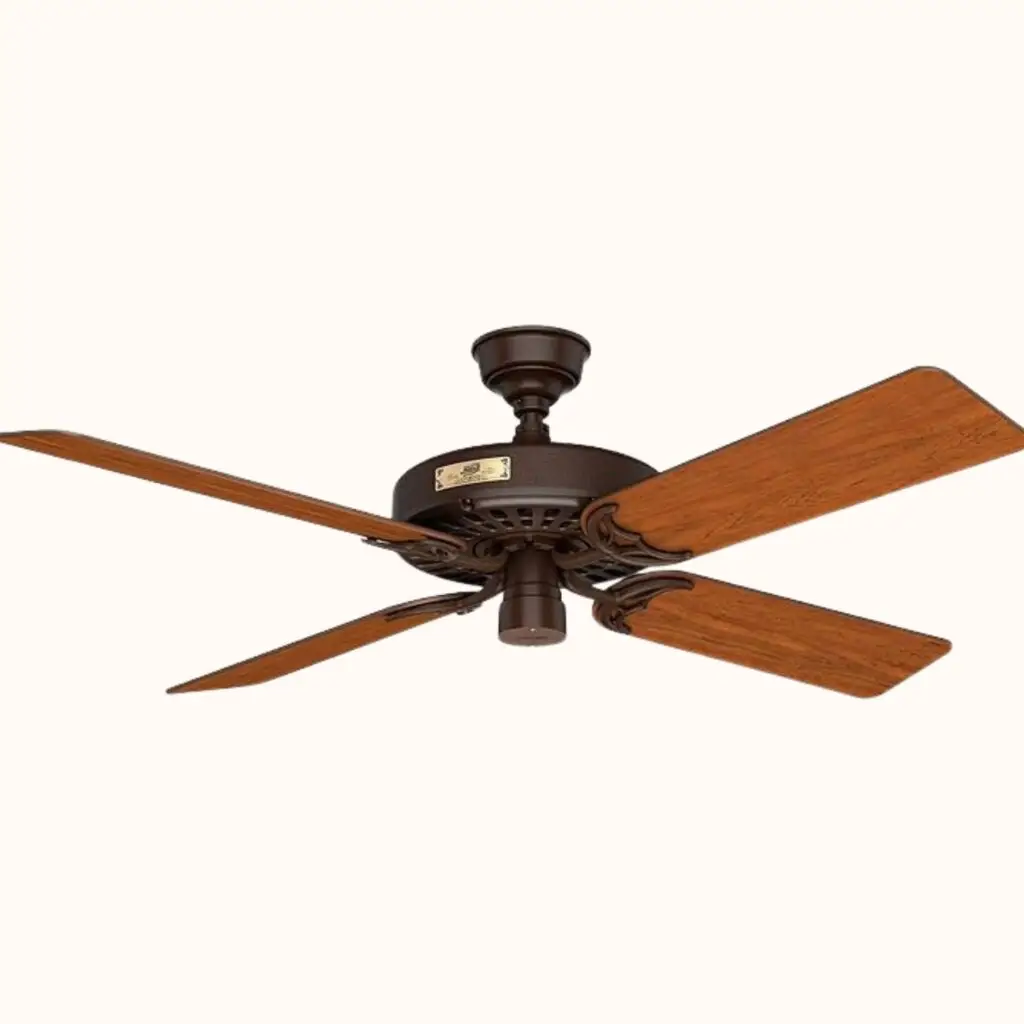
Hunter Original — 52″
If you only look at one classic, this is the one. It’s the closest thing to a true antique fan still made — a heavy cast-iron housing and oil-bath bearing built to run for decades. It has no light of its own, which is the point: it’s light-adaptable, so it’s the one to dress with the opal schoolhouse globe below, when you need overhead lighting, too.
Price: $$
Motor: AC (WhisperWind) — 3-speed
Airflow: ~6,700 CFM
Reversible: ✓
Control: pull chains + reverse switch
Damp rated: ✓
Light: ✗ — light-kit adaptable
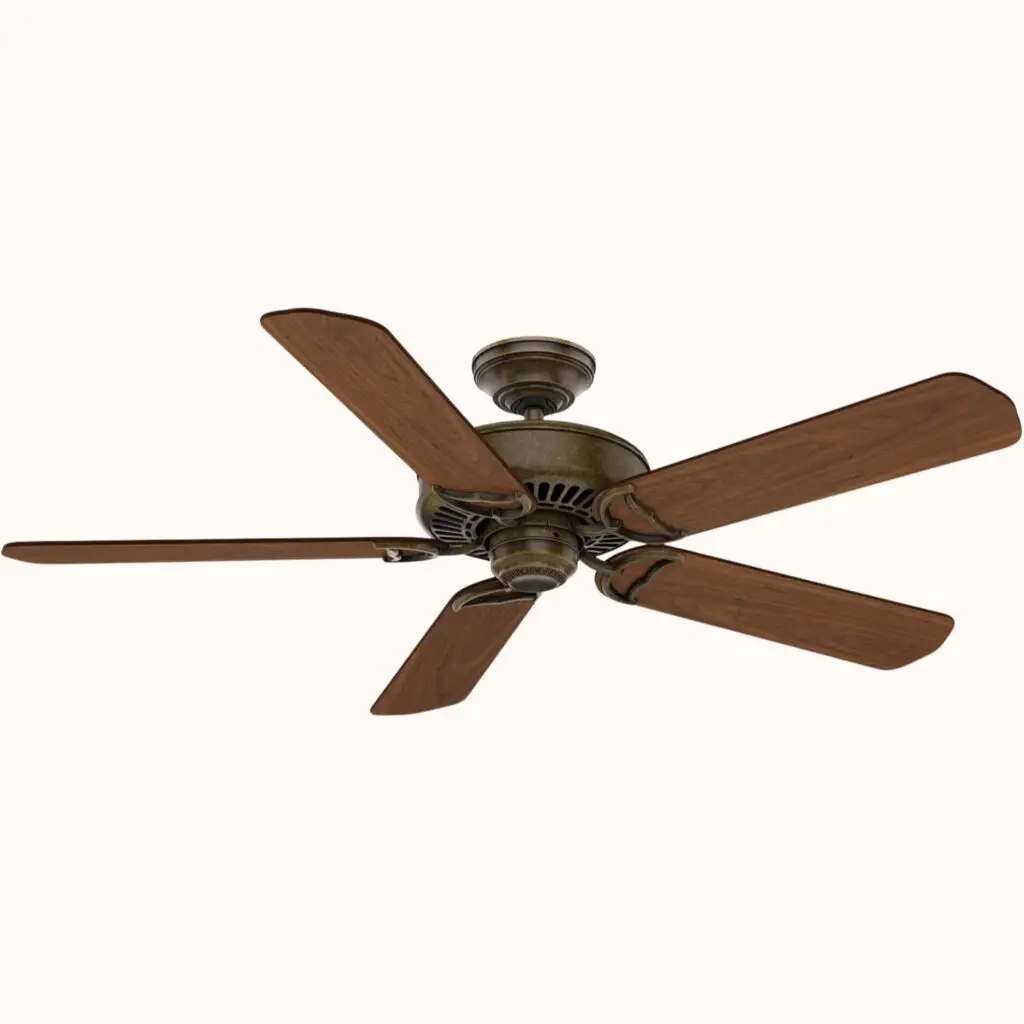
Casablanca Panama DC — 54″
Proof that “vintage look” and “DC motor” do coexist. The original 5-blade Casablanca silhouette, ENERGY STAR-rated, with reversible walnut blades and a whisper-quiet DC motor. The one to buy if you want the old-house look but quieter, energy efficient running.
Price: $$
Motor: DC — 6-speed, ENERGY STAR
Airflow: ~4,500–4,650 CFM
Reversible: ✓
Control: remote or wall-control version
Damp rated: ✗ — indoor / dry (damp-rated outdoor versions exist)
Light: ✗
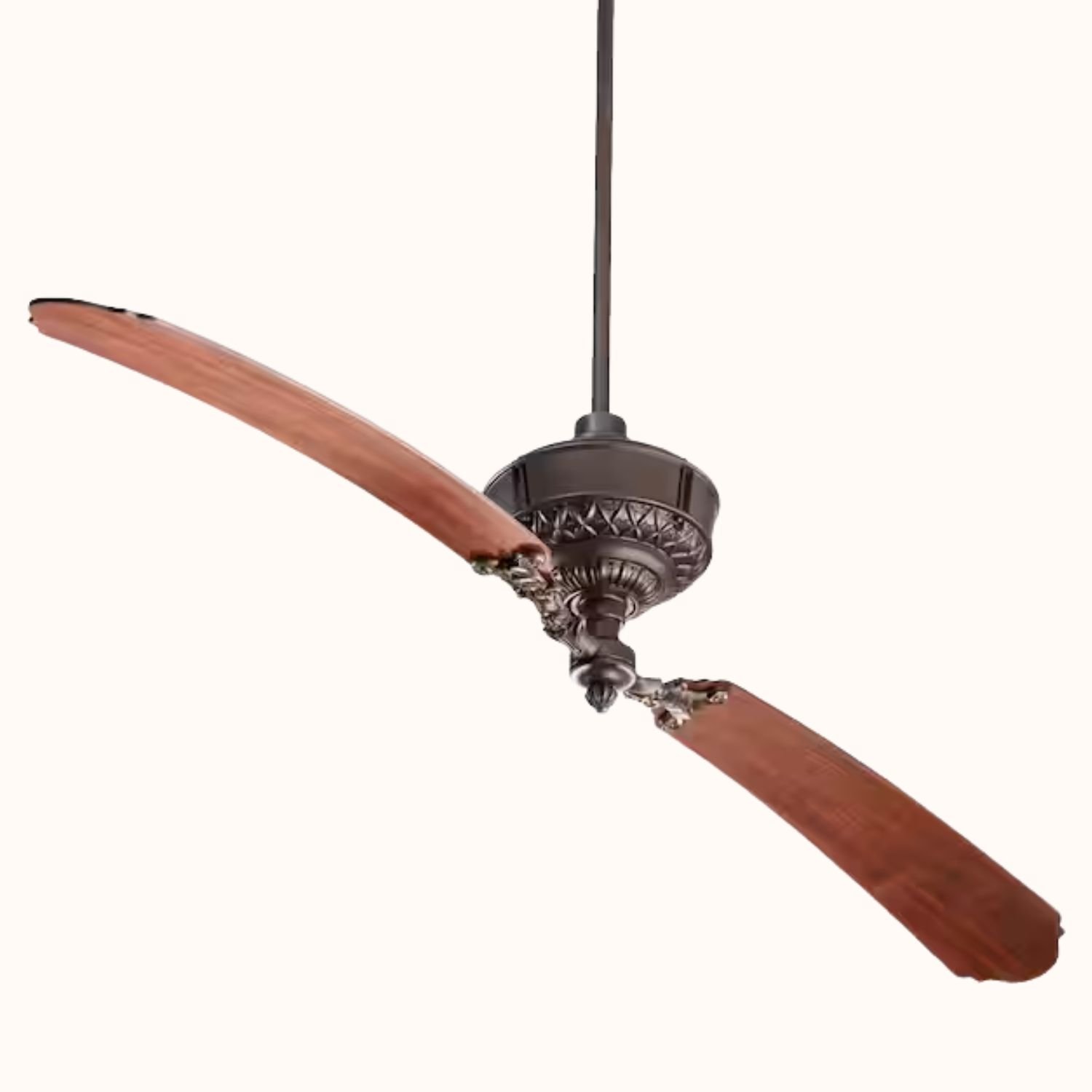
Quorum International Turner — 68″
The dramatic two-blade statement fan. Nothing else makes an entrance quite like this 68-inch sweep of two long walnut blades on an oiled-bronze body. It needs a big room with the height to carry it — and in the right space it’s a fan that looks right at home in a classic home.
Price: $$
Motor: AC — 3-speed
Airflow: ~5,696 CFM
Reversible: ✓
Control: wall-control included
Damp rated: ✗ — indoor / dry
Light: ✗
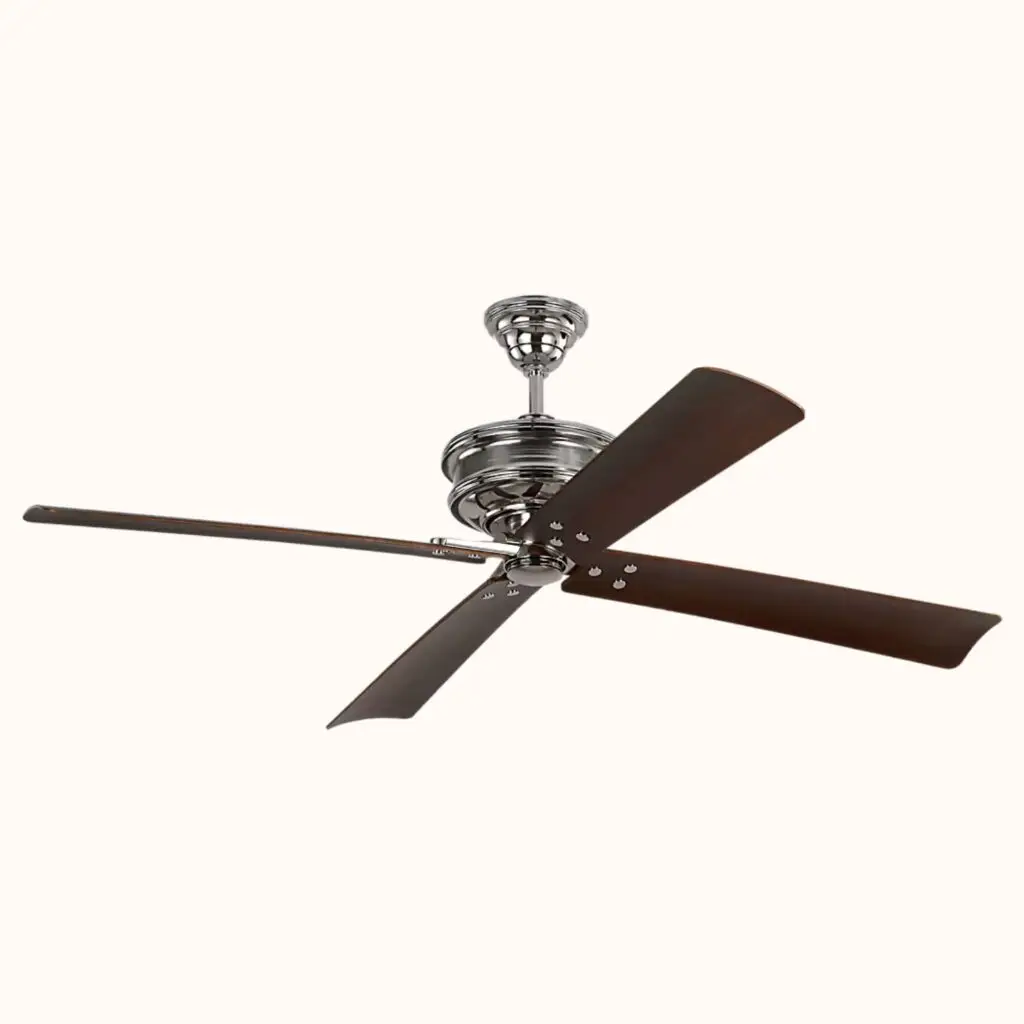
Visual Comfort Subway — 56″
The design-forward DC pick: an early-1900s “subway” industrial look that’s right at home in an old house. A quiet 6-speed DC motor, serious airflow, and damp-rated for a covered porch. A lighting-dealer fan you might not find on Amazon — and well worth a look.
Price: $$$
Motor: DC — 6-speed, ENERGY STAR
Airflow: 2,491–6,767 CFM
Reversible: ✓
Control: remote included
Damp rated: ✓ — indoor / covered outdoor
Light: ✗
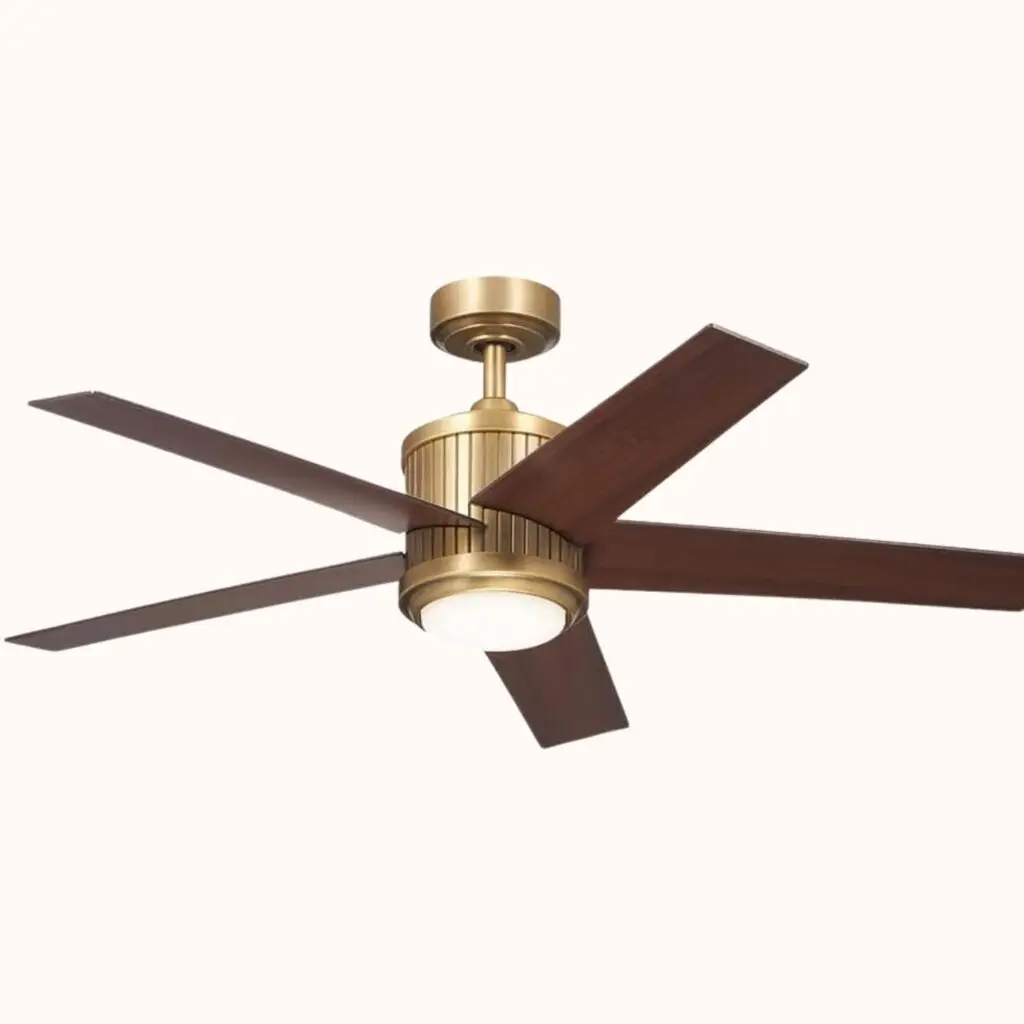
Kichler Brahm — 48″, Natural Brass + Walnut
The lighted fan that doesn’t compromise. A fluted, reeded brass drum straight out of the 1920s, with an integrated opal downlight — the one fan here that’s genuinely beautiful and the room’s light.
Price: $$
Motor: AC — 3-speed
Airflow: 4,077 CFM
Reversible: ✓
Control: remote included, dimmable light
Damp rated: ✗ — indoor only
Light: ✓ — integrated 17W LED, 1400 lumens, 3000K warm, dimmable
Adding Light Done Right to Your Old House Ceiling Fan
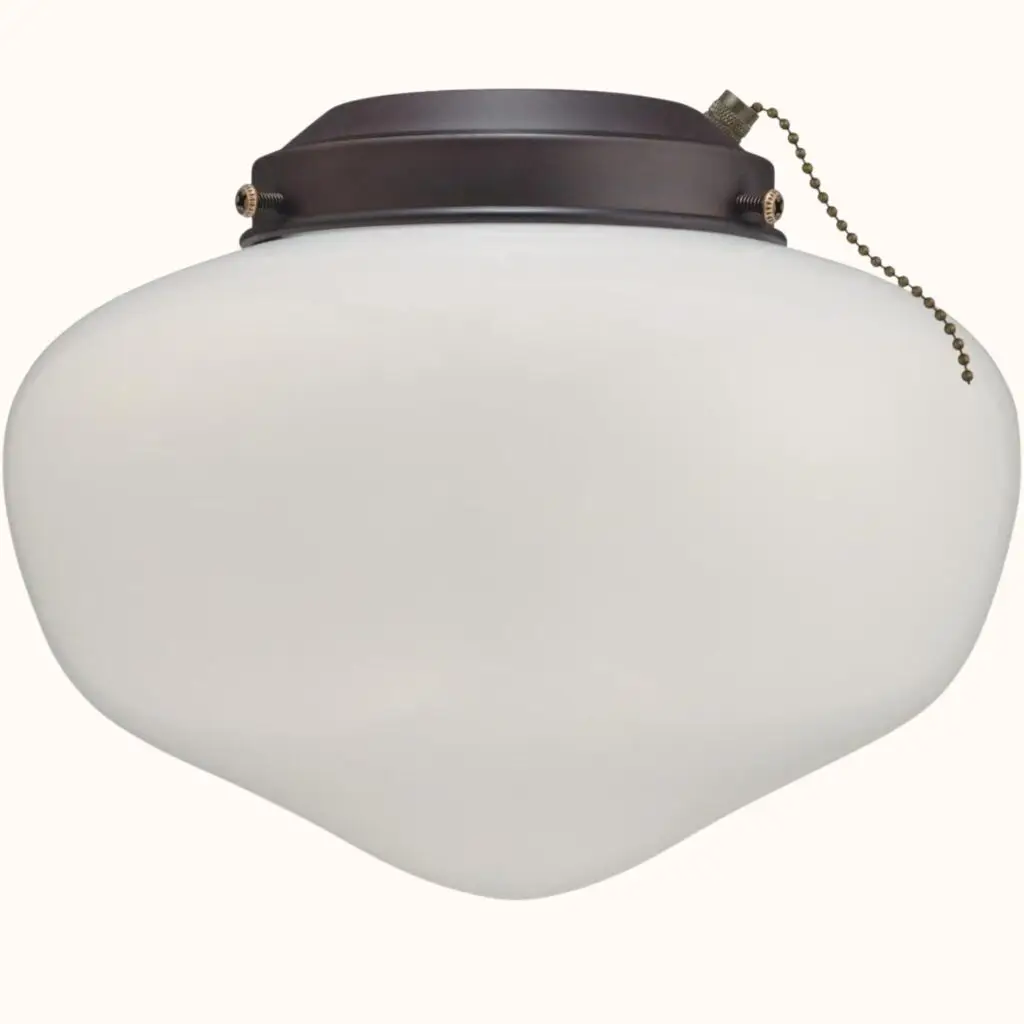
One design-killing reason some classic-look ceiling fans look cheap is the addition of an afterthought multi-bulb candelabra kit.
A simple, classic option kit that softens the look is a single opal schoolhouse globe.
This LED Schoolhouse Light Kit (oil-rubbed bronze, white opal glass, ~$40) fits standard light-adaptable fan with a center hole, and is even damp-rated for a bathroom or porch.
Don’t want to limit yourself to the classics? Best Ceiling Fans for Old Houses: 14 Breezy Beautiful Picks
Can’t Hang a Ceiling Fan? How to Cool the Room Anyway.
There are times you can’t — or won’t — put a fan on the ceiling. No fan-rated box and no easy way to run one. A plaster medallion you won’t disturb. An 8-foot ceiling with no headroom to spare. A rental. There are still options for you. What you need is a vintage-look fan that doesn’t mount overhead but still moves real air and looks right at home in an old house.
| Best for | Oscillates | Outdoor | Price |
|---|---|---|---|
Floor Decor Fanimation Arden — Oil-Rubbed Bronze + walnut tripod · Check Price → | ✗ | ✗ | $$ |
Classic Detective Desk Vornado Silver Swan Alchemy — Gunmetal · Check Price → | ✓ | ✗ | $ |
Patio Wall Classic Hunter Classic 16″ Wall Fan — Matte Black · Check Price → | ✓ | ✓ | $ |
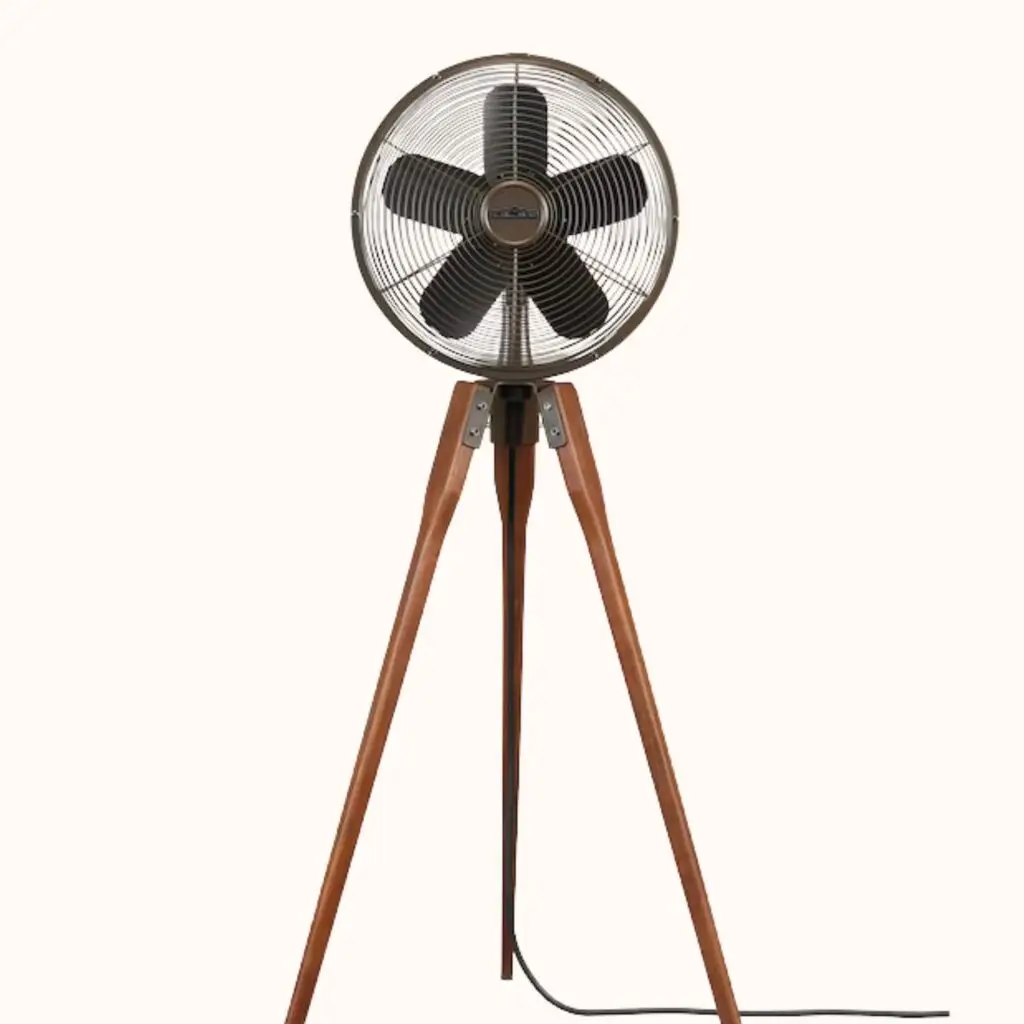
Fanimation Arden — Oil-Rubbed Bronze + walnut tripod
The design statement. An architect’s-tripod floor fan that happens to match your ceiling-fan finishes — the one you’re glad to leave standing in the room year-round.
Price: $$
Motor: AC
Airflow: not published
Oscillation: ✗ — fixed; aim by tilting the head
Control: 3-speed rotary dial on the unit; 8-ft cord
Damp rated: ✗ — indoor only
Light: ✗
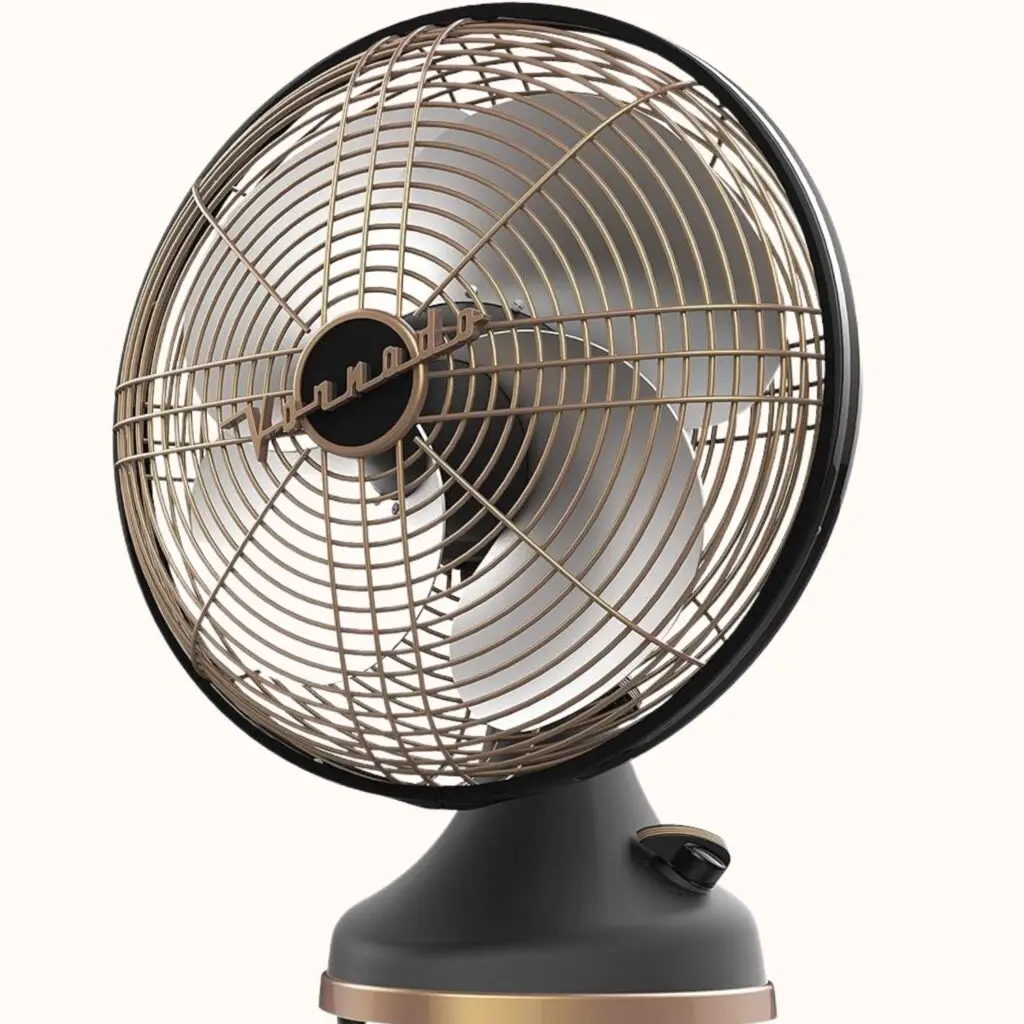
Vornado Silver Swan Alchemy — Gunmetal
The one that’s sexy as hell. Gunmetal body with copper accents that ties straight into old-house metal tones. For a nightstand, a desk, a kitchen counter — it cools the spot you’re actually in and looks like an object you chose.
Price: $
Motor: AC — all-metal
Airflow: not published
Oscillation: ✓ — plus head-tilt
Control: manual, 3 speeds
Damp rated: ✗ — indoor only
Light: ✗
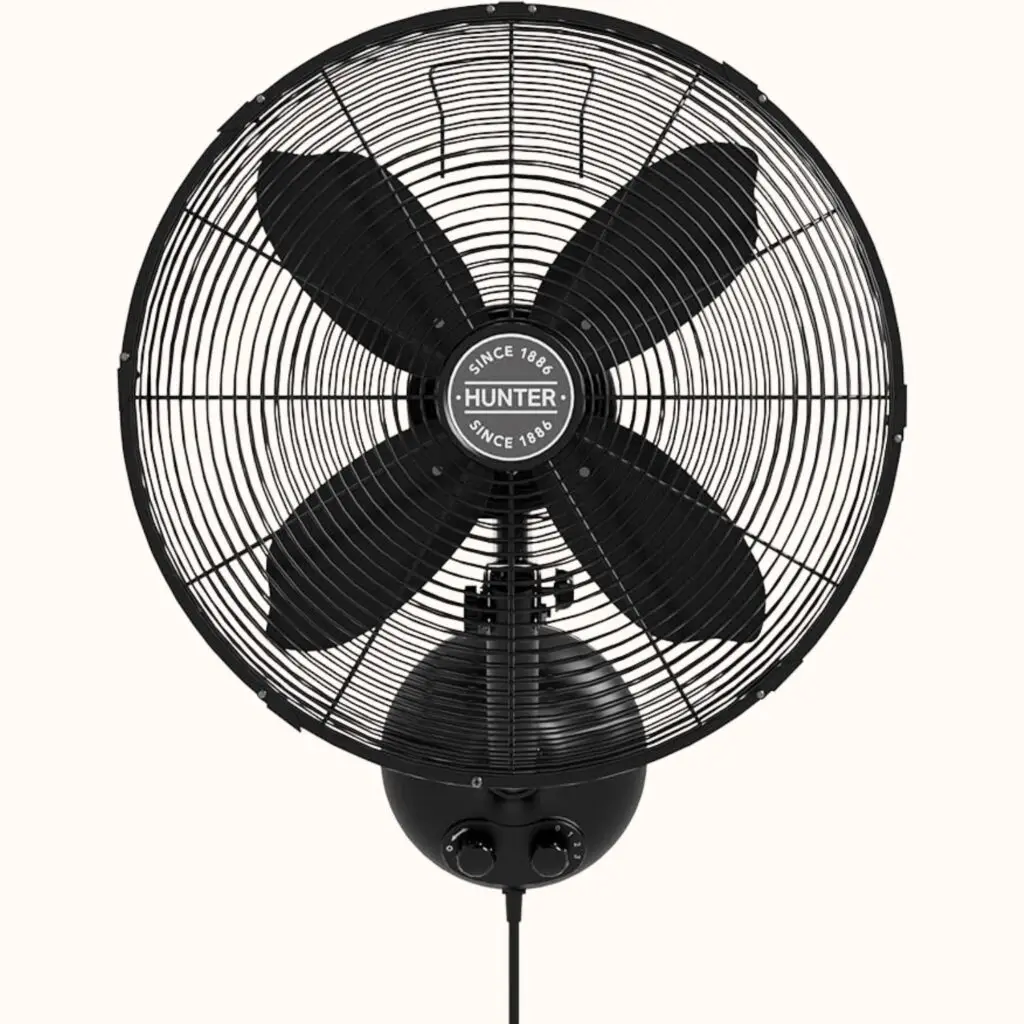
Hunter Classic 16″ Wall Fan — Matte Black
The wall-mount, plug in option that works on your porch. Mounts on the wall, oscillates, and tilts to aim — and it’s damp-rated, so it doubles as your covered-porch fan. Frees the ceiling and the floor entirely, and the matte black ties right back to the Hunter Original up top.
Price: $
Motor: AC
Airflow: 1,959 CFM (max)
Oscillation: ✓ — plus 7° tilt head; 3 speeds
Control: on-unit, 3-speed; 5-ft cord (plug-in)
Damp rated: ✓ — covered porch / patio / garage
Light: ✗
How To: Choosing an Old House Ceiling Fan
AC or DC Motor? The Choice Hiding Behind Every Listing
Every fan you look at runs on one of two motor types. Here’s what Old House owners need to know:
AC motors are the traditional option.
Time-tested, less expensive, and, critically for an old house, they can be hardwired to a wall switch.
They run three speeds (occasionally four), tend to be a touch louder, and they’re the honest match if you want a period look controlled the period way: a switch on the wall, no batteries, no phone.
DC motors are the newer technology.
They use up to 70% less electricity (roughly 25–35 watts on high versus 50–100 for an AC fan), run 40–60% quieter — often below a whisper on low — and offer as many as ten fine speed steps instead of three.
They cost more up front and usually pay that back within a couple of years. The catch: most DC fans come with a remote and expect you to use it. Many are also app-enabled.
The Old House Ceiling Fan decision, stated plainly
- When quiet and efficiency matter most — a bedroom, a fan that runs all night — buy DC and make peace with the remote.
- If you want a hardwired wall control and a traditional motor that looks and behaves like it belongs in the house, buy AC confidently.
There is no wrong motor, only a wrong match to how you want to turn it on or how efficiently you’d prefer it to run.
Why Reverse Matters in an Old House Ceiling Fan
The number of speeds a ceiling fan has is mostly a DC bragging point. Don’t pay more for ten speeds; do pay attention to a feature people ignore: reverse.
A fan should turn counterclockwise in summer to push air down and make a breeze, and clockwise in winter, on low, to pull cool air up and nudge the warm air trapped at the ceiling back down into the room.
In an old house with nine-foot-plus ceilings, that winter mode isn’t a gimmick.
It’s how you reduce the cost of heating the space over your head.
Every fan worth buying for an old house reverses. What differs is how you make it happen: a small switch on the motor housing or a button on the remote or app.
Blade Pitch and Airflow: The Details That Predict Performance
Two specs tell you whether a fan will move real air, and neither is the one people fixate on.
Blade pitch is the angle of the blades, and the sweet spot is 12 to 15 degrees. Flatter than 12 and the blades slice the air without pushing it; steeper than 15 and a weak motor strains, gets loud, and wobbles. A well-made fan pairs a 12–15° pitch with a motor strong enough to drive it.
Airflow — CFM, cubic feet per minute — is the single most important number on the spec sheet. It’s the actual output. Anything around 5,000 CFM and up moves real air; 6,000–7,000+ is excellent, and that’s what you want for a large or high-ceilinged old-house room.
Compare ceiling fans based on their CFM, full stop.
Which kills the most common myth: more blades doesn’t mean more air. Blade count is a style and sound choice, not a power one — a three-blade fan with a 15° pitch and a strong DC motor will out-move a five-blade fan with a lazy pitch. More blades can run a touch quieter and read more traditional; that’s the real tradeoff. Buy the CFM and the pitch. Treat blade count as aesthetics.
What Size Old House Ceiling Fan for Your Room: The Blade-Span Rule
Blade span is measured tip to tip, and it’s matched to the room’s square footage, not its ceiling. Bigger room, wider fan:
| Room size | Blade span |
|---|---|
| Up to 75 sq ft (small bath, small bedroom) | 29–36″ |
| 76–144 sq ft (bedroom, kitchen, office) | 36–44″ |
| 145–225 sq ft (standard living/dining room) | 44–52″ |
| 225–400 sq ft (large living room) | 52–56″ |
| 400+ sq ft (great room) | 56″+ — or two fans |
This chart is the minimum for moving air, not the ceiling. In my master bathroom remodel, I sized up in the master bathroom — considerably bigger than this table recommends — and it looks better for it with the higher ceilings, and runs quieter, because a larger fan doesn’t have to work as hard to move the same air. Size up for presence whenever you want.
Just hold the two numbers you can’t fudge: blades at least 18 inches off the walls, and a minimum of 7 feet above the floor.
Two more numbers that keep a fan from looking wrong: keep the blades at least 18 inches from the nearest wall (a couple of feet is better for circulation), and center the fan in the room, not over the furniture. A fan that’s too small disappears and does nothing; a fan that’s too big in a small room is all anyone will see.
In a long rectangular old-house parlor or a converted double room, two correctly-sized fans almost always beat one enormous one.
Ceiling Height: The Number That Decides Everything
A fan moves air best when the blades sit 8 to 9 feet above the floor. Code minimum is 7 feet of clearance under the blades. So your ceiling height from the ground dictates the mount:
- 8-foot ceiling (or lower): choose a flush mount — also called a hugger or low-profile fan. It bolts tight to the ceiling so the blades stay above 7 feet. Don’t add a downrod on an 8-foot ceiling.
- 9-foot ceiling: a standard short downrod (often the 6-inch rod in the box) drops the fan into the right zone.
- 10 feet and up — most pre-war main floors: you need a longer downrod to bring the fan down to roughly 9 feet off the floor. Left flush on a 12-foot ceiling, the fan spins uselessly up in the dead air and you feel nothing.
You don’t have to do the math. Match your ceiling height to the downrod that drops the fan into the airflow zone:
| Ceiling height | Downrod length |
|---|---|
| 8 ft | 4.5″ (or a flush mount) |
| 9 ft | 6″ |
| 10 ft | 12″ |
| 11 ft | 18″ |
| 12 ft | 24″ |
| 13 ft | 36″ |
| 14 ft | 48″ |
| 15 ft | 60″ |
| 16 ft | 72″ |
One footnote: following this recommendation hangs your ceiling fan about 8 feet off the floor, which is where it moves the most air. You can hang it higher if you’d rather — for headroom, or just because it looks better tucked closer to a beautiful ceiling.
You trade a little airflow for the look.
That’s the call I made in our bathroom, and because the fan is oversized, it still moves plenty of air and feels wonderful.
Hang a ceiling fan lower for maximum breeze, higher for the look — both are right, as long as you clear 7 feet.
And if your old house has a sloped or vaulted ceiling (a converted attic, a former sleeping porch), you’ll also need a sloped-ceiling adapter — standard mounts can’t sit right on an angle.
Old House Ceiling Fan Turn-Ons: Wall Switch, Remote, or App?
How you turn the fan on is a real decision in an old house, because the wiring you have may not support the control you want.
Hardwired wall control is the cleanest and most period-honest — a plate on the wall, no batteries, nothing to lose. But independent control of fan and light usually needs the right wiring run to the box, and a lot of old houses have a single switch leg feeding a single ceiling fixture. Ask your electrician what your box actually supports before you fall in love with a two-switch plate. (Smart hardwired switches from the likes of Lutron exist if you want app control without losing the wall plate.)
Handheld remote comes standard on most DC fans and is genuinely convenient — until it slides into the couch. Fine for most rooms; just know it’s a thing you can misplace.
App / smart control (Wi-Fi, Alexa, Google, HomeKit) earns its keep in exactly one situation that old houses create constantly: a fan on a 12-foot ceiling you cannot reach. No pull chain works at that height. Scheduling and voice control are real conveniences there.
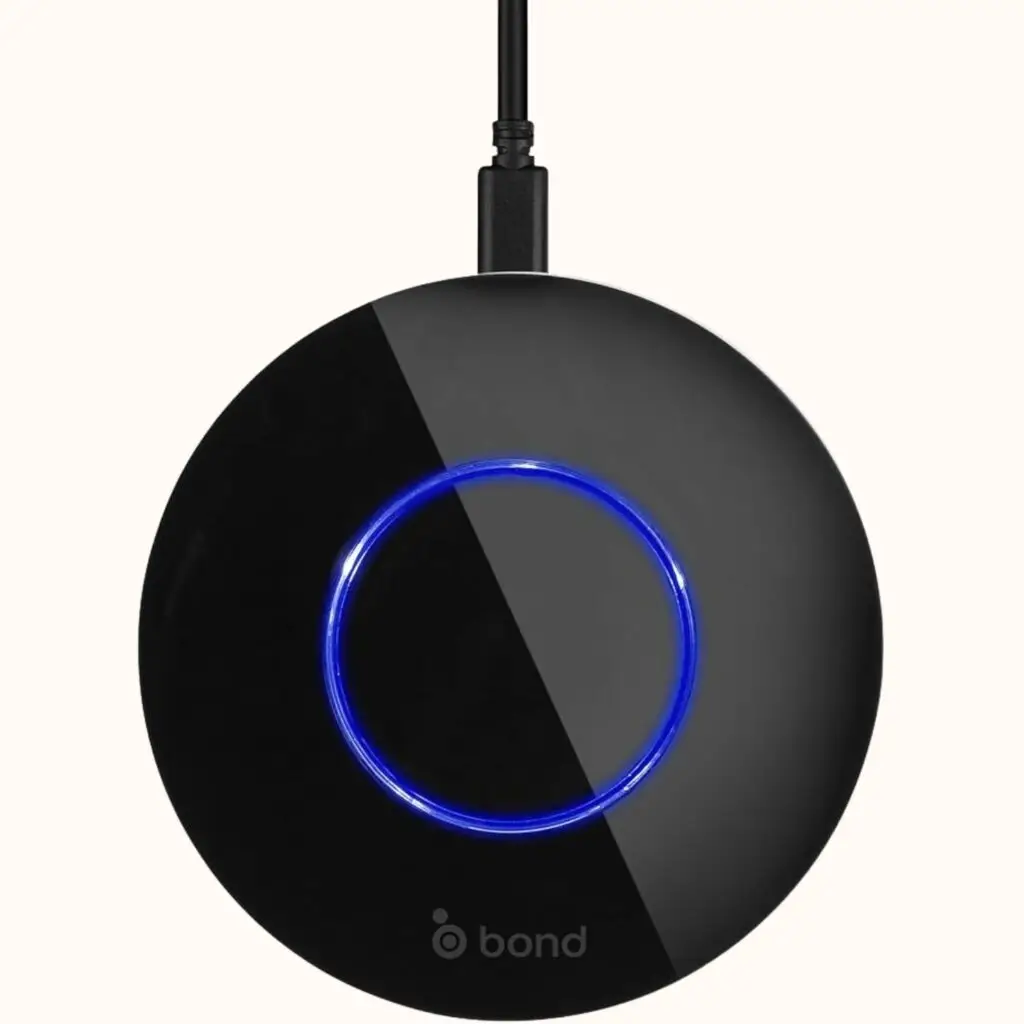
Already have a remote-controlled fan and wish it were smart? You don’t have to rewire or rebuy. A Bond bridge adds Wi-Fi, app, and Alexa/Google control to any fan that already runs on an RF remote — it just learns the remote’s signal. (It’s what I use on ours.) For a big old house, you add a second bridge to extend the range across floors. It’s the cheapest way to make a vintage remote fan smart.
And the humble pull chain? Charming, traditional, and completely useless ten feet over your head. On a tall ceiling, it’s decorative.
The Light Is Half the Fixture: Color Temperature
When a ceiling fan has a light — and in an old house it might be the room’s main fixture — the color temperature matters as much as the fan. It’s measured in Kelvin, and it’s the difference between a room that glows and a room that feels like a parking garage.
For a pre-war house you want 2700K to 3000K — warm white. That’s the warm, candle-adjacent light that flatters plaster, wood, and patina. Skip anything 4000K and up; that cool, bluish “daylight” makes warm wood tones look gray and wrong in an old room. Some newer LED fans now offer CCT — adjustable color temperature — so you set the warmth yourself, worth having if the room does double duty.
Related: The Best Warm Light Bulbs for Your Old House
Damp-Rated? Wet-Rated? Where the Ceiling Fan Goes Changes What You Buy
Here’s the one nobody mentions until it’s too late: every fan carries a location rating, and the wrong one corrodes. There are three.
- Dry-rated — standard indoor rooms, no moisture. Most fans.
- Damp-rated — built to take humidity and condensation without rusting (sealed or stainless hardware, painted metal, no plated finishes). This is the minimum for a bathroom with a tub or shower, a covered porch, or a laundry room.
- Wet-rated — sealed against direct water, for an open porch, a pergola, or anywhere rain reaches.
The rule for an old house: a bathroom fan should be damp-rated at minimum, and a porch fan damp- or wet-rated depending on how exposed it is. A dry-rated fan in a steamy bathroom will pit and streak within a season or two. (I’ll tell you where I bent this rule, and how, below — but bend it knowingly.)
Old House Ceiling Fan Rules: Before You Hang
1924 Rosemont isn’t a DIY-electrical blog, so I’m not going to tell you to open a junction box. I am going to tell you what an old ceiling needs so you buy the right fan and have the right conversation with a pro:
A fan needs a fan-rated, braced box. You can’t hang a fan on the standard light box that’s up there now. A fan’s weight and constant motion require a metal box rated for fans and braced to the joists. This is the single most important thing to confirm before installation — say exactly this to your electrician: “I need a fan-rated braced box installed.” If you’re not sure, be sure to get a qualified expert to help.
Your Old House wiring may need attention first. It’s not the most exciting part of the process, but it’s so important. Knob-and-tube, brittle cloth-sheathed, or ungrounded wiring common in pre-1960s houses may need to be updated or grounded to carry a modern fan safely. Ask your electrician to confirm the circuit before you schedule the install — not after the fan arrives.
Mind the medallion. If you’re fortunate enough to have an original plaster ceiling medallion, check that the fan’s canopy covers its footprint cleanly without cracking or covering the original plaster awkwardly. Period canopies and restoration-grade medallions are worth sourcing (House of Antique Hardware is one of my go-to sources).
Get the downrod right. Box, wiring, and grounding are the electrician’s call. But blade span, mount type, and downrod length are selection decisions you make at purchase. Get them right and the install is simple; get them wrong and you’re returning a fan. My electrician told me this is the most common error he sees.
Old House Ceiling Fans: What Not to Do
- Don’t hang a flush-mount fan on a high ceiling. It’ll spin in the dead air above the room and leave you wishing for a breeze.
- Don’t put a downrod on an 8-foot ceiling. You’ll drop the blades below safe height.
- Don’t make a buying decision based on blade or speed count. Ten speeds you’ll never use is not a reason. Reverse, motor type, and CFM are.
- Don’t assume your current electrical box can support a ceiling fan. A light box isn’t rated to support a ceiling fan.
- Don’t pick a remote-only DC ceiling fan for a room where you want a wall switch. Know the control type before you check out, not after.
Looking for modern-meets-classic fans? Read this next: Best Ceiling Fans for Old Houses: 13 Breezy, Beautiful Picks
Related: Caring for Metal Finishes in an Old House
Ceiling Fans for Classic Houses: FAQ
Match the blade span to the room’s square footage: roughly 36–44 inches for a bedroom, 44–52 inches for a standard living or dining room, and 52 inches or more for a great room. Keep the blades at least 18 inches from the walls and center the fan in the room.
A fan on a downrod, not a flush mount. The blades should hang 8 to 9 feet above the floor, so a 10- or 12-foot ceiling needs a longer downrod — usually around 24 inches for a 12-foot ceiling — to bring the fan into the zone where you actually feel it.
Only if the electrical box is replaced with a fan-rated, braced box. A standard light box can’t safely hold a fan’s weight and motion. Older wiring may also need to be updated or grounded first, so have an electrician confirm the box and circuit before you buy.
Neither is universally better. AC motors are less expensive and can be hardwired to a wall switch, which suits a period look. DC motors are quieter and far more efficient but usually rely on a remote. Choose based on how you want to control the fan.
Yes — a bathroom fan should be damp-rated at minimum, meaning it’s built with sealed, rust-resistant hardware to handle humidity. A standard dry-rated fan will corrode in a steamy bathroom. Wet-rated is only needed where water hits the fan directly, like an open porch.
Look for roughly 5,000 CFM or more for a normal room, and 6,000–7,000+ for a large or high-ceilinged space. CFM measures how much air the fan actually moves — a far more useful number than the count of blades, which barely affects airflow.
Clockwise, on low. That pulls cool air up and pushes the warm air trapped near a tall old-house ceiling back down into the room. Counterclockwise is the summer setting for a downward breeze.