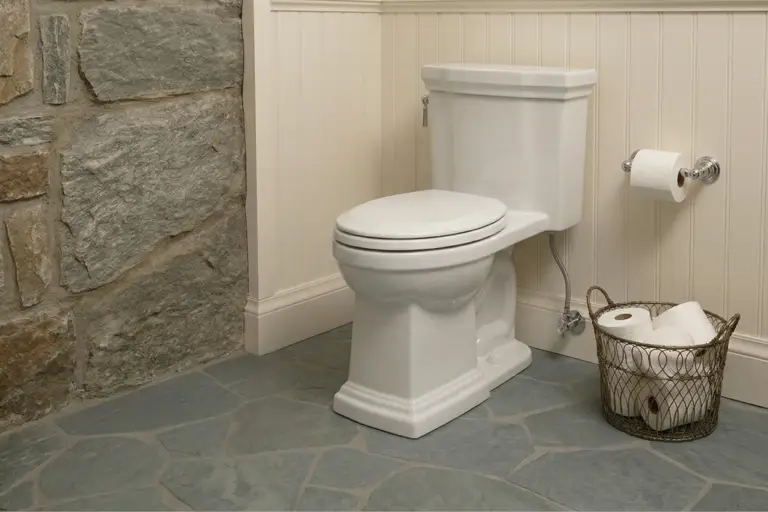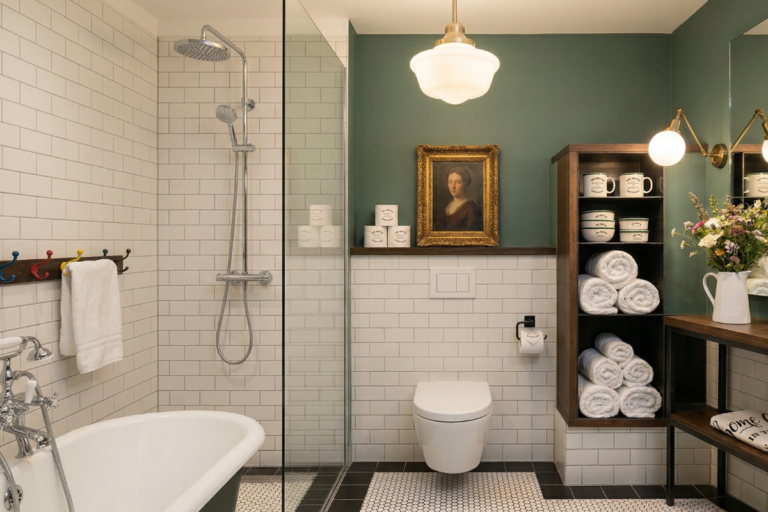

Historic homes almost never have perfectly matched fixtures. Door hardware, hinges, plumbing, and lighting have all evolved across decades. Trying to force everything into one metal finish could actually flatten your Old House’s rich story.
This post is for you if…
- You want to make the “rightest” decision about metal hardware finishes in your older home.
- It’s important to you to make brass vs chrome decisions that honor your house’s history.
- You want to figure out what feels right and looks amazing, no matter what’s on trend today.
Hate the story but want the exact sources?
→ shop the story
Some links may be affiliate links, meaning I may earn a small commission if you choose to purchase — at no additional cost to you. I only share products I genuinely like, would use in my own home, or have researched and feel confident recommending.
Chrome vs Brass Bathroom Fixtures in an Old House
It all starts with answering this question: How much contrast do you want between past and present? If you’re deciding between chrome vs brass bathroom fixtures, the right answer usually depends on how much patina, contrast, and historical continuity you want in the space.
Both finishes work in old houses — they just tell different stories. Mixing warm and cool metals creates tension. Tension creates interest.
And that’s exactly what makes a space feel “collected over time and storied” instead of “bought and paid for, then installed.”
When you mix metals, you get a visual depth and flexibility, while a single metal finish in a space reads as calmer and easier to execute (but can also deliver a “flat”, one dimensional feeling if you’re not careful).
At Rosemont, we have a ton of clues to guide us. Original door hinges, knobs, window hardware, and bathroom fittings all give us a glimpse of design choices made in 1924 through the 1940s.
Our original windows (which are on the list for restoration) all have bronze hardware.
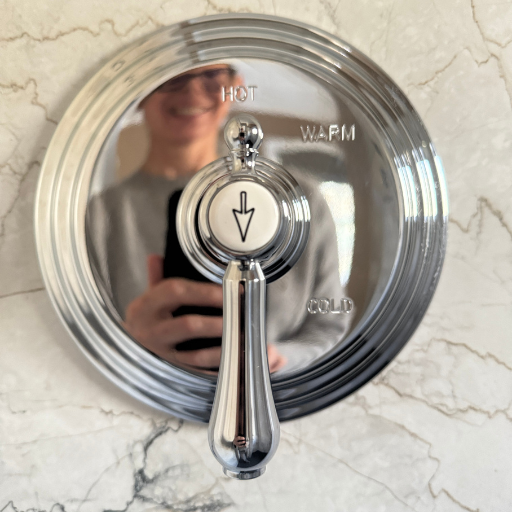
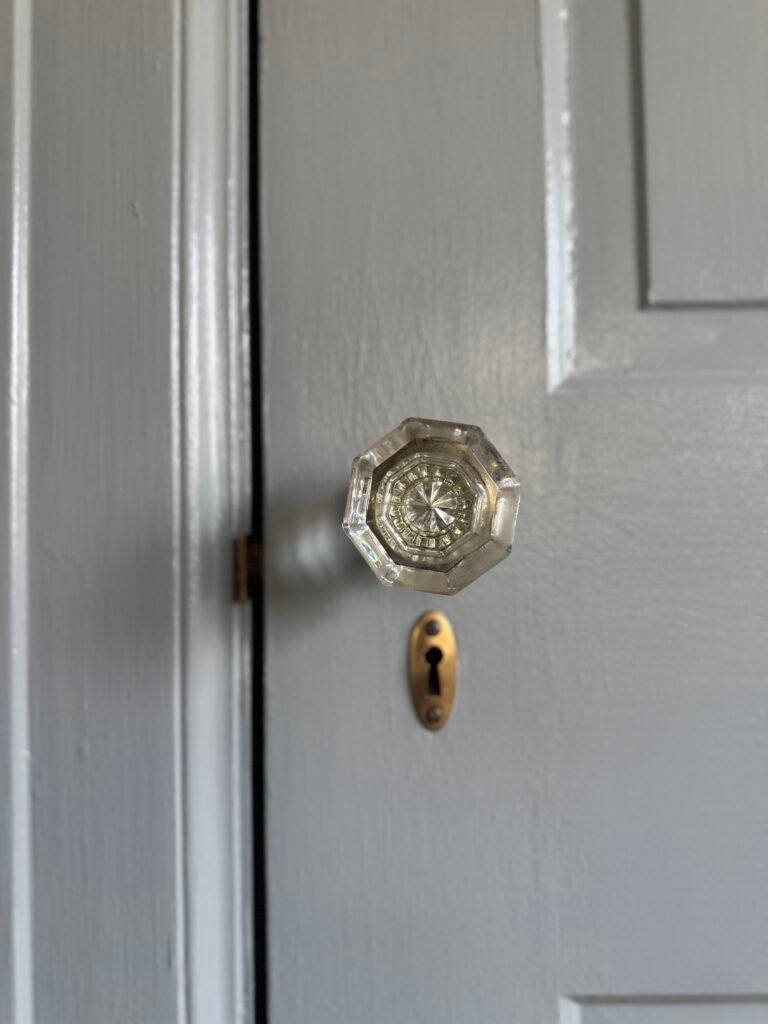
The jack and jill bathroom shared by the kids’ rooms on the second floor have original Hajoca faucets and fittings – all in well-worn chrome. There are glass and brass doorknobs on every original door in the house, and the hinges vary between what looks like copper, bronze, and chrome.
We use these clues to guide our decisions on every project we take on, so our decisions evolve, not erase, the story of the house.
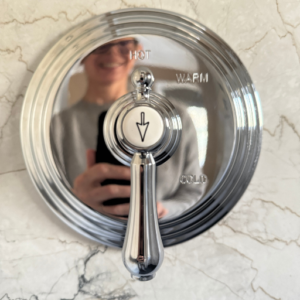
It was the arrow that got me.
The Side-by-Side Comparison
Chrome
Cool · Bright · Mirror-like
- Cool, bright, mirror-quality reflective finish
- Durable electroplated surface — highly resistant to staining
- Shows little to no tonal change with standard use
- Minimal maintenance; easy to keep streak-free
- Best for crisp, classic, contemporary, or Art Deco–leaning interpretations
Brass
Warm · Traditional · Living
- Warm, traditional, nostalgic finish with depth and character
- Starts bright and reflective, evolving over time (depending on finish)
- Unlacquered, living brass develops patina — no two pieces age alike
- Patina varies by humidity, water hardness, and polishing frequency
- Best for warmth, heirloom character, and period-authentic bathrooms
Source: Waterworks — Metal Finishes
Four Key Finishes
From mirror-bright chrome to deeply aged brass, each one carries a different visual tone and wear profile.

Polished Chrome
Cool mirror finish. Electroplated for durability and stain resistance. Minimal tonal change over years of use.
Polished Brass
Warm, bright gold that starts highly reflective. Lacquered versions resist change; unlacquered versions begin to patinate.
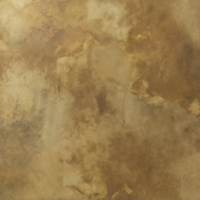
Unlacquered / Living Brass
A “living” finish that develops unique texture and color variation over time. No two pieces age evenly.
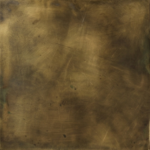
Vintage / Aged Brass
A mellow heirloom effect — deep tones, uneven color, and character from decades of oxidation and handling.
Both Are Bathroom Materials That Age Well (But Differently)
Unlacquered brass is popular in historic homes because it doesn’t freeze the house in time — it continues the aging gracefully process.
Patina isn’t damage. It’s the finish doing exactly what it is supposed to do. Document the story of use over time. If you’re not the biggest fan of too much “story”, you can always use a wax polish to gently bring some shine back.
If you love perfection → chrome
If you crave patina (like I do) → brass
When combined, chrome might play a supporting role while brass becomes the hero material.
Where to Spend, Where to Save
Mixing metals doesn’t just tell a layered story, it lets us spend strategically.
Splurge where your hands and eyes go most often. Save where the utility calls for simple.
In my recent primary bathroom renovation, I splurged on my shower fixtures because I start every day with a shower and I want it to feel like a pretty epic hotel experience every single morning.
My towel rings have the same look, but are from a much more economical line.
Worth spending on?
- faucets
- sconces
- mirror frames
- cabinet hardware
- shower trim
Where to save?
- towel bars
- toilet paper holder
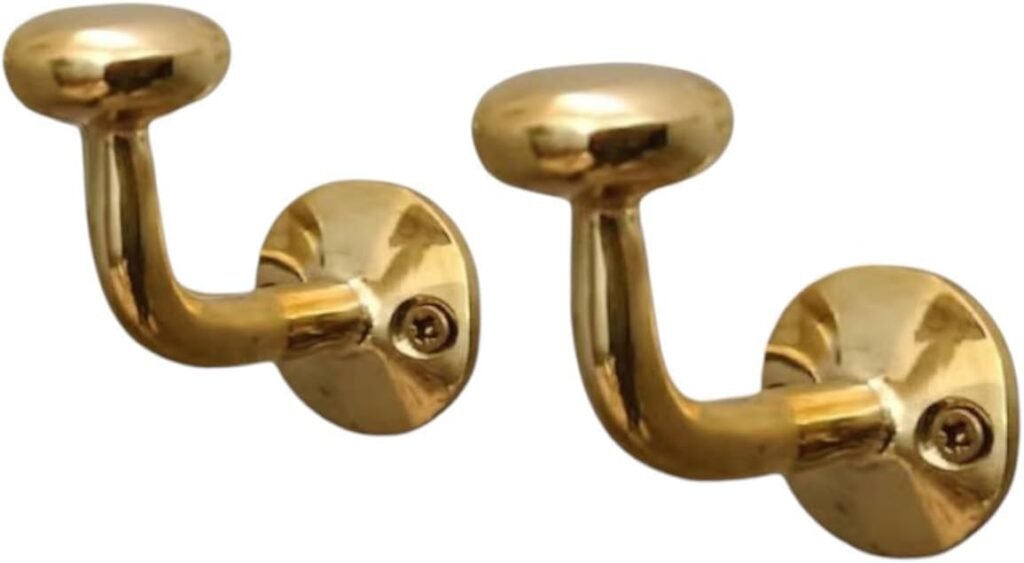
- hooks
- robe hardware
- hidden plumbing rough-ins
Old House Rules: Mixing Metals
Keep it extremely simple:
- Let your Old House give you clues. Use original details to choose 2 “go-to” finishes (3 max)
- Repeat each finish at least twice to give rhythm in a space
- Assign roles by finish – for example
- plumbing = one finish
- lighting = another
- Keep undertones consistent (warm with warm, cool with cool)
- Make one finish the star of the show (a 70/30 ratio works well
These Old Houses deserve informed, honest materials more than need any sort of perfection.
Quick Metal Mixology Decision Guide
Choose chrome when:
- you want low maintenance
- the room already has visual complexity (this was our primary bathroom)
- you prefer consistency
- resale neutrality matters
Choose brass when:
- you want warmth
- you appreciate patina
- the home has historic character, and warm metals
- variation feels appealing, not stressful
Mix metals when:
- the house already has mixed metal finishes
- you want layered depth
- you want flexibility on budget
- your vibe is collected, not perfectly matched
The Metallurgic Bottom Line
Chrome gives clarity. Brass gives character.
Old Houses can usually benefit from a bit of both.
The goal in my Old House isn’t perfect coordination. It’s comforting, layered material coherence informed by history.
Shop this story
Some links may be affiliate links, meaning I may earn a small commission.
- Newport Brass Chesterfield fixtures feel amazing and substantial to the touch. Hotel-good quality and period correct.
- Vintage-look Interior Glass Door Knob that give the look of historic finishes. For when you can’t find what you need on Facebook Marketplace.
- Unlacquered Brass Wall Hooks a set of two that are heavy and solid, and will patina gorgeously over time.
- Renaissance Wax Polish for polishing metals gently throughout the house, new and old.