
This Post Is For You If:
- You’re choosing wallpaper for an old house bedroom and keep second-guessing yourself
- You’ve made an Old House wallpaper decision that felt right on paper, made you swoon as a sample, and now seems wrong in the room
- You want to get better at taking the feeling in your head from mood board to reality
Hate the story but want the exact sources?
→ shop the entire project
Some links may be affiliate links, meaning I may earn a small commission if you choose to purchase — at no additional cost to you. I only share products I genuinely like, would use in my own home, or have researched and feel confident recommending.
Old House Wallpaper is Period Correct. Period.
I love being in Old House rooms with bold wallpaper choices. The bedroom at Rosemont has windows on three of four walls. And zero wallpaper.
From the bed, you see an Appalachian forest shift through every season — bare branches in winter, the full green crush of summer, the particular quality of light that comes through old-growth trees with blazing leaves in October. My design brief?
Make it even more botanically cozy in here.
The room doesn’t need to try to be beautiful. It needs to connect even more deeply to what makes me love it already. Wallpaper is the bridge.
What We Found When We Moved In
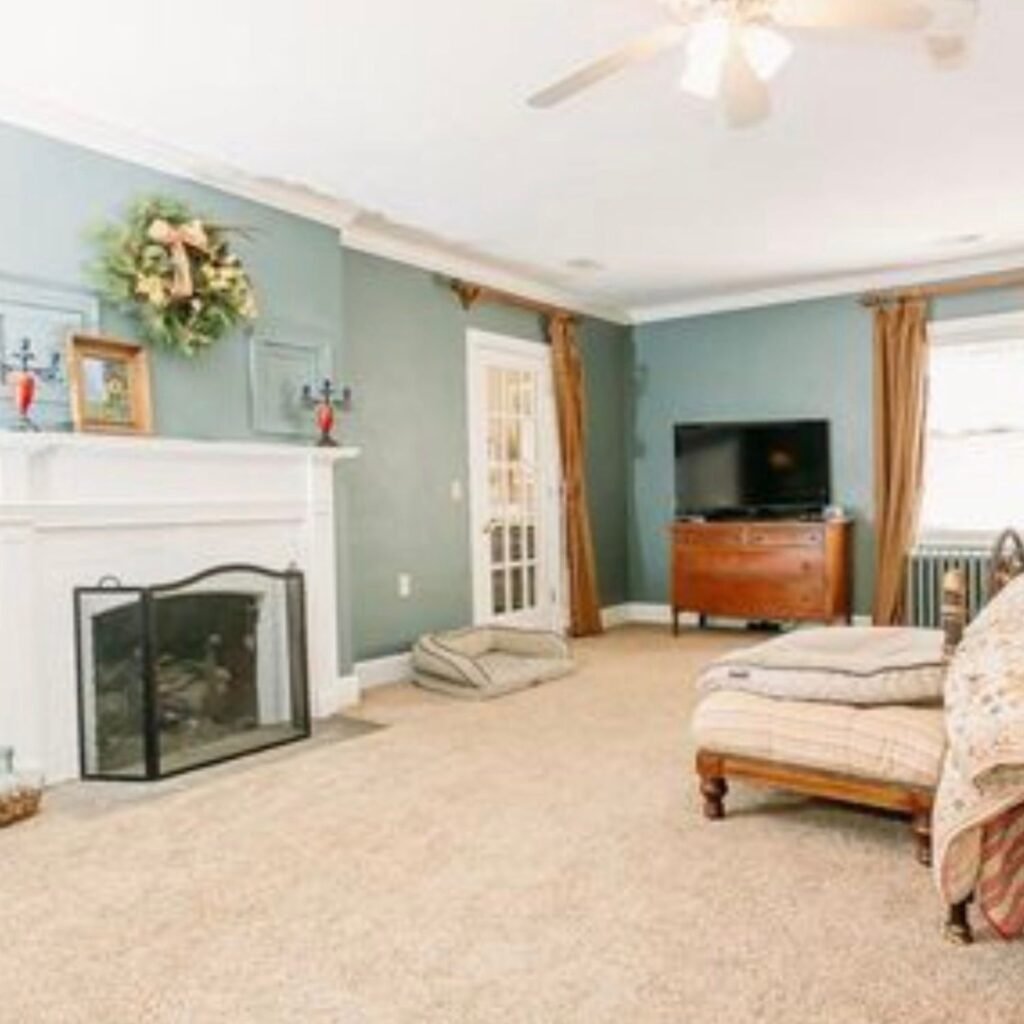
The listing photos featured beige wall to wall carpet.
A lot of it. Walls painted a muddy blue-gray. Glossy white trim. Heavy drapes and slatted blinds.
The 1924 bones of the bedroom were being upstaged by bulky modern choices.
We knew the original wood floors were under there. But we had no idea what condition we’d find.
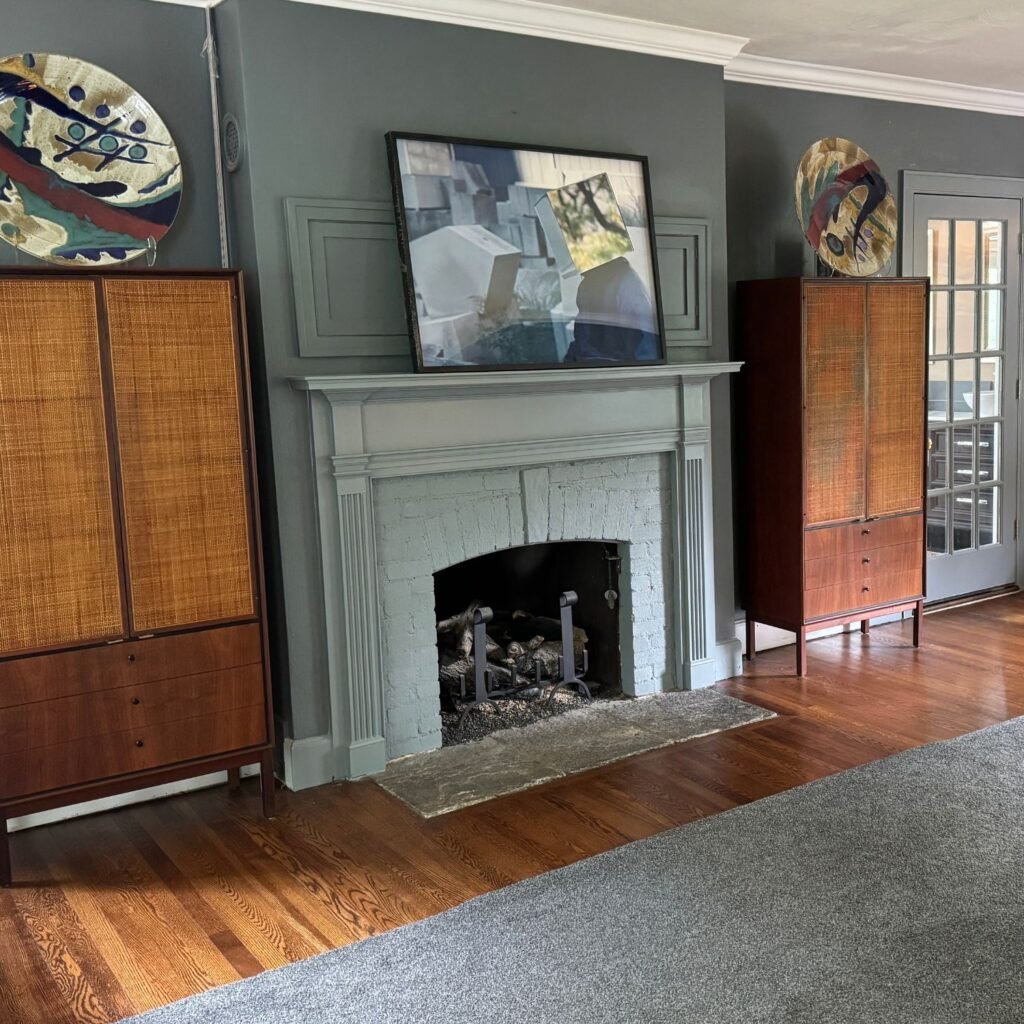
We ripped up the carpet on the entire second floor before we moved in and refinished every room’s floors. From a kaleidoscope of refinishing decisions over time to a single color — Jacobean and Early American mixed, in a satin finish.
Now the upstairs has depth, calm, and relates with the original stair treads.
The walls went darker. It’s a custom Benjamin Moore color — slate-informed, shifting between blue, gray, and green depending on the light and the time of day. The trim is tonal, with the doors and windows painted to match with just enough variation to read as intentional rather than monolithic. While I was at it, I restored every piece of original door hardware. Removing years of paint to uncover copper, brass, and bronze.
The 1924 glass knobs were all there, now they sparkle.
The furniture came with us.
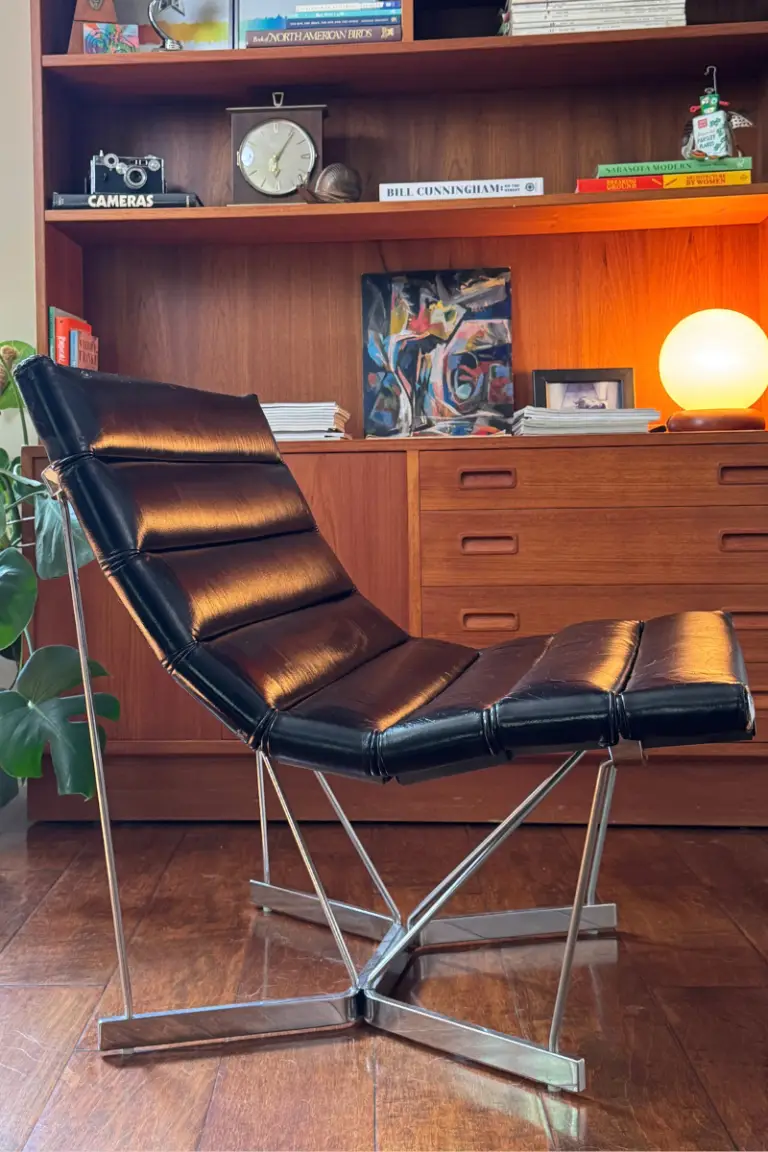
Paul McCobb pieces collected over the years.
Jack Cartwright for Founders armoires – a dealer score – that get misattributed to Knoll constantly (you can find these on Chairish and 1stDibs if you’re patient and know what you’re looking for.)
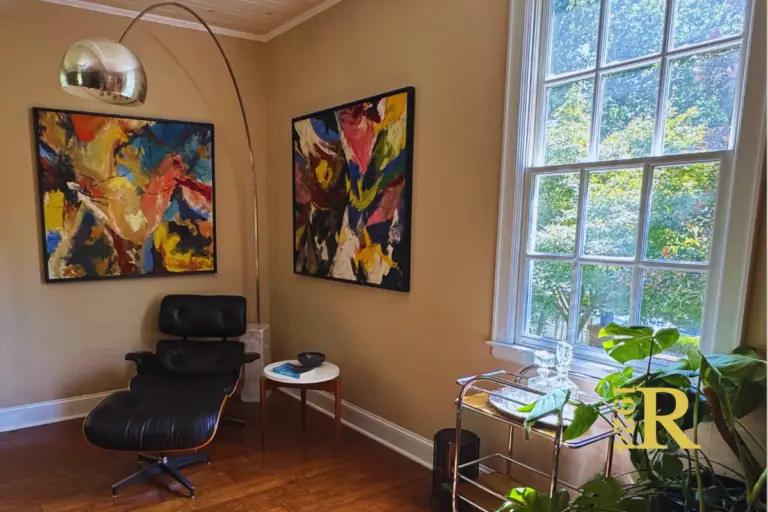
The art is from dealers we trust. Very little in this room was bought new.
Now that my bathroom renovation is wrapping up, it’s time to put the finishing touches on the whole bedroom suite.
The Alcove and the Original Old House Wallpaper Plan
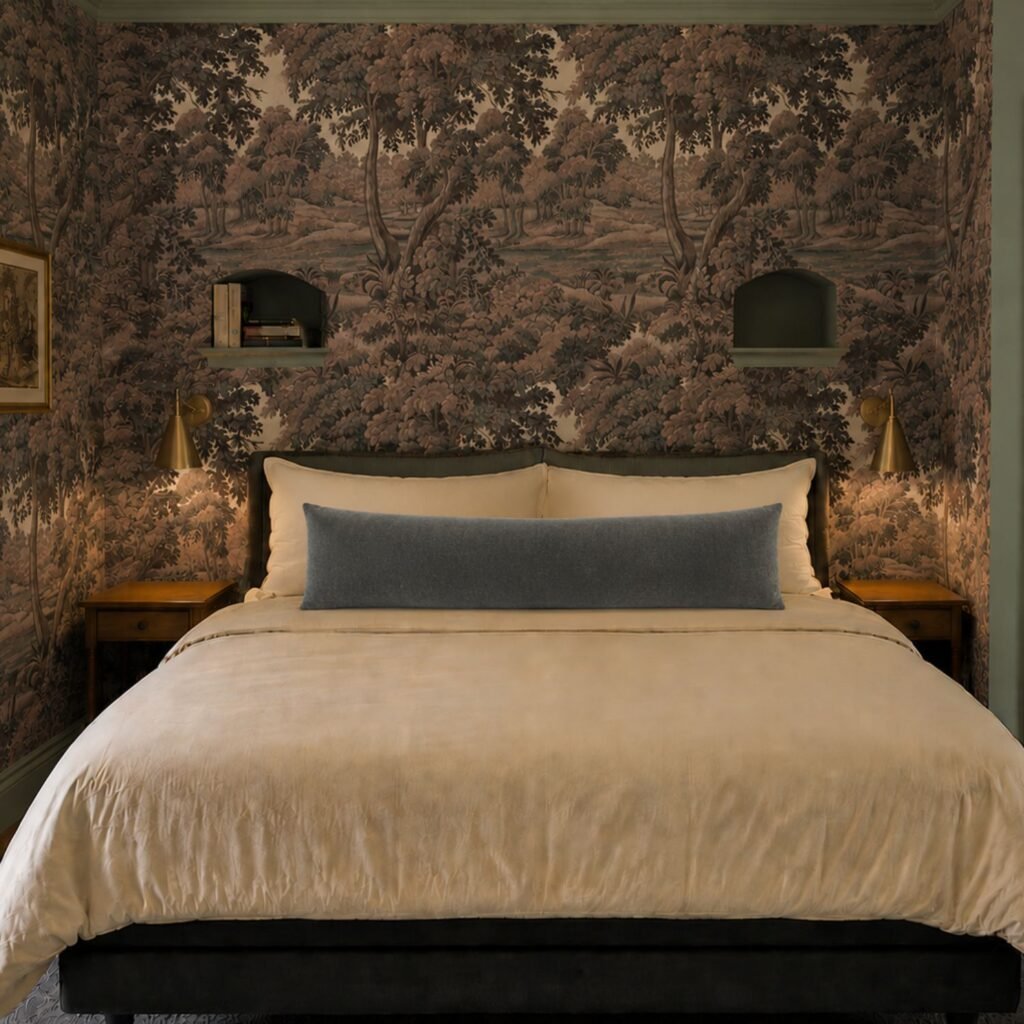
The bed sits in a niche on the interior wall.
It’s framed by the room’s closets (not original) and the original master bathroom (now the laundry room). There are windows on every other wall in the room.
The alcove for the bed is the most cozy, intimate part of a large room.
I knew in our first spring in the house I wanted wallpaper in that cozy spot. Not on all the bedroom walls — the dark paint is doing too much good vibey work to interrupt. Just the alcove. Just behind the bed.
After deliberating obsessively, I bought the painterly botanical Plantasia (Sienna) wallpaper from House of Hackney.
The way I see it: with three walls of windows looking into the forest, the wallpaper should respond to nature. Plantasia is a lush botanical print with hand-drawn trees and foliage in warm earthy tones. House of Hackney wallpaper is made using Forest Stewardship Council (FSC) certified, purposely grown materials, printed with water-based, environmentally safe inks, is PVC-free and made to order, reducing waste.
Buying it was a “makes complete sense on paper” decision I felt incredible about. Then I saw it in a mockup at scale.
My gut said, “I’m not sure”. Immediately. And project Old House wallpaper majik was – just like that – on pause, pending a lightning bolt of certainty.
What I’ve Learned While Living Life in This Room
Here’s what happens when you live your life in a space before making decisions: the rooms advocate for themselves.
Natural light in this bedroom in the morning filters through forest. It’s layered, slightly cool-green in the spring, vibrantly green in the Summer, and cooler gray and sepia in the fall and winter. In the evenings, my lighting game is strong, with a warm directional wash across the alcove wall. At night, the room is very dark, cozy, and very quiet.
Seasonally, what the light does to the room is completely different vibes. Whatever I choose for wallpaper has to work in all of them.
Plantasia is lush, with a fair bit of light filtering through the background. For all its beauty, Plantasia in this colorway belongs in a lot of places.
But I’m not sure it’s the right wallpaper for this room.
So it’s back to the design drawing board for the cozy bed alcove of my Old House dreams.
Choosing Old House Wallpaper That Makes the Room (Even) Better
The Case for Stripes

House of Hackney’s Artist’s Stripe is a “looks handmade”, irregular, slightly wobbly, not-at-all-preppy striped wallpaper.
In the Euphorbia & Alabaster colorway it would nearly disappear into the walls, reading as painted texture more than wallpaper pattern.
I immediately liked it for its painterly, kind of quirky restraint.
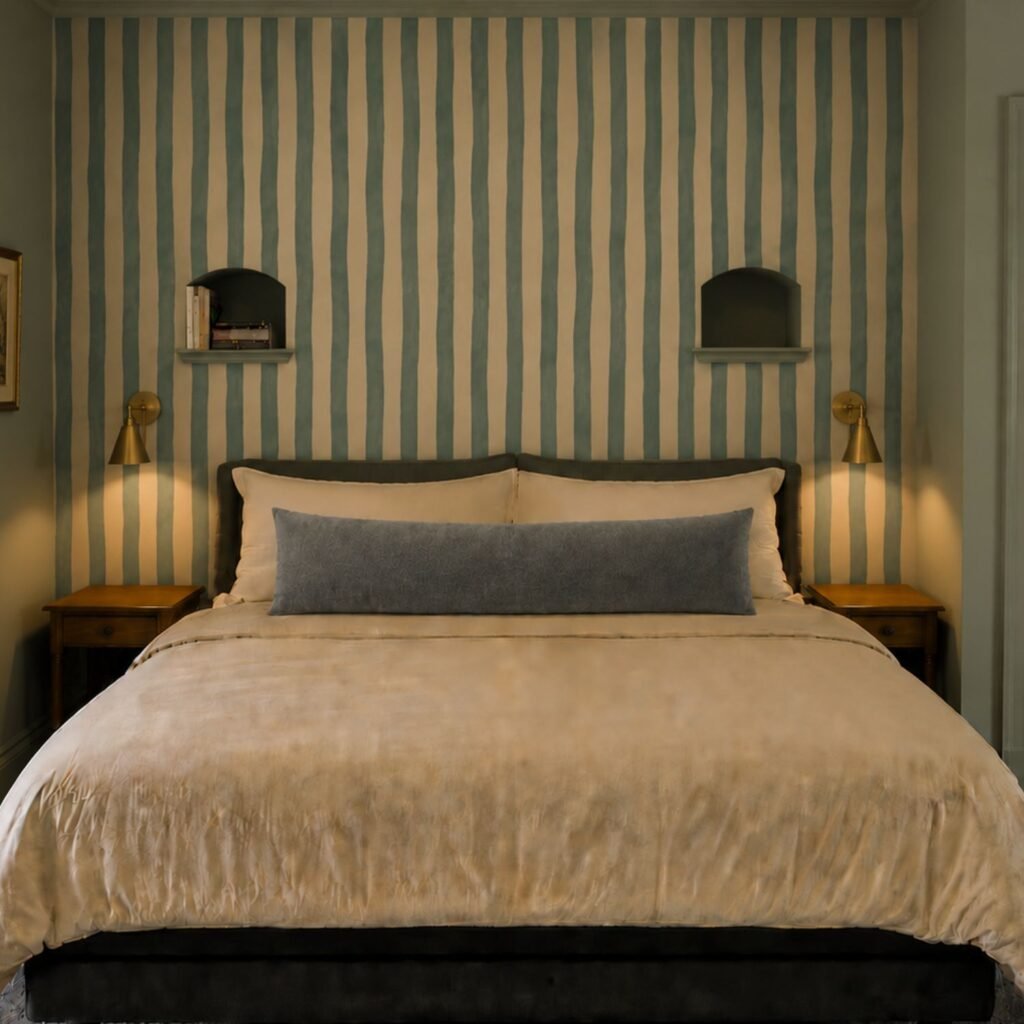
But the mockup showed me something that looked more … hotel-y. Not restrained. Not botanical. Not a natural botanical background.
The stripe in this wallpaper is beautiful. And I love it for a hallway or dressing room. Or another bedroom.
But not this bedroom’s cozy alcove.
Wildly Botanical Old House Wallpaper
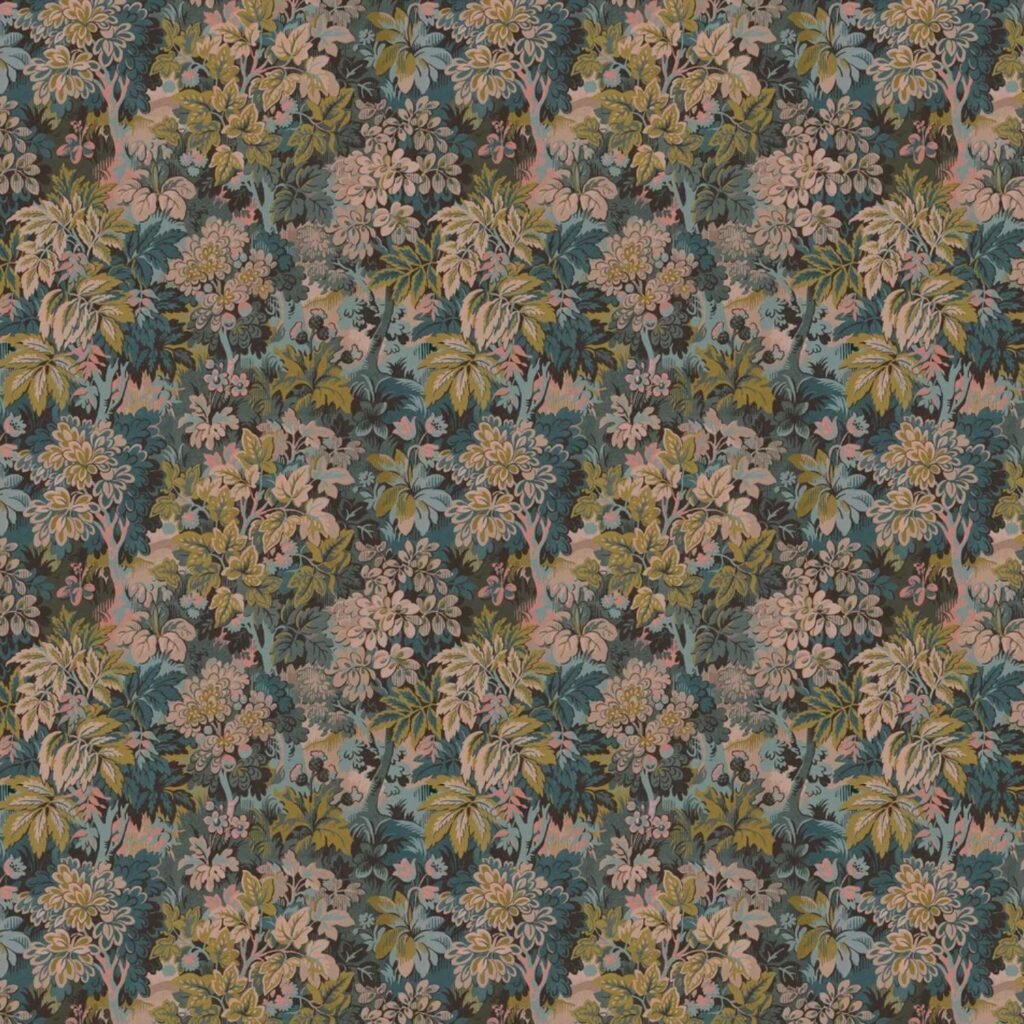
Sidney Paul & Co has a gorgeous botanical in Wildwood.
There are three colorways: Blush (shown here), Blue, and Teal. They’re all great. But Blush is what I really liked for the alcove.
It’s a lush, dark, moody forest botanical, with a handmade look and feel.
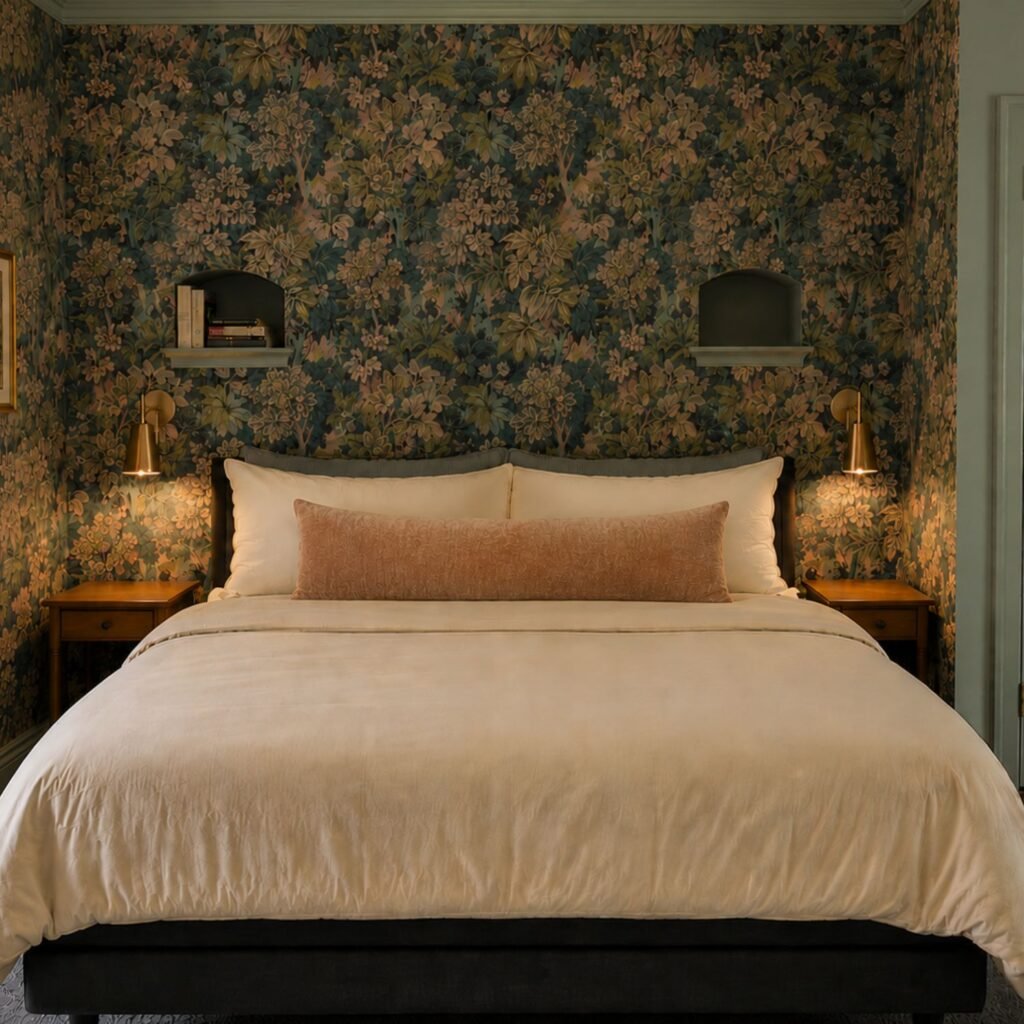
This is much more the atmosphere I want in the alcove. A pattern that makes it feel like I’m sleeping in the forest.
The mockup looks beautiful, but the sample on the wall reads as … too much. Too vibrant. Not restful. Not calm.
It’s out of the running. For this room.
That said, this is Old House wallpaper that is spectacular and I’d highly recommend it if you’re looking for a botanical with a special handmade look and touch.
A Literal Forest
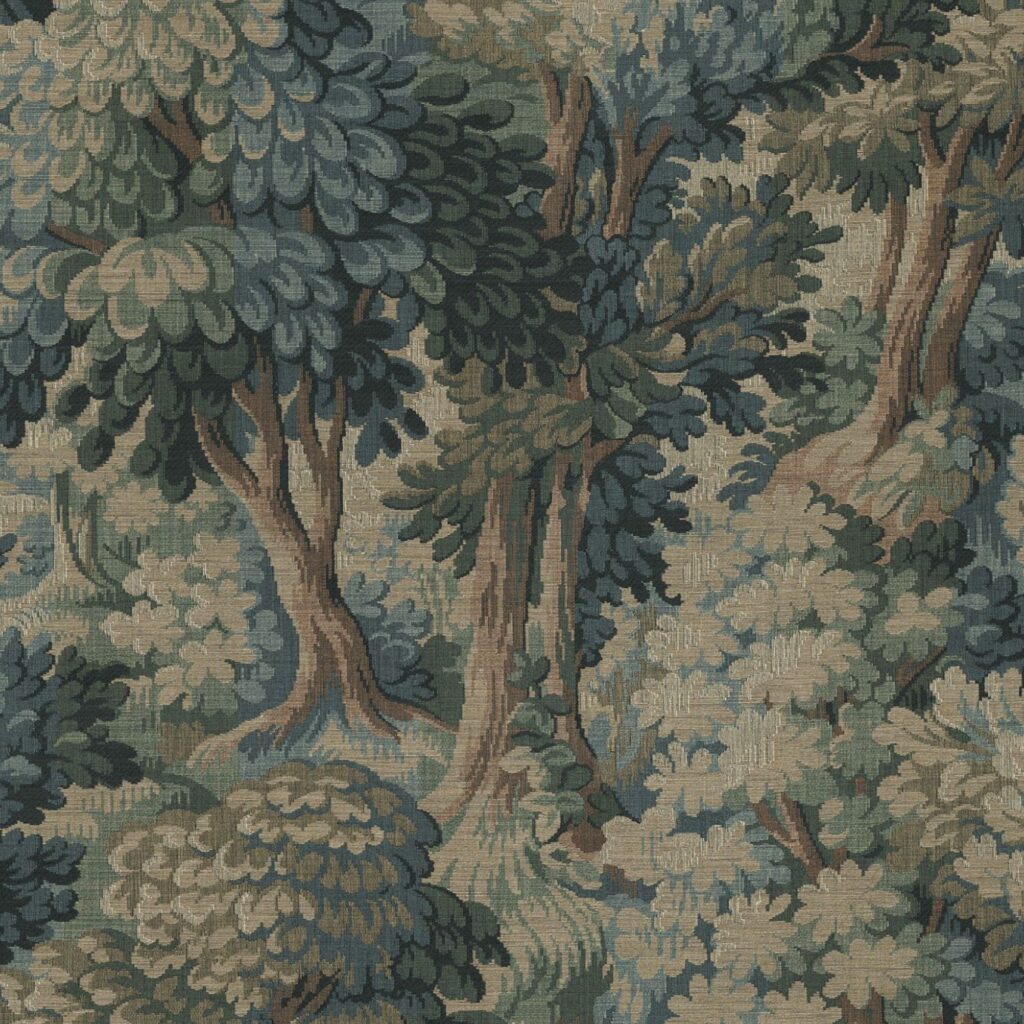
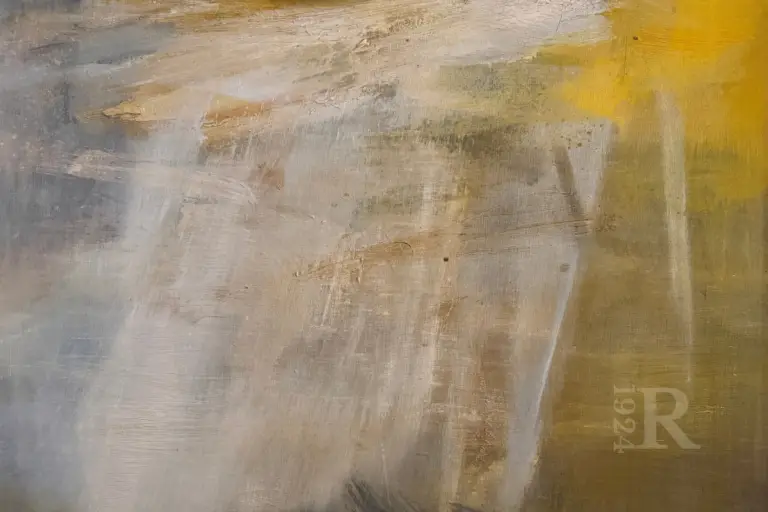
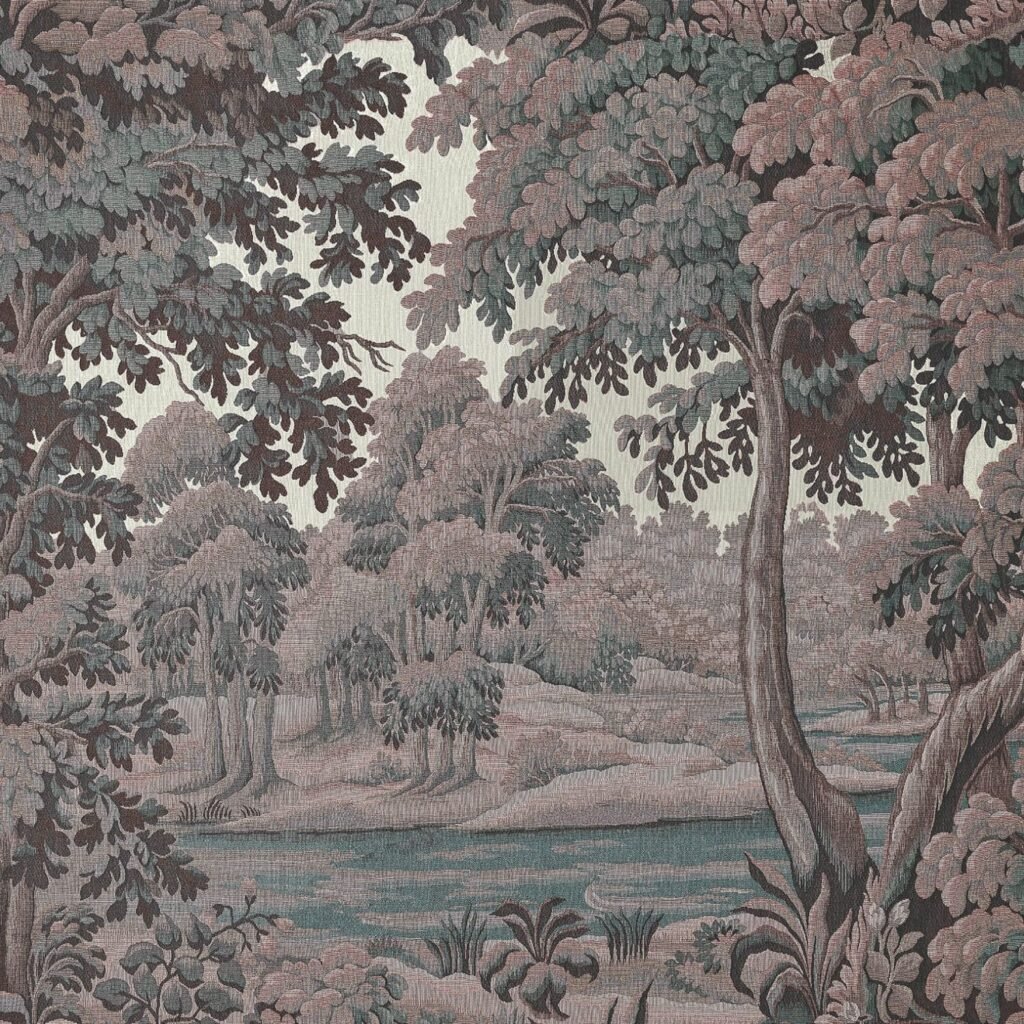
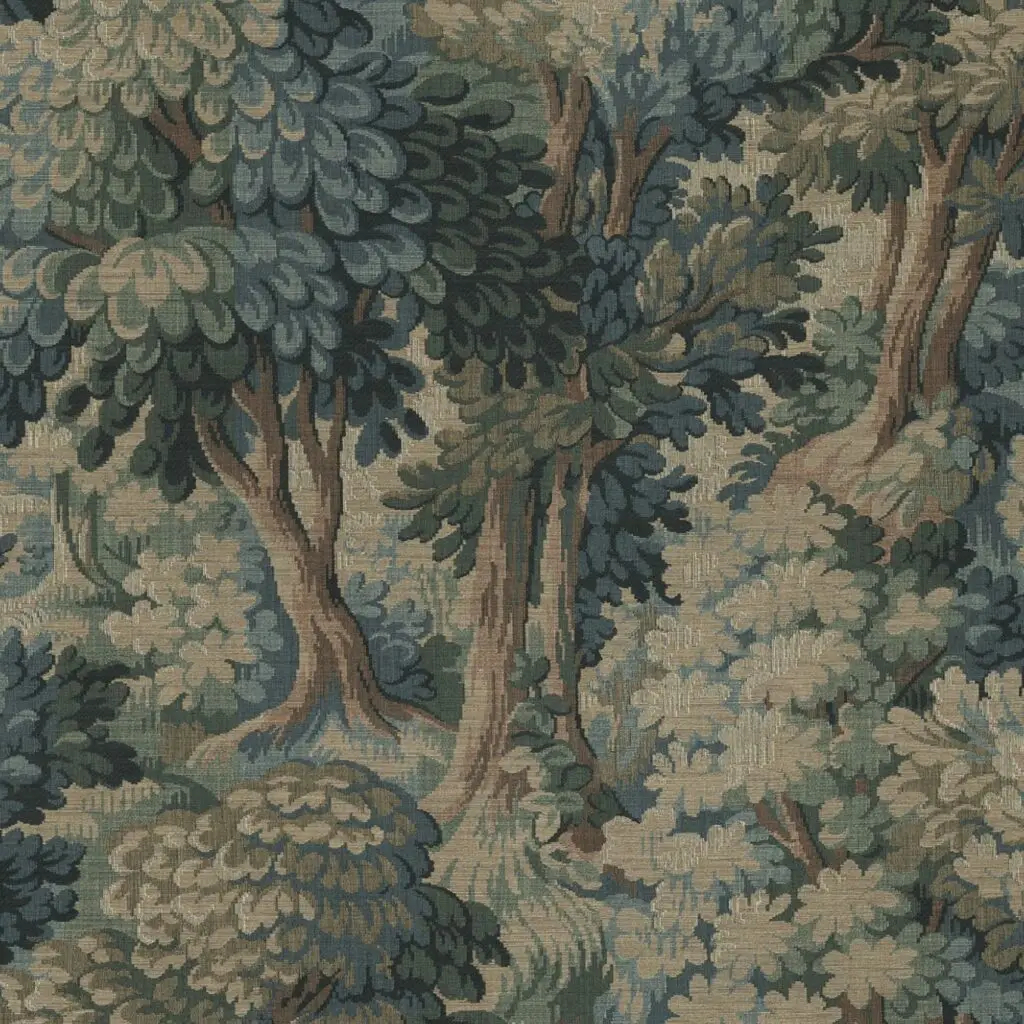
I can’t wait to get my sample from Artscape. Orléans Forest is drawn from an antique French tapestry, gives that look of being in the trees I really want, and all three colorways are lovely.
I have Strand (pictured) and Malva (a charcoal, blue, and cool toned plum/blush) on the way, and Terra is a natural colorway with tan, ochre, and olive.
It’s a wallpaper that brings the forest inside.
In Strand, Orléans Forest has blue-greens, sage, warm brown tree trunks, and reads as something that might have hung on a wall in this house in 1924.
That historical resonance feels good. But I haven’t gotten the sample yet so the jury is still out.
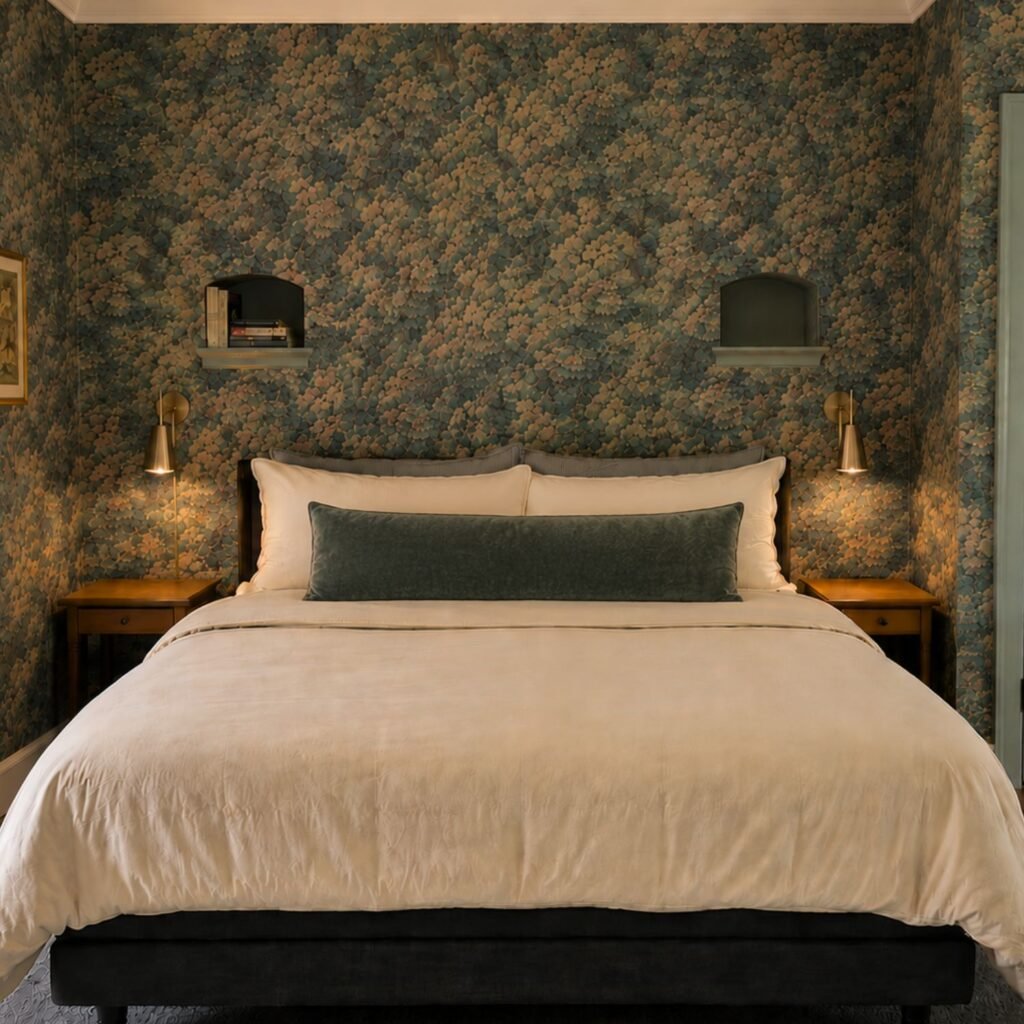
I also like that Artscape started as a San Francisco Bay area window film company and then added wallpaper in 2025. Their wallpapers are designed in Portland, sustainably printed in Sweden, and offer both paste the wall and peel and stick.
Next Steps in the Old House Wallpaper Choice
I haven’t committed … yet. I’ve got a Plantasia sample stuck on the alcove wall in painter’s tape so I can see it at night and first thing in the morning. I fell back in love almost immediately.
The Artscape Orléans Forest samples are on the way. I want to see both in the actual room, next to the Plantasia sample before I decide.
This room is built from old things. The wallpaper I choose will look like it belongs, or will break the spell with on-purpose modernity.
That’s not indecision. That’s living with the design process. That’s the design process working correctly. The room has been teaching me what it wants, and the lesson is consistent: don’t rush the decision you’ll live with every day.
There’s also a pink ceiling coming — after some plaster restoration. That’s another layer, and I’m not ready to know yet how it changes everything.
Old House Wallpaper Rules: Making Great Decisions
- Live in the room first. Not for a week. Live through all the seasons once, if you can. Understand how the light changes at different times of day, what the room feels like at night, what you actually look at from the bed. How the room feels in Spring, and what you need it to feel like in Winter.
- Let the room make the argument. Old houses have existing material DNA — floor color, trim profiles, the quality of the plaster, hardware that’s been there for a hundred years. Wallpaper should belong to that lineage, give a design-forward tension. It shouldn’t clash. It shouldn’t override the good bones and history.
- Your gut is more honest than your mood board. As soon as I had doubts about Plantasia, I paused. That information was worth more than every hour I spent loving it on paper. And way better to pause than to go ahead and install, only to regret it when the wallpaper is hung.
- The most beautiful pattern you find can still be wrong for the room. Wildwood is a beautiful Old House wallpaper. It will show up somewhere at Rosemont, just not in this room.
Shop this story
Some links may be affiliate links, meaning I may earn a small commission if you choose to purchase – at no extra cost to you.
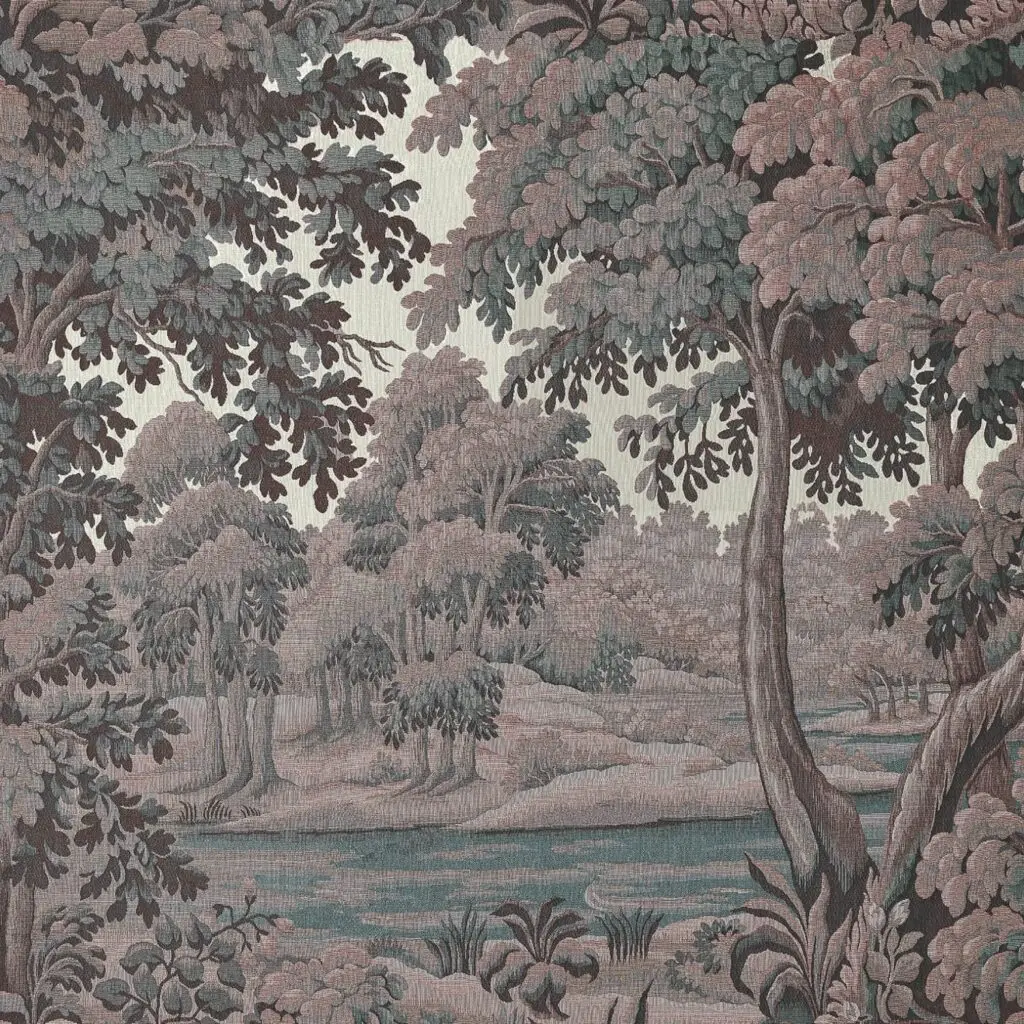
The original choice. Beautiful botanical.
Still a front-runner.
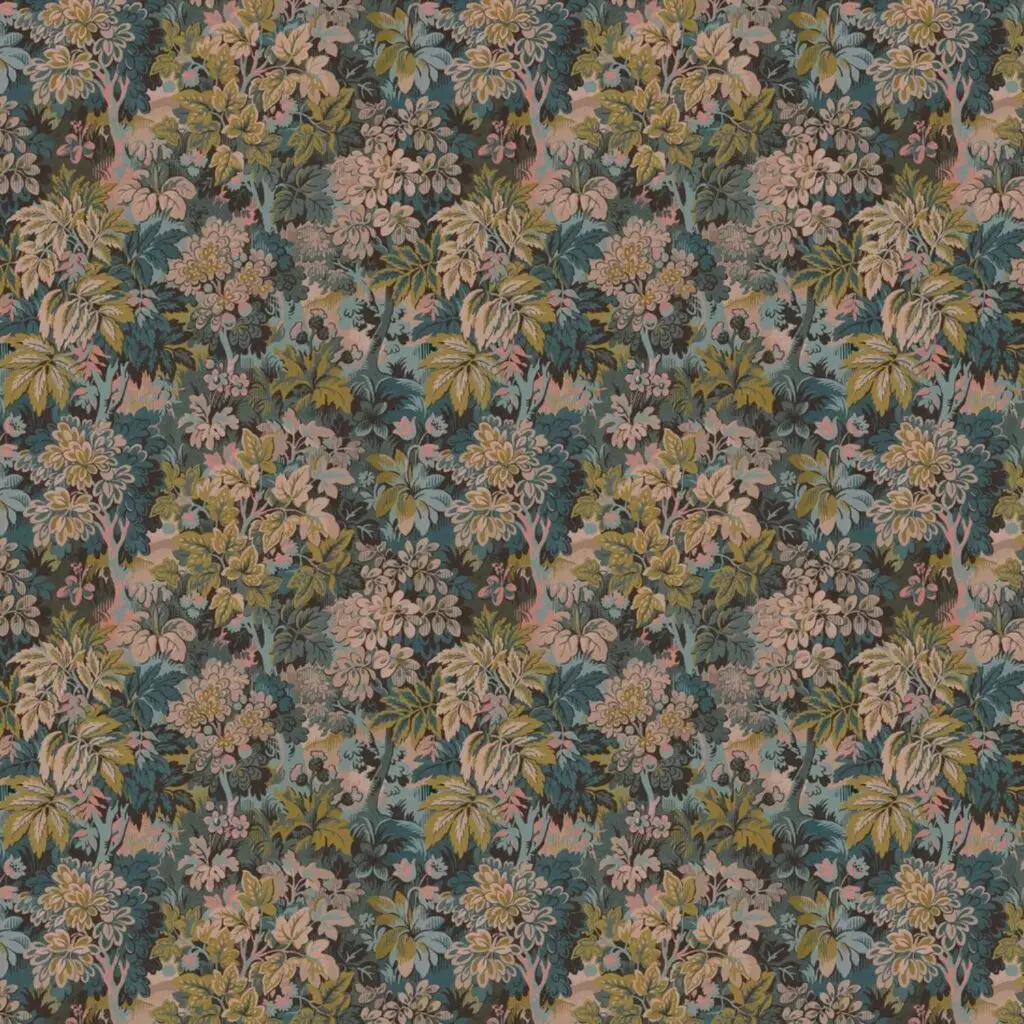
Dense dark botanical. Out of the running for this room (but incredible for somewhere else).

FAQ
How do you choose wallpaper for an old house?
Live in the room first, if you possibly can. Old houses have existing visual DNA — floors, hardware, trim profiles, the quality of light through original windows. The right wallpaper belongs to that DNA. Start with the room’s purpose and the feeling you want to have when in the room, not a wallpaper catalog.
Let Pinterest inspire you, consider the era of the house without limiting yourself to historical prints. Then choose the pattern that complements the architecture and delivers the feeling without feeling trapped by historical accuracy.
Should you wallpaper the whole bedroom or just one wall?
It depends on the room. In bedrooms with strong architectural features, dark paint, substantial furniture, or original details, a single accent wall or recessed niche is often enough.
A focused application creates impact without overwhelming the space. Full-room wallpapering can be beautiful, but it works best when the wallpaper is the primary design feature.
Should you hire a professional wallpaper installer?
If you’re investing in premium wallpaper, especially in an older home with plaster walls, professional installation is worth considering.
Rather than relying just on helpful reviews, I recommend starting with a certified installer through the Wallcovering Installers Association (WIA). WIA members have access to training, industry standards, and the “I’ve done this before” specialized knowledge that can be especially valuable when working with historic homes.
Search for a certified wallpaper installer here: https://www.wallcoveringinstallers.org/consumers/locate-a-wallcovering-installer/
Even if you ultimately choose a different installer – or decide to DIY it – it’s a great place to find the people in your area who love wallpaper as much as you and have the professional wall covering experience to do the job right.
What wallpaper works in a dark old house bedroom?
Choose patterns that still have presence in low light. Dense botanicals, historical prints, murals, and tonal stripes can work beautifully because they maintain visual interest throughout the day.
Avoid patterns with very little contrast, which can disappear in the shadows. Always order samples and move them around the room before committing. What looks bright online can feel completely different under warm bedside lighting.
Is paste-the-wall wallpaper better than peel-and-stick for old houses?
In most cases, yes. Paste-the-wall wallpaper is typically the better choice for older homes with plaster walls.
Peel-and-stick wallpaper can struggle on uneven surfaces and may even damage plaster or old paint when removed. Paste-the-wall papers are more forgiving, easier to position, and generally provide a more professional-looking installation.
There are four main ways to apply wallpaper, categorized by how the adhesive is activated or how you get the paper to stick to the wall.
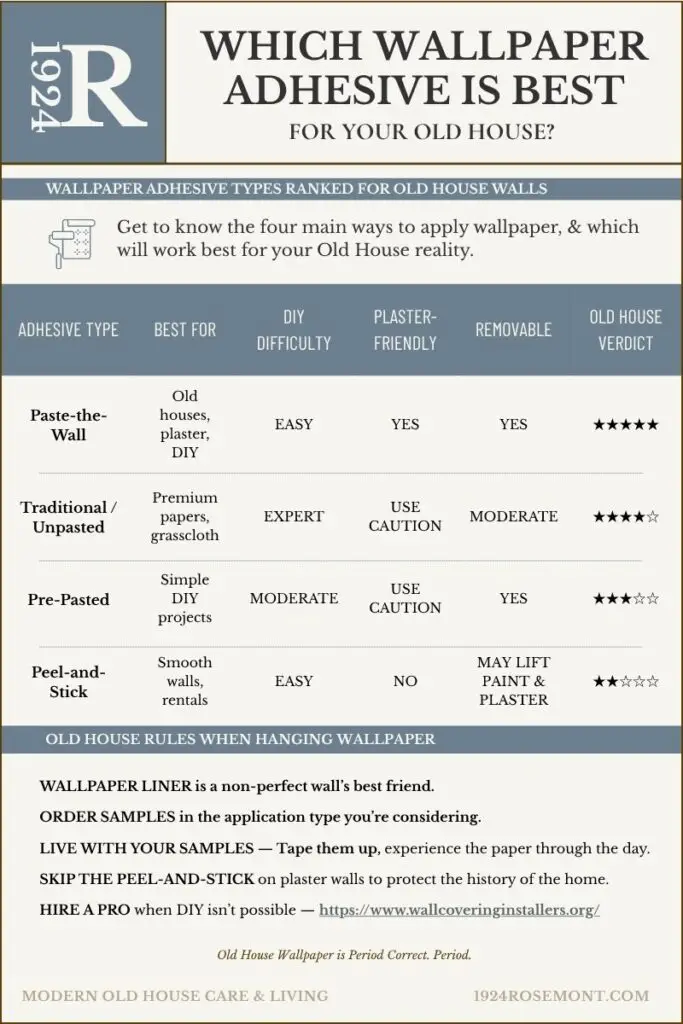
Paste-the-Wall Wallpaper
🏆 Best for: DIYers, beginners, old houses
Old House Verdict: ★★★★★
This is my first-choice option for most old-house projects. Non-woven paste-the-wall papers are forgiving, repositionable during installation, and typically handle the slight imperfections found in older walls better than peel-and-stick products.
Traditional (Unpasted) Wallpaper
🏆 Best for: Premium papers, grasscloth, professional installation
Old House Verdict: ★★★★☆
Traditional wallpaper offers excellent durability and works beautifully with many high-end materials. The tradeoff is a steeper learning curve and a messier installation process.
Pre-Pasted Wallpaper
🏆 Best for: Straightforward DIY projects
Old House Verdict: ★★★☆☆
Pre-pasted wallpaper can work well, but I generally find paste-the-wall papers easier to install and adjust. It’s a perfectly reasonable option, just not my first choice for older homes.
Peel-and-Stick Wallpaper
🏆Best for: small spaces, smooth & trouble-free walls, accent walls, projects
Old House Verdict: ★★☆☆☆
Peel-and-stick wallpaper is basically a giant sticker. It can struggle to stick to textured plaster, and removal might pull paint or damage fragile surfaces. I avoid it in older homes unless the walls are exceptionally smooth and in excellent condition.