
This Post is for you if…
- You want a mirror in your vintage bathroom that looks like it’s meant to be there
- You want a shortlist of bathroom mirrors that work (and why they work)
- You need the Old House Rules for the right size mirror for your vanity … and how to place it
- Start Here: 5 Bathroom Vanity Mirrors That Work in Classic Bathrooms
- See Vintage & Investment Mirror Finds
- (Even) More Great Old House Bathroom Mirrors
- The Mirror Shopping Mistake Most People Make
- Measure RIGHT, Buy Once: Vanity Mirror Sizing Cheat Sheet
- Mirror Hanging Mistakes to Avoid in Old House Bathrooms
Start Here: 5 Bathroom Vanity Mirrors That Work in Classic Bathrooms
If you only look at a handful of mirrors, this roundup represents stellar options for your old house bathroom.
Each one is sized and styled for a bathroom vanity, and right at home in a century-house.
Some links may be affiliate links, meaning I may earn a small commission if you choose to purchase — at no additional cost to you. I only share products I genuinely like, would use in my own home, or have researched and feel confident recommending.
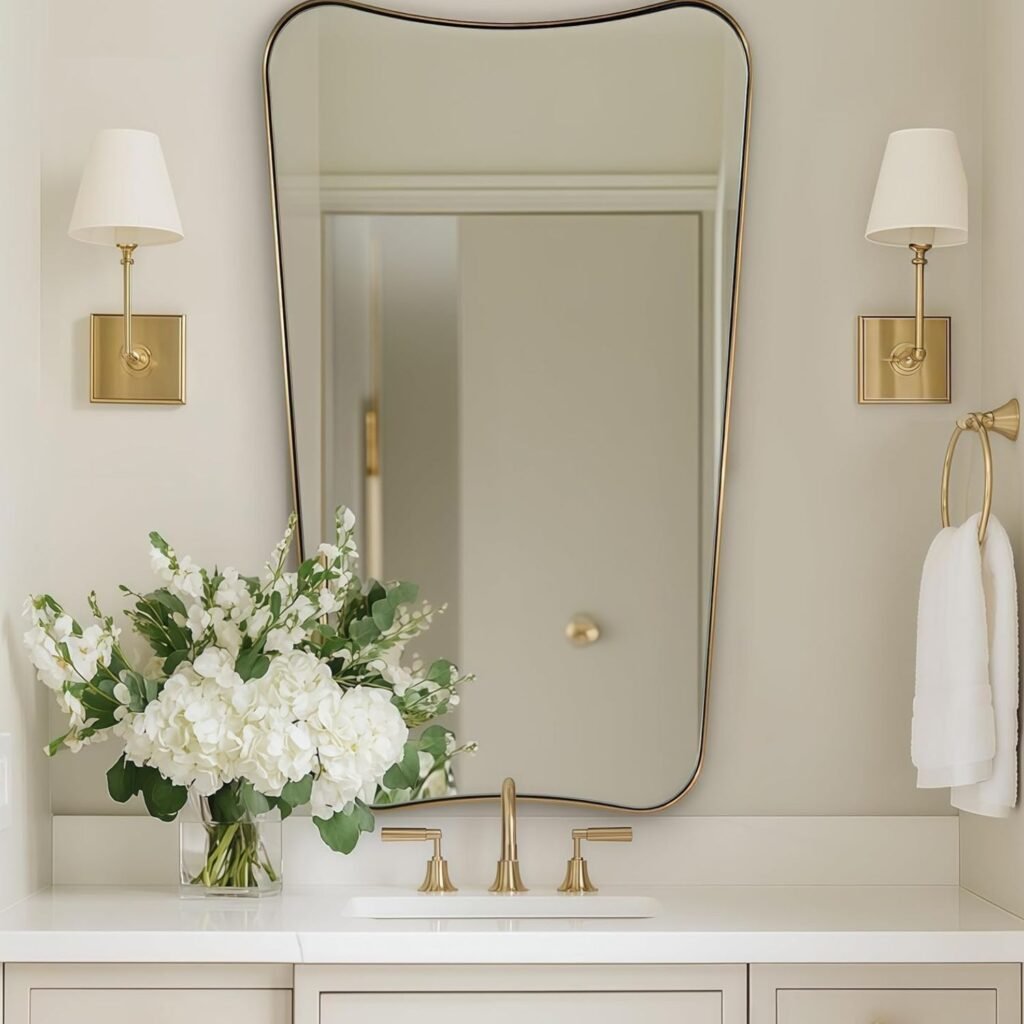
Shield Brushed Brass-toned Bathroom Mirror
Designed for the bathroom. The brushed gold frame is warm but not fussy, and the proportions — taller than wide — work over most single vanities in the 24–32″ range.
Price: under $250 Finish: brushed brass/gold Shape: shield, taller-than-wide Best for: single vanity 24–32″
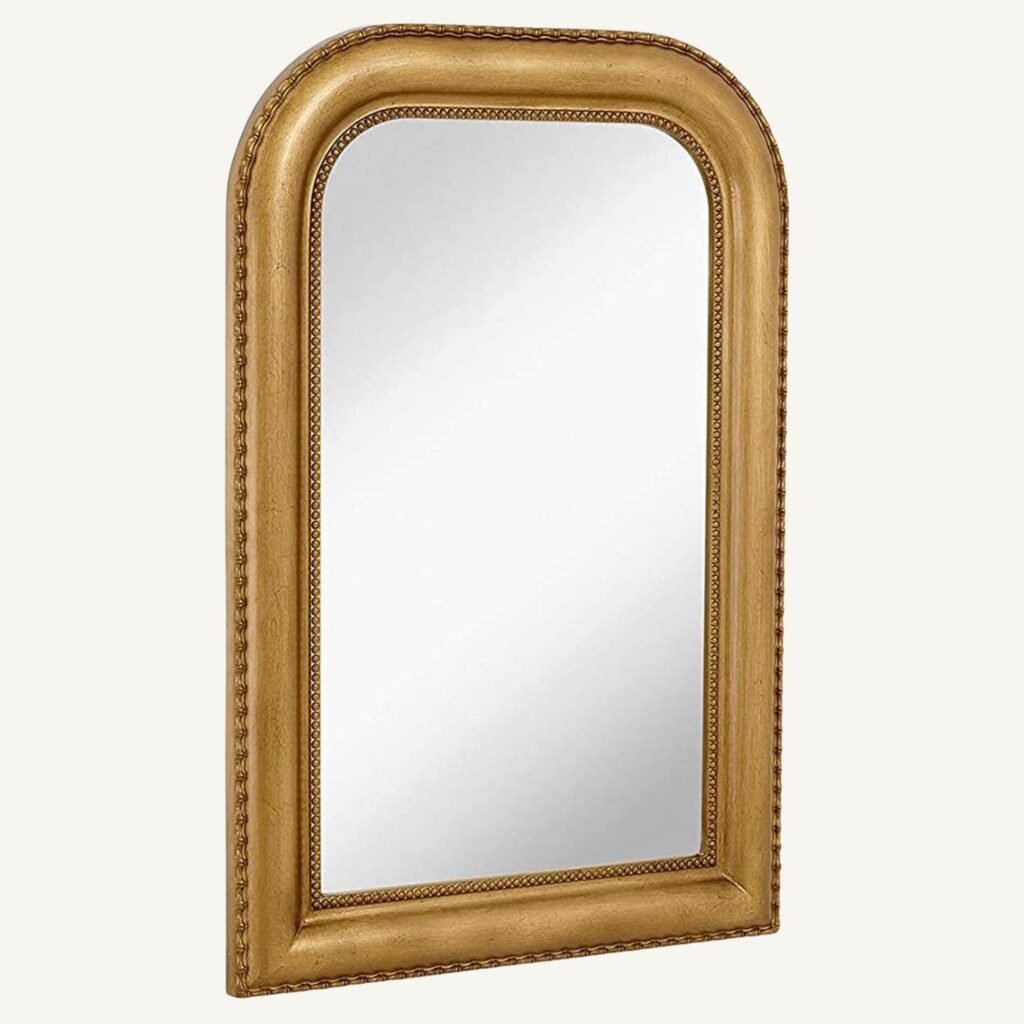
Arched Gold Framed Mirror
The arched top does real work. It gives this mirror a period look that reads right in a vintage bathroom without being precious about it.
Price: under $250 Finish: gold Shape: arched Best for: single vanity
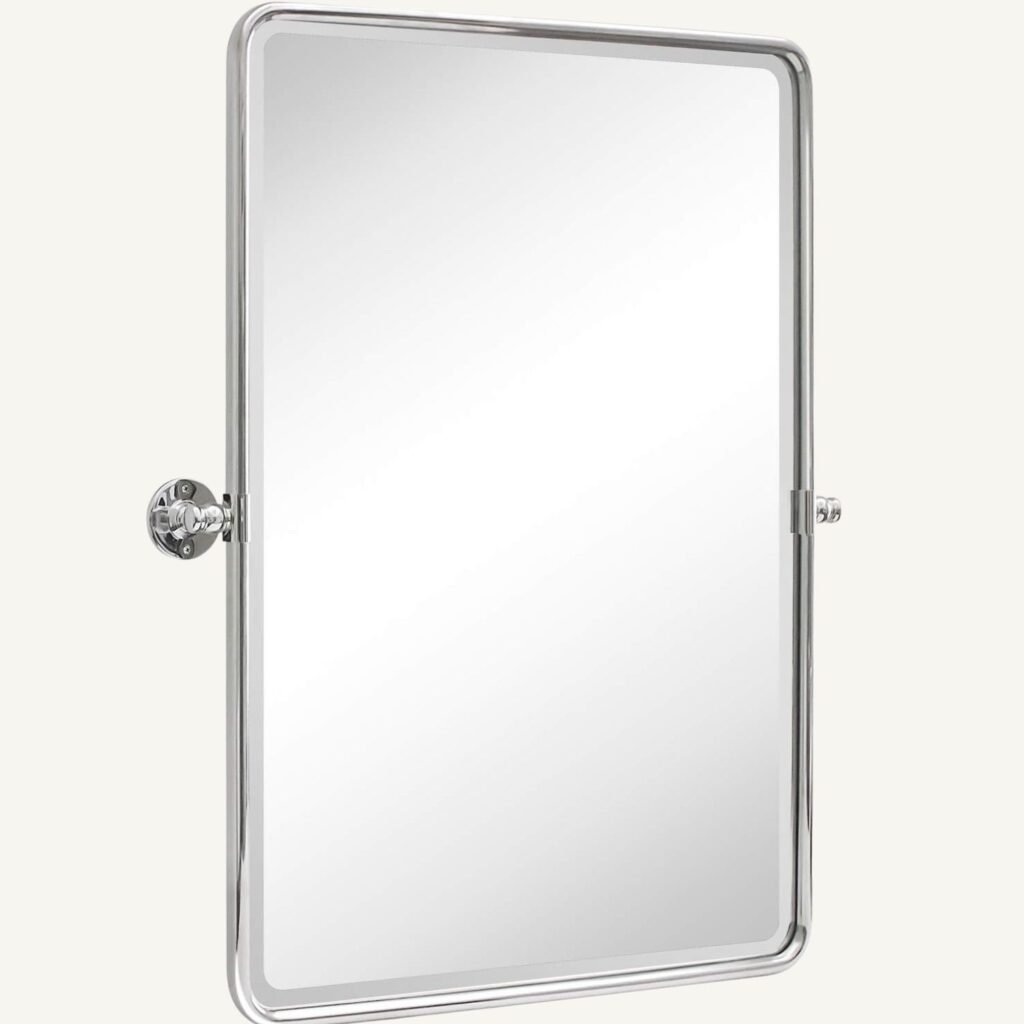
TEHOME Chrome Pivot Rectangle Mirror
The pivot solves a real problem. Tilt it to suit every height in the house. Best in a clean, functional bath rather than a maximalist one.
Price: under $150 Finish: chrome Function: pivot / tilt Best for: a clean, functional bath
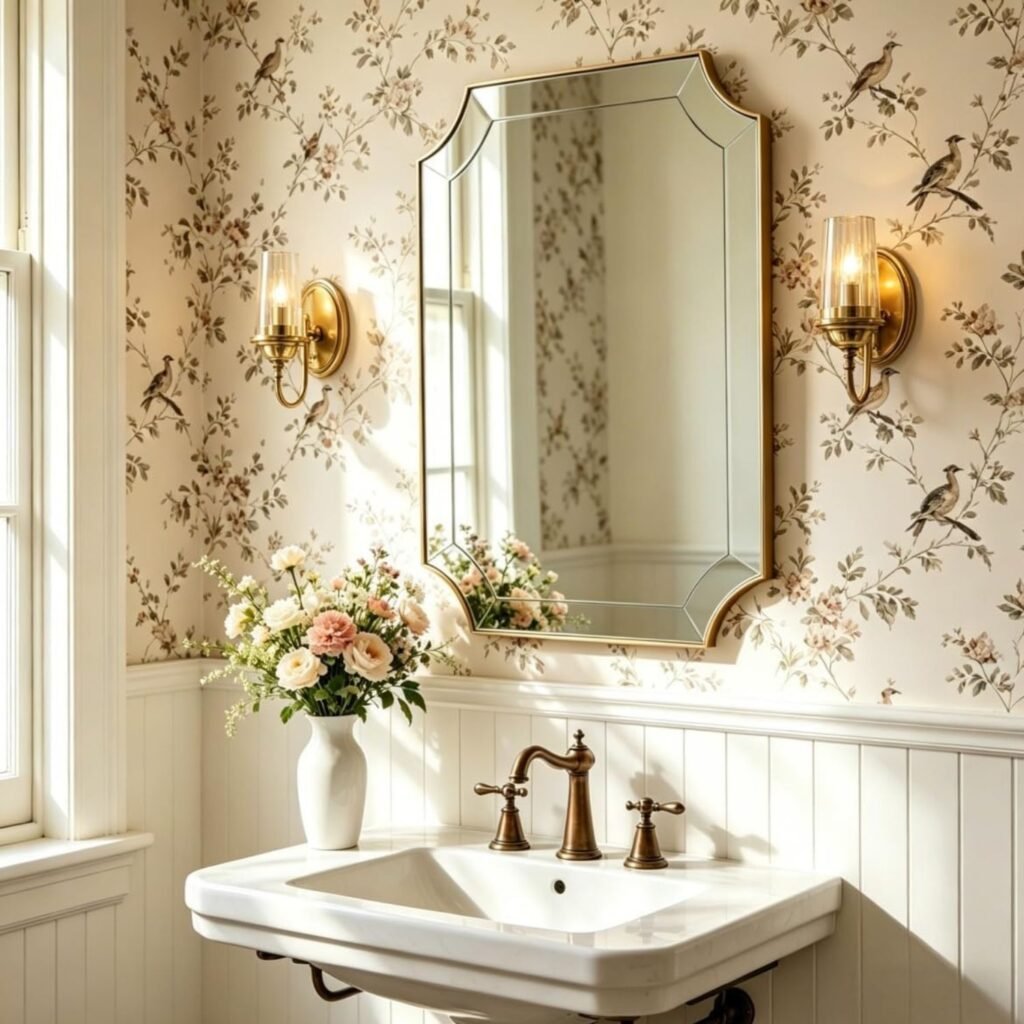
Scalloped Mirror
The scallop is the period detail. A scalloped edge reads old-house in a way a plain framed rectangle just doesn’t.
Price: under $200 Shape: scalloped Best for: cottage / vintage bath
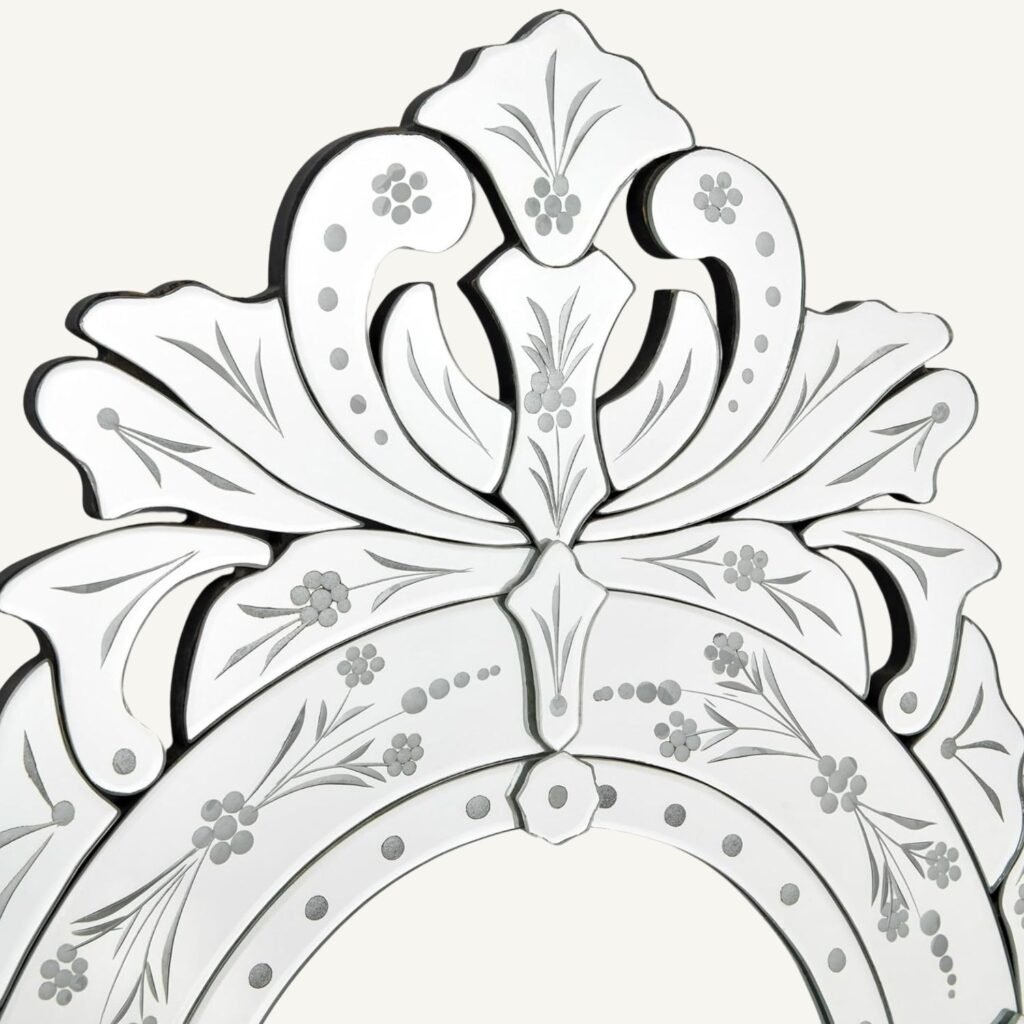
Floral Etched Mirror
Venetian character, far less money. The etched detail gives it Venetian-glass presence for significantly less, and it comes in sizes to fit many vanities.
Price: under $200 Style: Venetian / etched Sizes: multiple
Want MORE bathroom mirrors that actually work?→ Shop the full story
Need the full sizing guide? → Download the Cheat Sheet
Back to Table of Contents
Vintage & Investment Mirror Finds
My rule of thumb?
If you’re lucky enough to find a great vintage mirror at a reasonable price, buy it. It might not be there tomorrow (but your regret will).
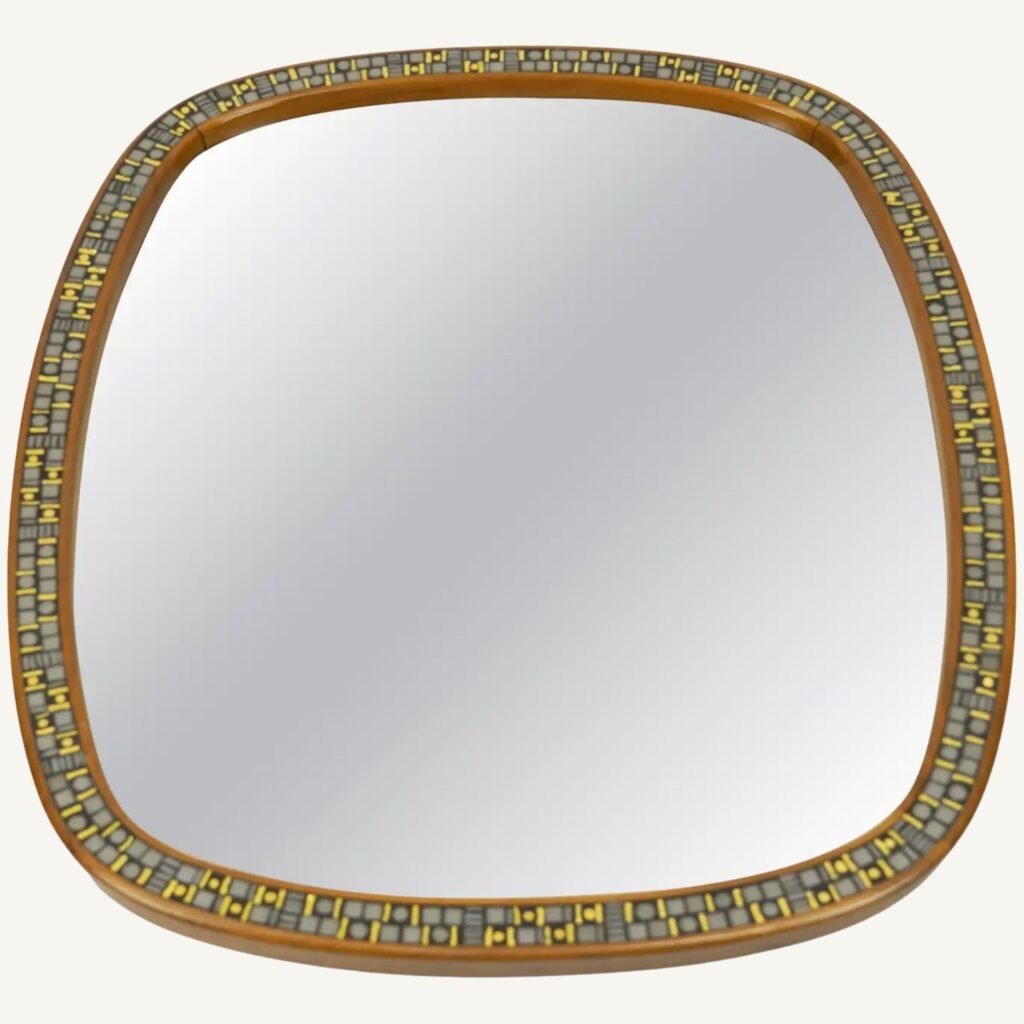
Mid-Century Cherry Mosaic Inlay Mirror
One of a kind, and I love it. The craftsmanship and mosaic inlay make this special for an eclectic or mid-century old-house powder bath.
Source: 1stDibs Style: mid-century mosaic Note: one of a kind
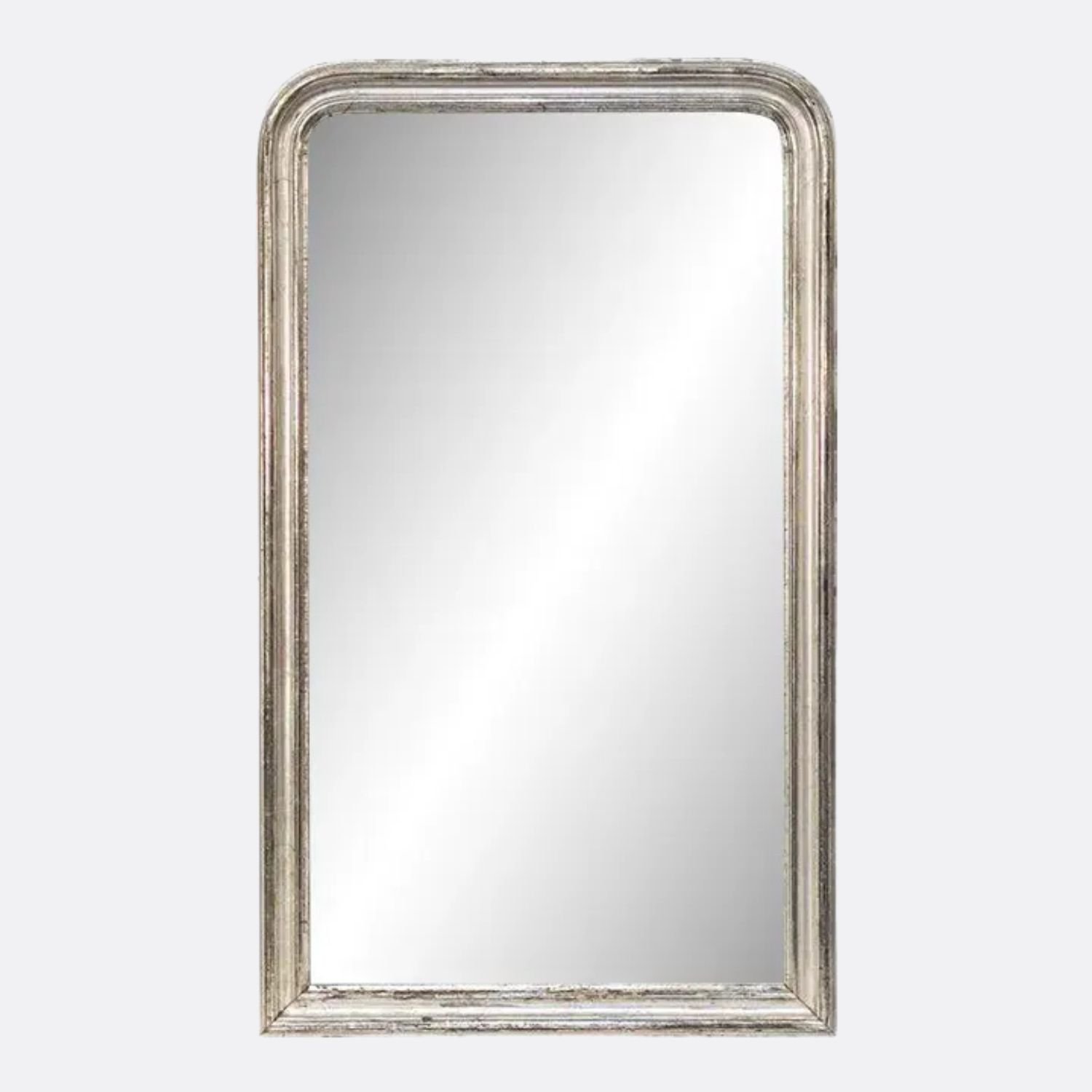
Large Louis Philippe Silver Gilt Mirror
The top of the range. Aspirational reference — what the category looks like at the top of the price-list and in the true antique category. An absolute stunner in a maximalist bathroom.
Source: Chairish Style: Louis Philippe silver gilt Best for: a maximalist bath
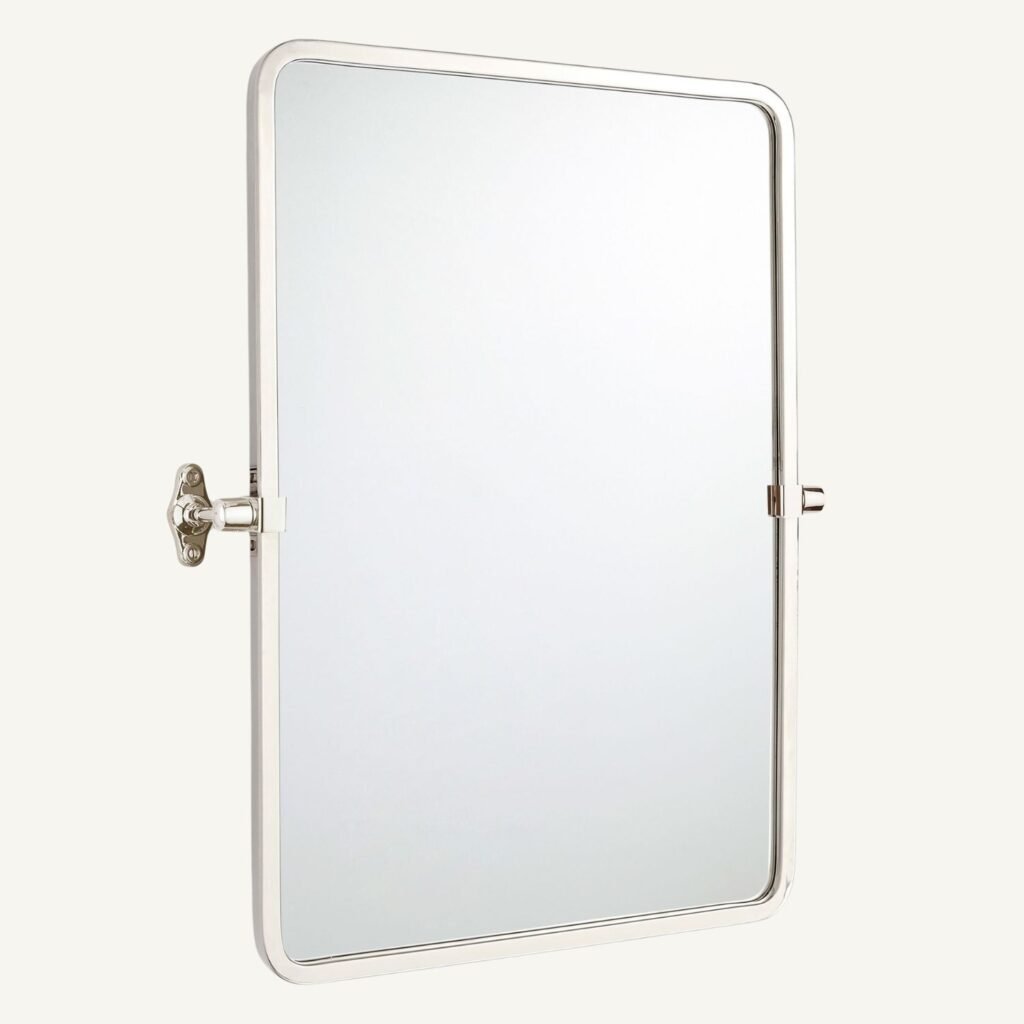
Tolson Rounded Rectangle Pivot Mirror
New, but reads vintage. A pivot mirror with a vintage look in three finishes, including a clean polished nickel.
Source: Rejuvenation Finishes: three, incl. polished nickel Function: pivot
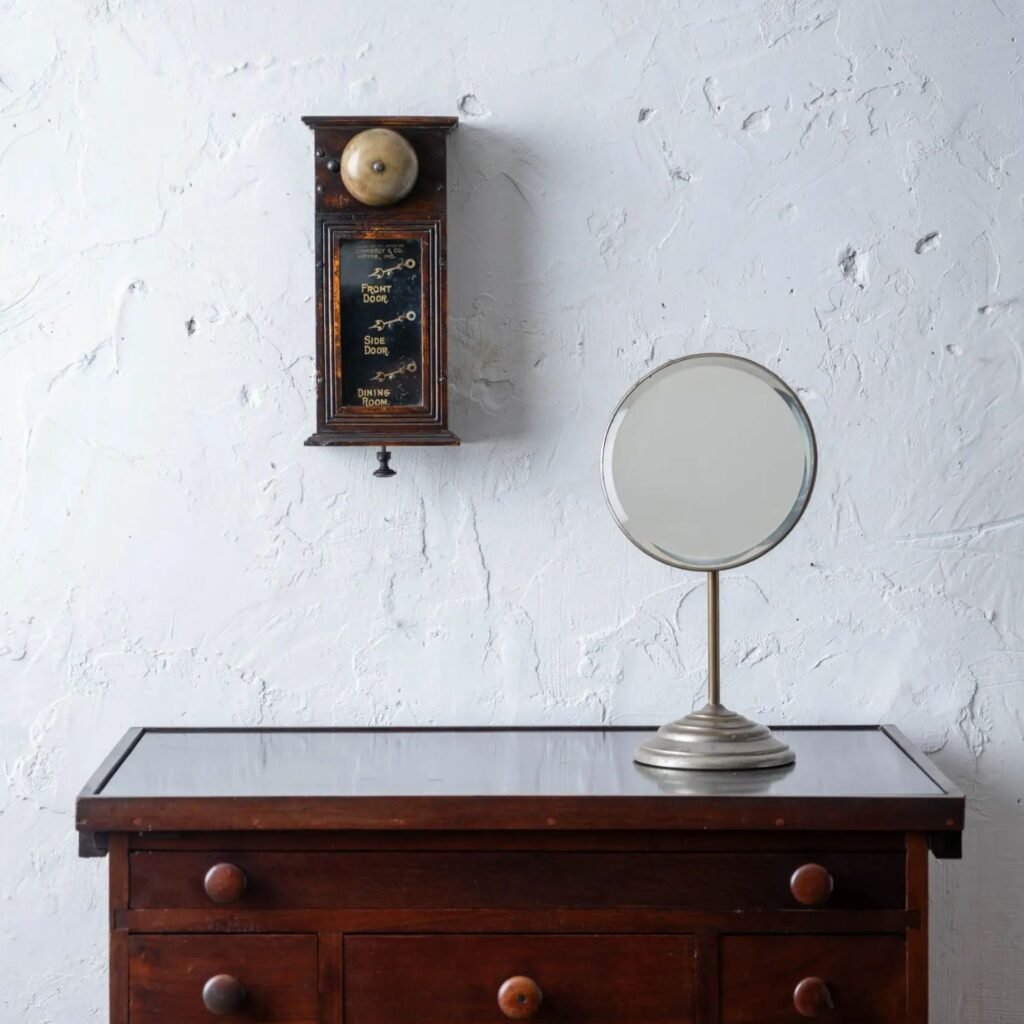
Nickel-Plated Shaving Mirror, 1920s
Living with the house, not decorating it. An original shaving mirror, patina and all — the real thing, not a reproduction.
Source: Chairish Era: 1920s original Finish: nickel-plated
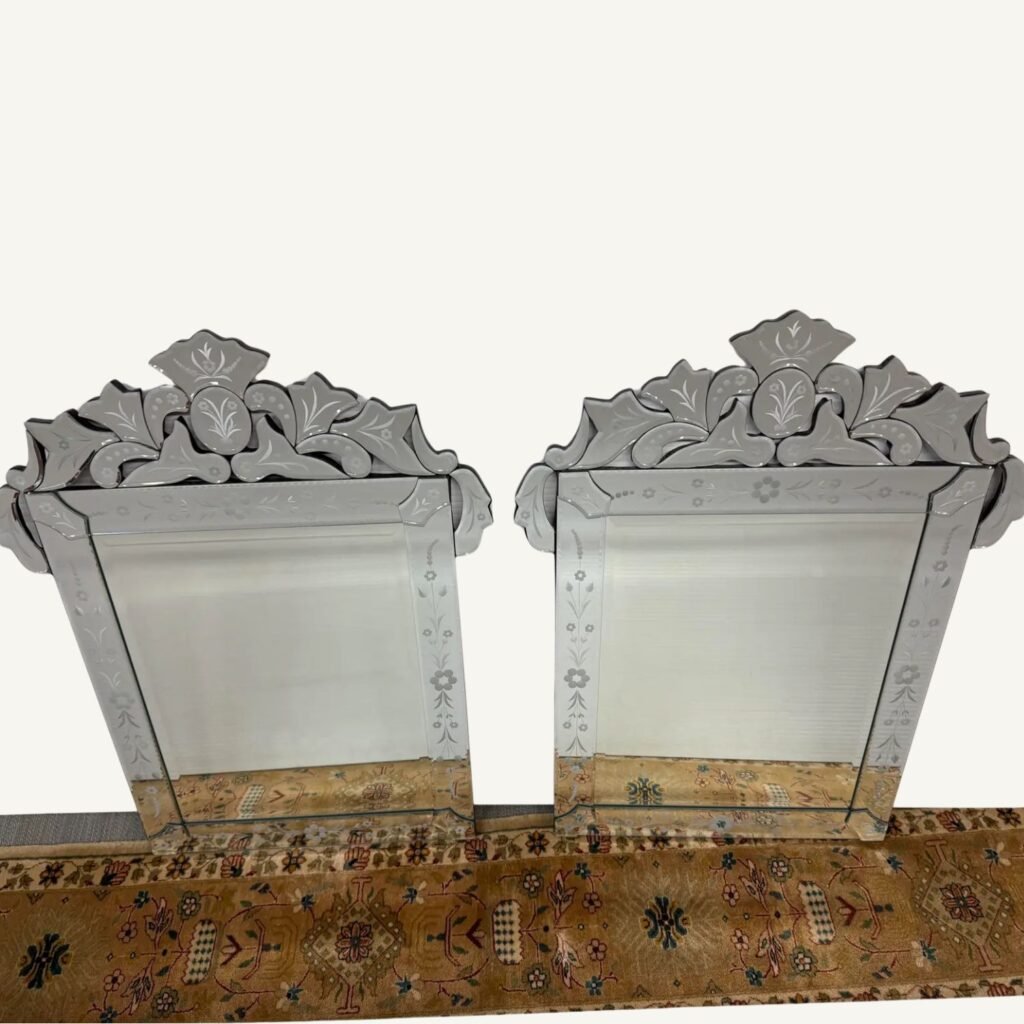
Venetian Cut & Etched Glass Mirrors, Pair
Stunning over a double vanity. A vintage pair of etched Venetian glass reads as genuinely old in a way almost nothing new can replicate.
Source: Chairish Style: Venetian etched glass Best for: a double vanity
Related: The Power of Good Mirrors in Great Rooms: An Old House Lover’s Guide
Back to Table of Contents
More Great Bathroom Mirrors For Your Old House Powder Bath and Vanity
Other right-at-home options, inspired by vintage and antique mirrors.
Some gorgeous looks-for-less, a pop of the perfect blue, and pivots that work for every member of the house, no matter their height.
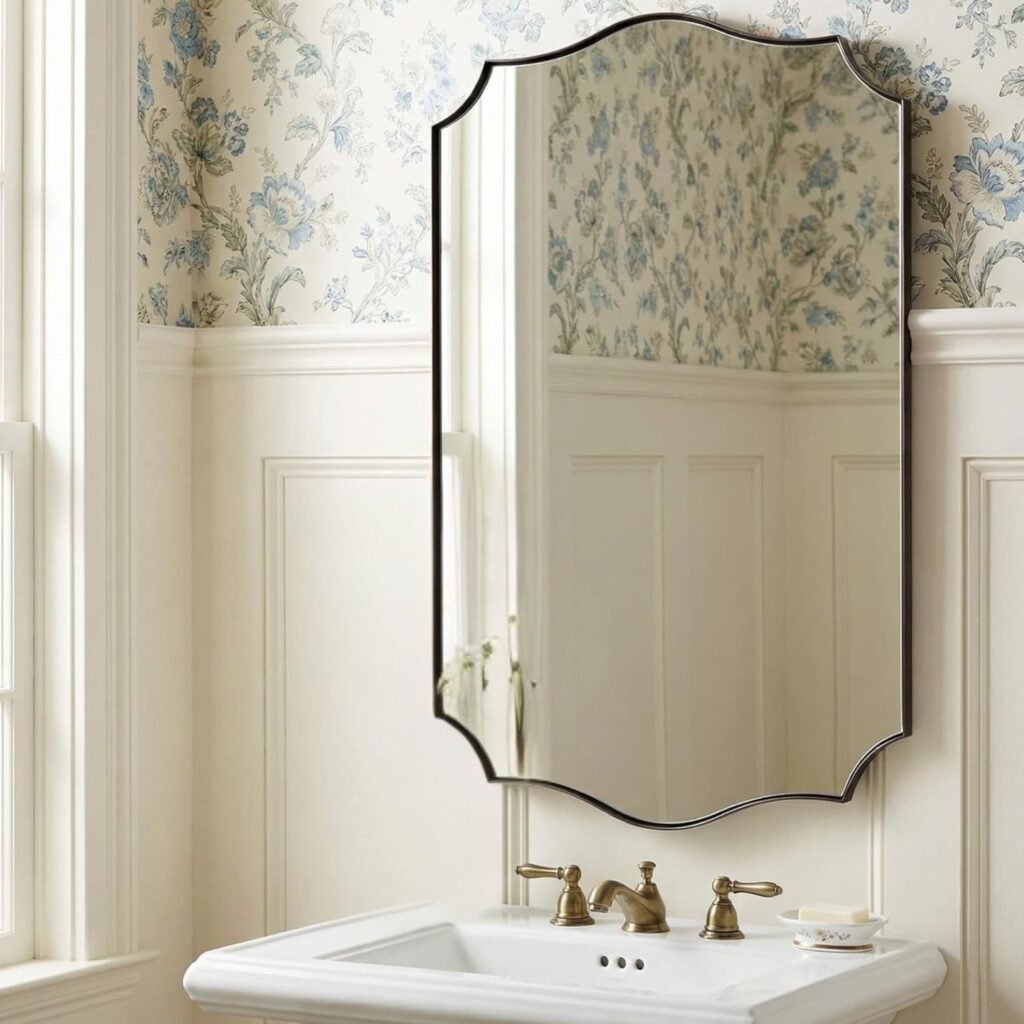
Bronze-Tone Vintage-Look Wall Mirror
Simple, clean, under $200. I appreciate the simplicity and clean lines of this vintage-inspired find.
Price: under $200 Finish: bronze tone Style: vintage-look
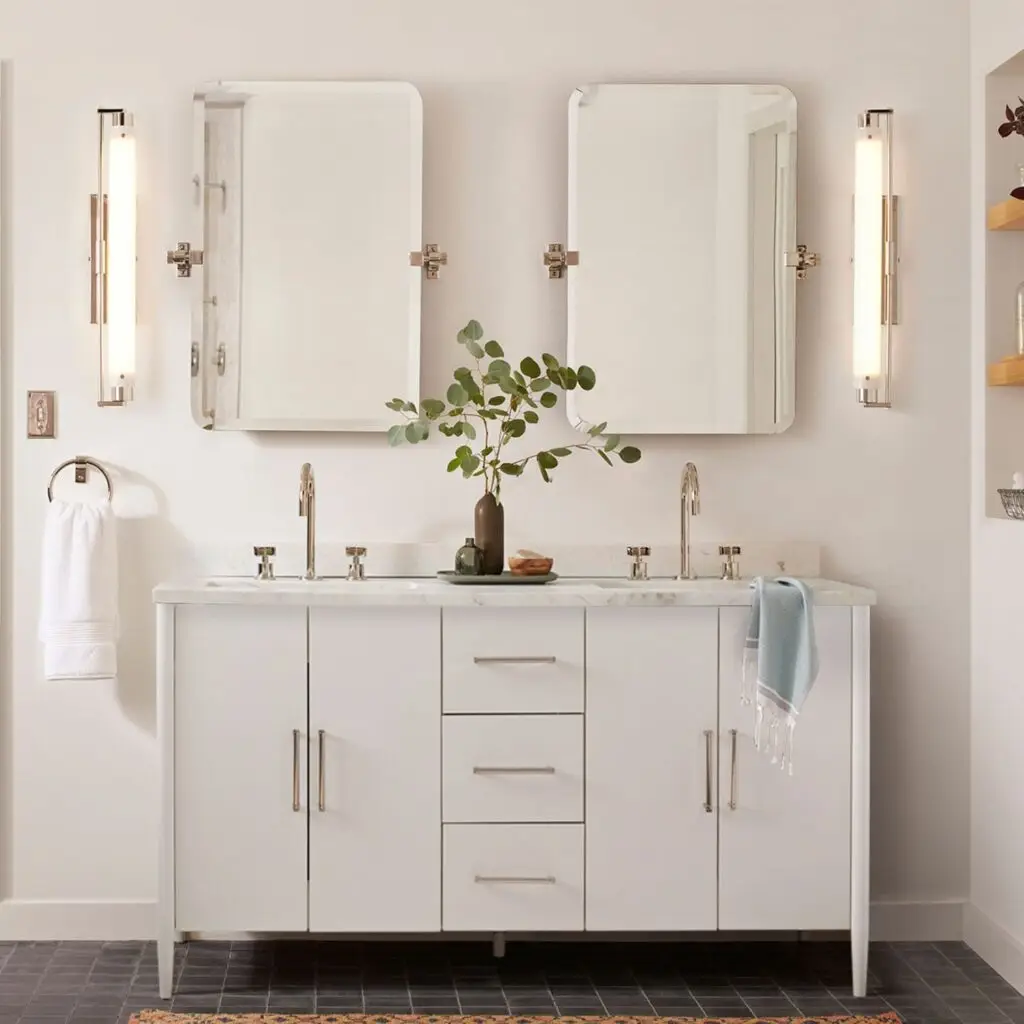
West Slope Frameless Rounded Rectangle Pivot Mirror
Frameless, but with period sensibility. The pivot arms and rounded corners give it more old-house character than a stationary frameless rectangle.
Source: Rejuvenation Shape: rounded rectangle Function: pivot
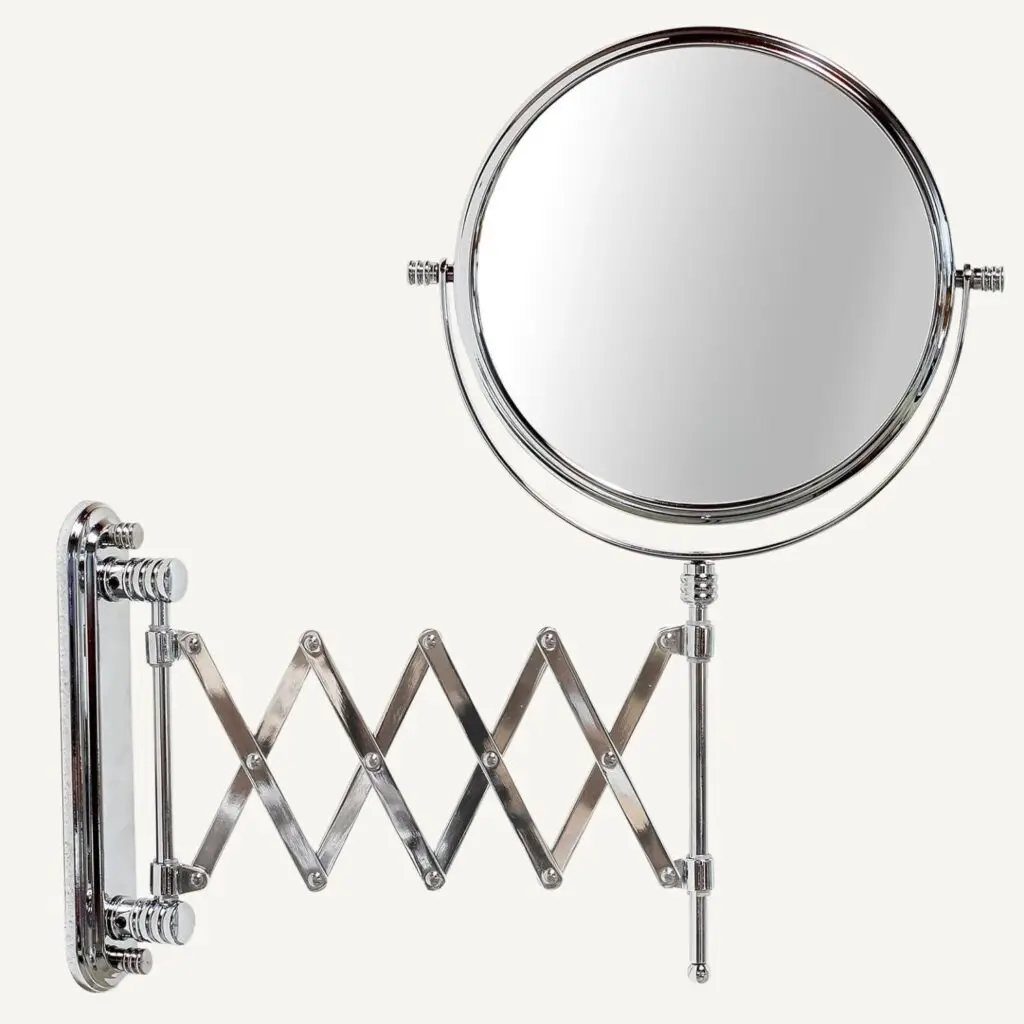
Deco Brothers Extendable Wall-Mount Mirror
Functional and correct, under $40. A classic wall-mount shaving mirror that adds close-up utility alongside your primary vanity mirror.
Price: under $40 Function: extendable shaving Best for: beside a vanity mirror
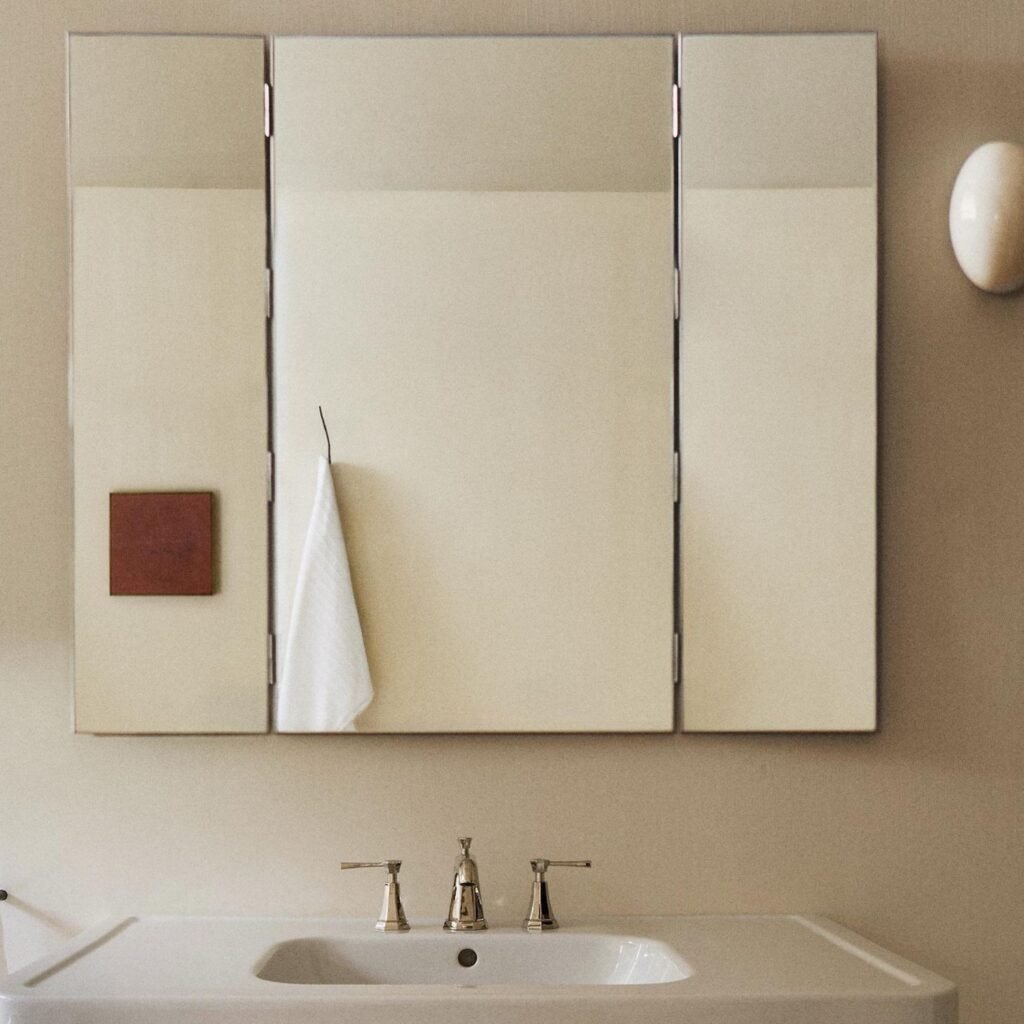
TEHOME Chrome Pivot Rectangle Mirror
Simple and functional. Perfect for a vintage bath and practical in smaller rooms.
Finish: chrome Function: pivot Best for: smaller bathrooms

Carlotta Mirror, Cornflower Blue
A soft blue that pops. A wonderful soft shade of blue that works in a simple bathroom and just as well in a maximalist space.
Source: Ballard Designs Color: cornflower blue Style: framed
Back to Table of Contents
The Mirror Shopping Mistake Most People Make
Too many people go shopping for the mirror before they really know their numbers.
Sure, you’ve got a budget in mind…but do you know the dimensions that matter when shopping for the “just right” vanity mirror?
Number ONE number? The width of your vanity.
Without that, you’re shopping blind. The most common outcome is a mirror that’s either too wide (which makes the vanity look smaller and the wall look crowded) or too short (which makes the whole arrangement look like an afterthought).
Know your numbers first. Budget and vanity width.
Then shop.
The Vanity Mirror Sizing Rules
These aren’t suggestions. They’re the rules that prevent expensive mistakes.
Mirror-to-Vanity Width
Your bathroom mirror’s width should be 70–90% of your vanity width. Never wider than the vanity itself. Leave 2–4″ of breathing room on each side.
If you’re unsure whether to go wider or narrower within that range: go slightly smaller. A mirror that’s 75% of your vanity width looks intentional. Bathroom mirrors that graze the vanity edges looks like a measuring error.
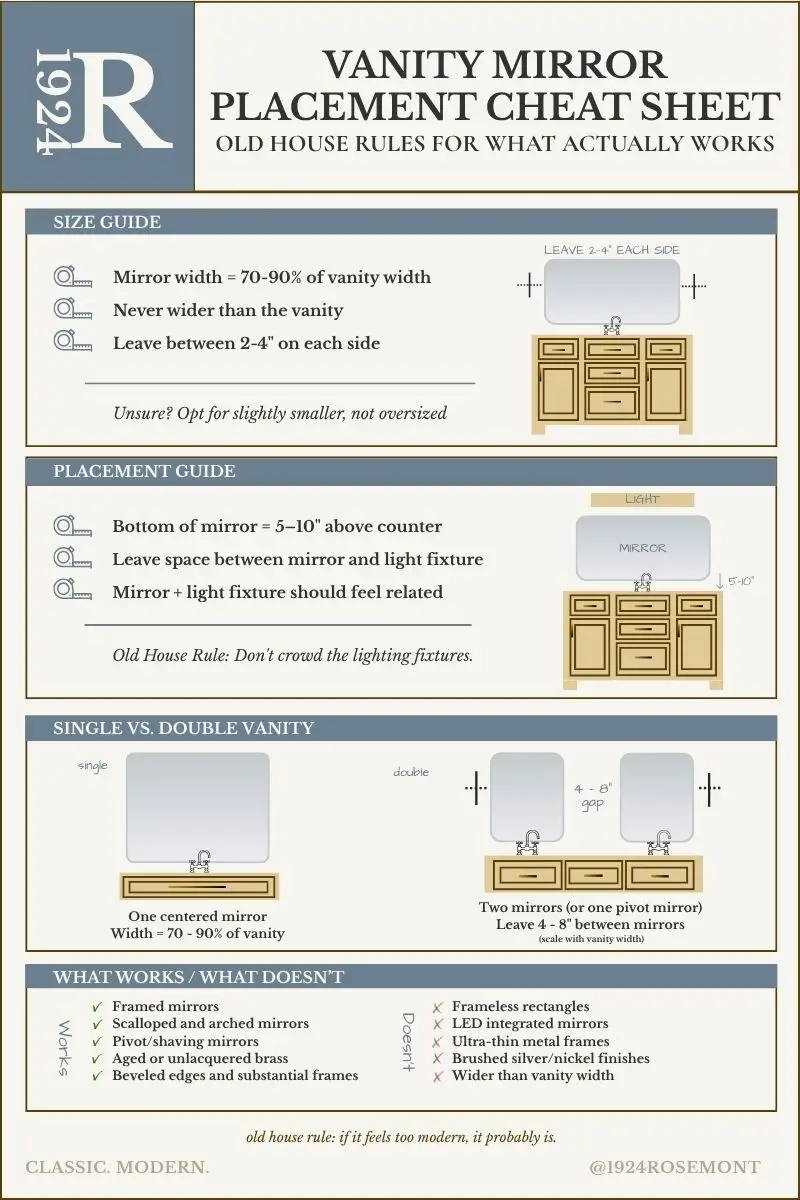
A guide to help you source your “just right” mirror
Mirror-to-Vanity Height
There’s no single perfect Old House Rule on height the way there is on width. What actually matters:
Bottom of mirror: 5–10″ above your counter. This gives you clearance for faucets, toiletries, and the visual breathing room the vanity needs.
Top (or sides) of mirror: clear the light fixtures by at least 2–4″. Your mirror and light should feel related … like they were chosen together … not like your mirror is crowding your light fixtures.
You’ve got to let both have their breathing room so they can (literally) shine.
Proportions: A mirror that’s drastically wider than it is tall starts to look squat over a standard single vanity. For most single-sink situations, a mirror that’s taller than wide, or at least close to square, feels more balanced. Wide horizontal mirrors work best over wider vanities (36″+).
When in doubt, let your vanity’s proportions guide your mirror proportions.
Single vs. Double Vanity Mirror Sizing
Single vanity: One centered mirror. Width = 70–90% of vanity.
Double vanity: Two bathroom mirrors, one centered over each sink. Leave 4–8″ between them, or scale the gap with your vanity width. The wider the vanity, the more gap you can afford.
Unless you find a vintage or design-forward option you can’t live without, skip the one oversized mirror spanning both sinks. It can read as a cost-saving decision, not a design decision.
Related: 15 Bathroom Accessories That Won’t Ruin the Old House Look
Mirror Mistakes to Avoid in Old House Bathrooms
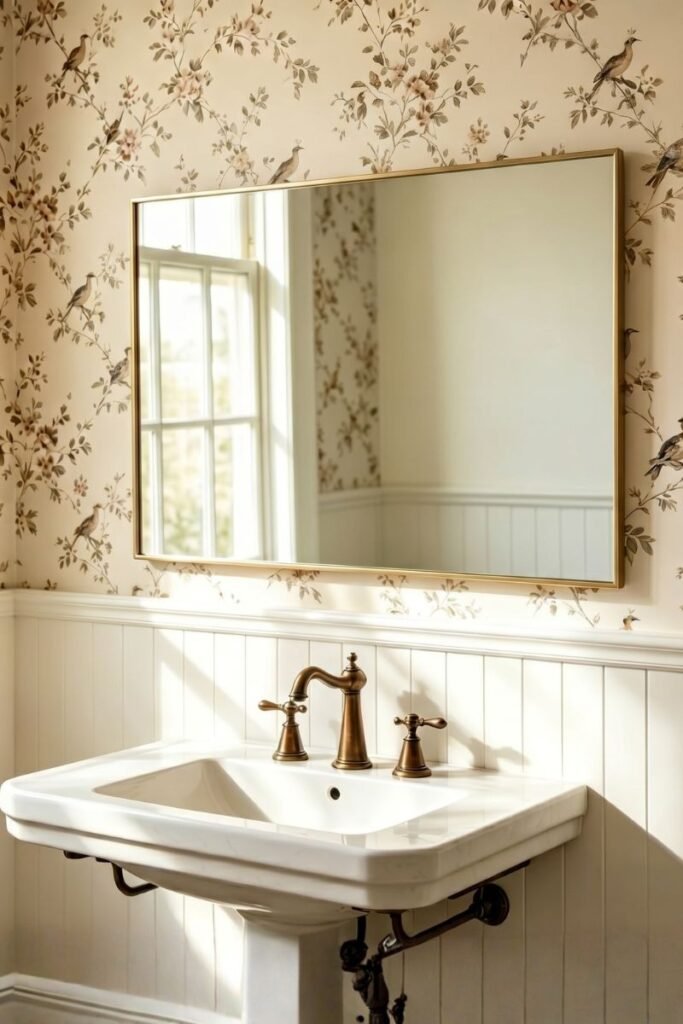
Hand it right by following the cheat sheet.
Most mirror missteps in old houses come down to four things.
Too wide. A mirror that spans edge-to-edge on a vanity makes the whole arrangement feel tight and modern in the worst way — like a builder-grade update, not a considered renovation.
Frameless. Frameless mirrors are designed to disappear. In a bathroom with original woodwork, period tile, or plaster walls with a century of character, a mirror that disappears just announces that it doesn’t belong.
Wrong height relative to lighting. A mirror crammed up against an overhead fixture, or floating in the middle of the wall with no relationship to the light above it, breaks the visual logic of the room. Mirror and light are a pair. Treat them that way.
Too modern. LED-integrated mirrors, ultra-thin brushed nickel frames, backlit rectangles.
They’re not bad mirrors. They’re the wrong mirrors for old houses. A mirror’s frame weight, material, and profile all carry historical information.
In a pre-1940 bathroom, that information should be period-appropriate, or read as collected (not a big-box-buy).
Related: Where to source great mirrors – at any budget – for your old house
Frequently Asked Questions: Old House Bathroom Mirrors
About 70–90% of your vanity width, and never wider than the vanity itself. Leave 2–4 inches of breathing room on each side. If you’re between sizes, go slightly smaller — a mirror at 75% reads intentional, while one that grazes the vanity edges reads like a measuring error.
One with a frame and some period character — arched, scalloped, gilt, pivot, or Venetian glass. Skip the frameless slab and the LED-integrated rectangle; in a room with original woodwork or plaster, a mirror that disappears just announces that it doesn’t belong.
One with a frame and some period character — arched, scalloped, gilt, pivot, or Venetian glass. Skip the frameless slab and the LED-integrated rectangle; in a room with original woodwork or plaster, a mirror that disappears just announces that it doesn’t belong.
Two — one centered over each sink, with 4–8 inches between them. Skip the single oversized mirror spanning both sinks unless it’s a vintage piece you can’t live without; one wide mirror often reads as a cost-saving decision rather than a design one.