
Slate vs Porcelain floors: How to choose, care for, and enjoy the biggest investment you’ll walk all over daily.
This post is for you if…
- You’re planning a new floor in your old house and want to stay true to its heart
- You’re not sure how to make the decision between slate and porcelain (but really want to get on with it)
- You’re frozen at the intersection of fear and design
Hate the story but want the exact sources?
→ shop the entire project
Choosing between slate vs porcelain tile for a bathroom in an older home is rarely just about looks.
When renovating an old house, material decisions carry more weight than they might in new construction. It’s usually about finding materials that feel appropriate to the history while still working for modern life. And not fighting with what made us fall in love with the house to begin with.
Our primary bathroom renovation at Rosemont was no different. We went through many (many) flooring options before we landed on our final choice. Originally, I thought we’d use a historically appropriate small-format tile, something like a basketweave mosaic marble floor.
But designs that live well aren’t isolated decisions.
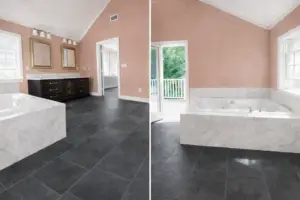
It’s a big room — approximately 16 by 12 feet — with a huge, original, stacked “bossy” granite chimney. It’s a converted exterior sleeping porch, and the stacked stone of the chimney is a feature we didn’t want to change or fight. Once I mocked up a basketweave pattern in the space so I could visualize it, I was 100% sure it would add too much movement. Add that with the chimney stone and the wood ceilings and the room felt busy instead of calm.
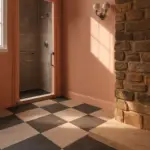
So we explored tonal checkerboard patterns, which are currently everywhere. While beautiful, they shifted the room stylistically. They felt more European than American Colonial — more designed, more formal, and less in step with the straightforward character of this house.
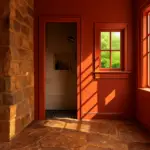
A guiding principle emerged during our planning process: every original bathroom and porch in the house uses natural stone flooring, 100+ year stone worn by time. The stone is local to the region and contributes to the quiet authenticity of the house. We loved the idea of continuing that material into the primary bathroom.
However, when we mocked up locally sourced stone alongside the stacked granite fireplace, I thought the combination created competition. Was the floor the star or the chimney?
And the cost? It would have rreeaaally hurt.

At that point, found really lovely porcelain tiles designed to resemble stone. The Pathstone Grafito Gray Textured Matte Porcelain Flagstone Tiles from Tilebar were a blue-gray porcelain option that worked really well with the fireplace and connected to the palette in the primary bedroom.
It gave a tonal surface that worked with the room.
We ordered the tile and were excited to get the floors in. But when the shipment arrived, nearly half of the tiles had been damaged in transit. Small scratches in the factory finish exposed the porcelain body beneath the glaze. Replacement tiles weren’t going to happen on our timeline.
It was back to the mood board.
And tile shopping. We quickly figured out tying together the warmth of the “busy” granite and the cool of the limestone-inspired tile in the shower was going to be hard. Many of the local porcelain options introduced undertones that didn’t work with either the fireplace or the shower walls, which were already installed.
Darker porcelain options in the stores were in formats that didn’t work with the age of the house.
But on the third visit to The Tile Shop, I picked up a sample of Adoni Black slate almost as an afterthought. The second I placed it next to the fireplace stone, the decision was obvious.
The slate was quiet and grounding. It tied into the home’s existing use of natural stone without competing with the granite. Its dark graphite tone softened the visual intensity of the fireplace while allowing it to remain the focal point.
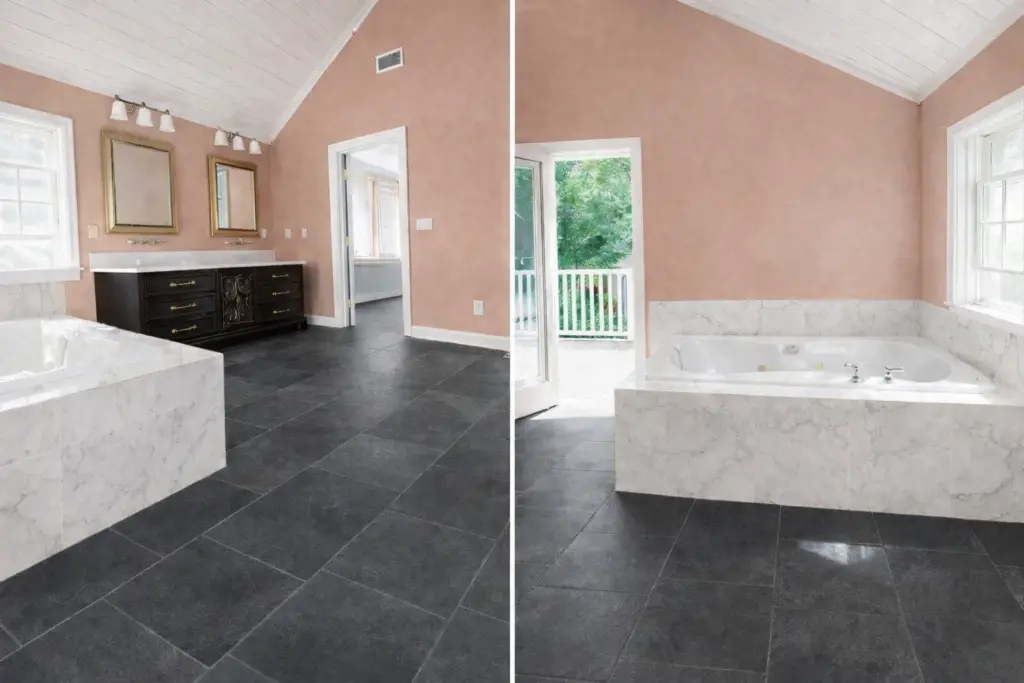
The slate felt honest to the house. It felt right.
Natural slate gave us the monolithic effect we wanted. Using a very dark grout created a continuous surface that calmed the room visually and allowed the architectural elements to be the star.
One consideration with slate – with any stone – is structural weight. Natural stone requires greater rigidity in the floor system than porcelain. We worked with our contractors to confirm the floor joists and subfloor met the necessary deflection standards. We made minor improvements to the subfloor to protect long-term stability.
Maintenance was another consideration. Slate requires sealing. Sealing ( we used STONETECH Bulletproof sealer ) protects the stone without dramatically changing its appearance, and the patina that develops over time will work perfectly with the overall philosophy of the house.
Another (BIG!) benefit of slate is its thermal performance with radiant heat. It takes slightly longer to warm than porcelain but retains heat longer, making for a super-comfortable and consistent feel underfoot during the winter months. Our bathroom needs all the heating help it can get, so I am thrilled about this value-add.
Looking back, the slate ended up solving multiple design constraints simultaneously. It respected the architectural language of the house, reduced visual noise, and delivers a gorgeous, honest, durable surface appropriate for daily use.

Why slate ultimately won
- visually quieter than patterned tile
- consistent with existing stone floors in the house
- supports the fireplace instead of competing with it
- holds heat well with radiant flooring
- feels historically believable
What worked
The slate. It creates visual calm in a room with multiple strong architectural elements. The dark, tonal surface allowed the fireplace, millwork, and fixtures to stand out without competition.
The material also connects the primary bathroom to other stone surfaces throughout the house, reinforcing the history of the house honestly.
What I'd do differently (if I could)
Open and inspect tile shipments immediately upon delivery. Material damage is easier (and cheaper) to resolve before installation timelines become tight.
We waited longer than we should have to open every box in the porcelain shipment, which limited our options for replacement and resulted in a cost overrun. Early inspection protects both timeline and budget.
My silver lining? If I had found the slate earlier in the process, I would have selected it immediately. That said, the exploration helped clarify what the room needed — and what it didn’t.
In older homes especially, restraint often delivers the most elegant, livable result.
Shop this project
- I use Milanote to get my visualization on. It all starts (and iterates) with the mood board.
- Adoni Black Slate Tile (16×16 & 2×2) from The Tile Shop. I am 100% obsessed with the look and feel of this stone. A happy accident!
- Schluter systems heated floor system almost makes me excited for next winter? A well-worth-it one time splurge I’d give a 10 out of 10.
- STONETECH Bulletproof sealer protects the porous slate surface without dramatically changing the color. Once a year sealing is recommended (but 5 years is the expected sealer wear).
Some links may be affiliate links, meaning I may earn a small commission.