
They’re not just decorative — they solve real problems. Here’s exactly when a backplate earns its place, and which ones work in an old house.
This Post Is For You If…
- You’re switching hardware types — pulls to knobs, knobs to pulls and have more or less holes than you need (but don’t want to refinish)
- You sized up (or down) and your new hardware won’t land where the old hardware did
- The finish around your old hardware is worn, stained, or just looks MEH, and you want a faster fix than a full refinish
If You Only Look at Four Backplates, Look at These
Some links may be affiliate links, meaning I may earn a small commission if you choose to purchase — at no additional cost to you. I only share products I genuinely like, would use in my own home, or have researched and feel confident recommending.
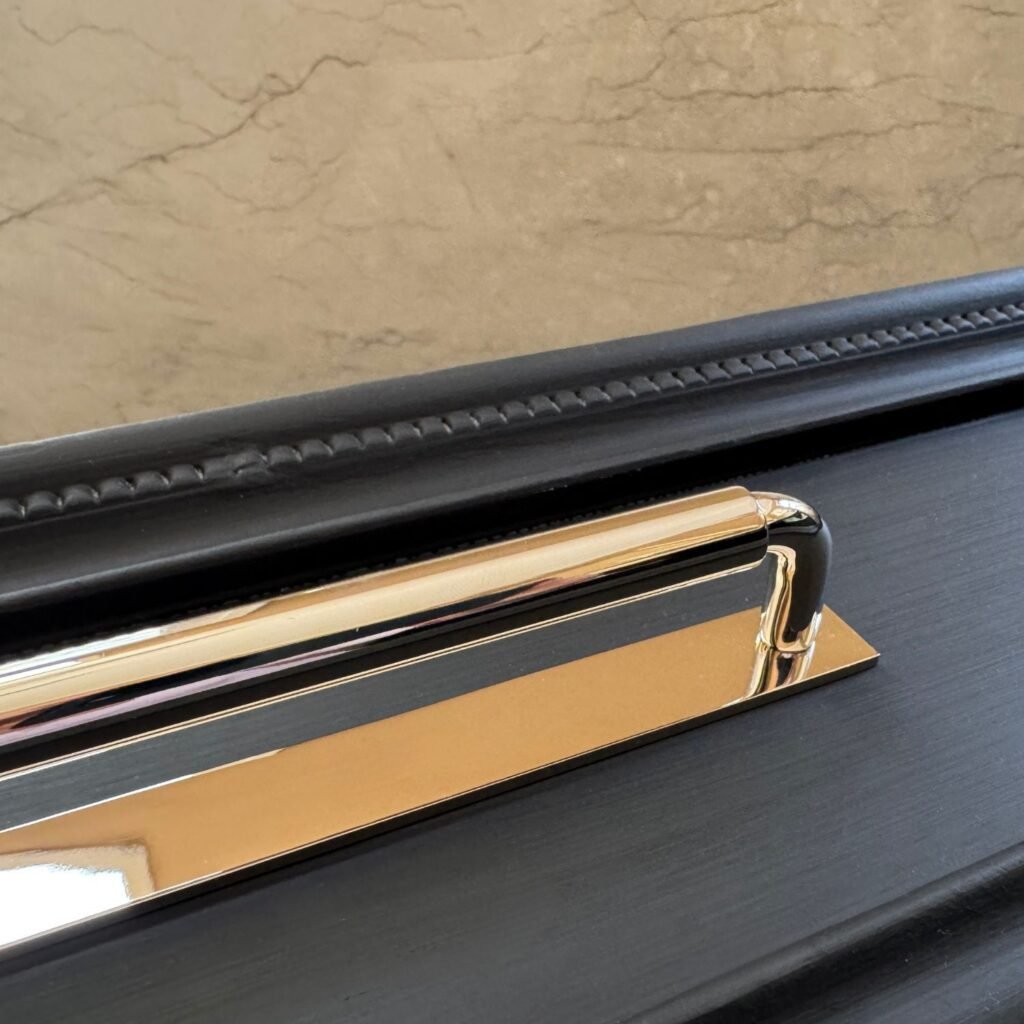
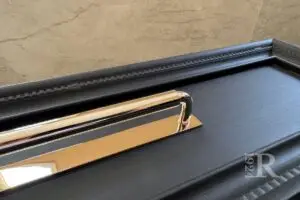
The pull + backplate set solving a real hole-spacing problem in the Rosemont master bath — 8” polished nickel, substantial and traditional.
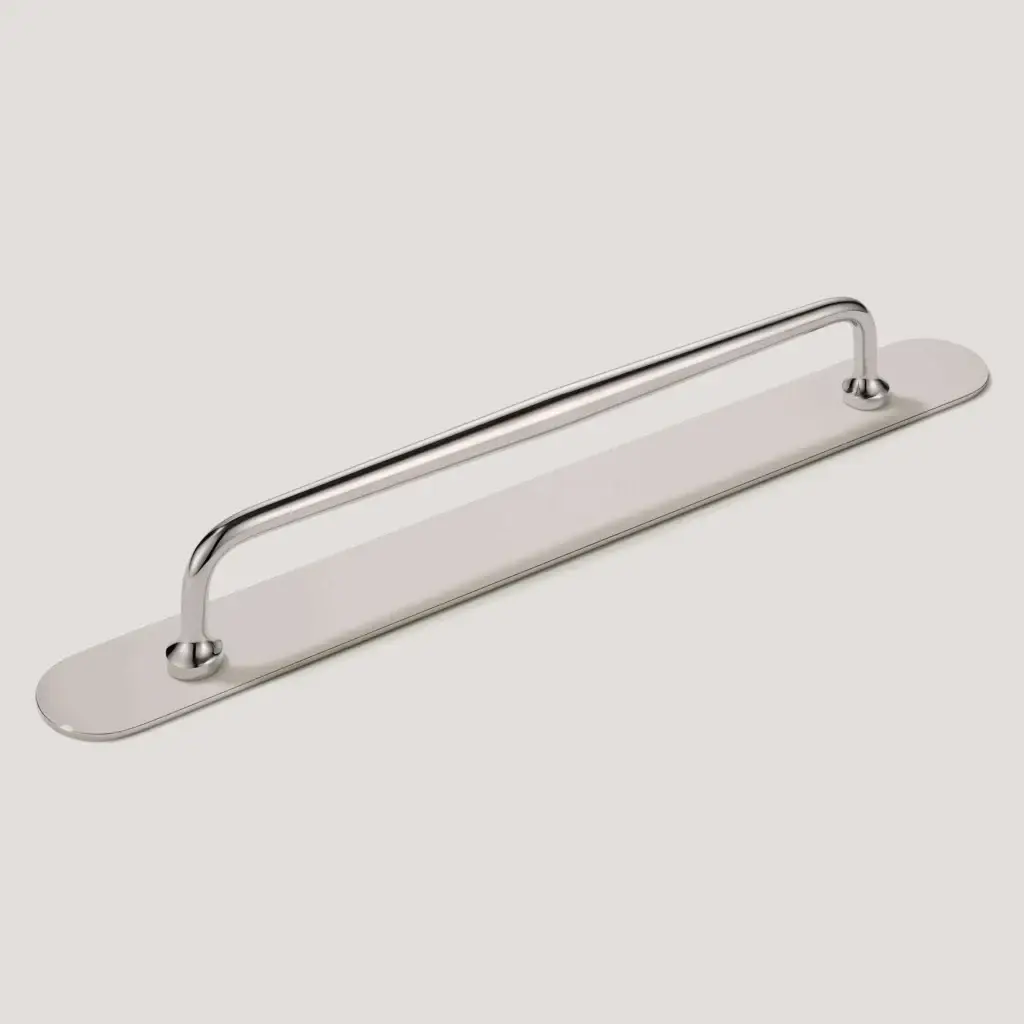
From simple, clean, polished nickel to antique brass — the backplate is part of the design and protects the finish from day one.
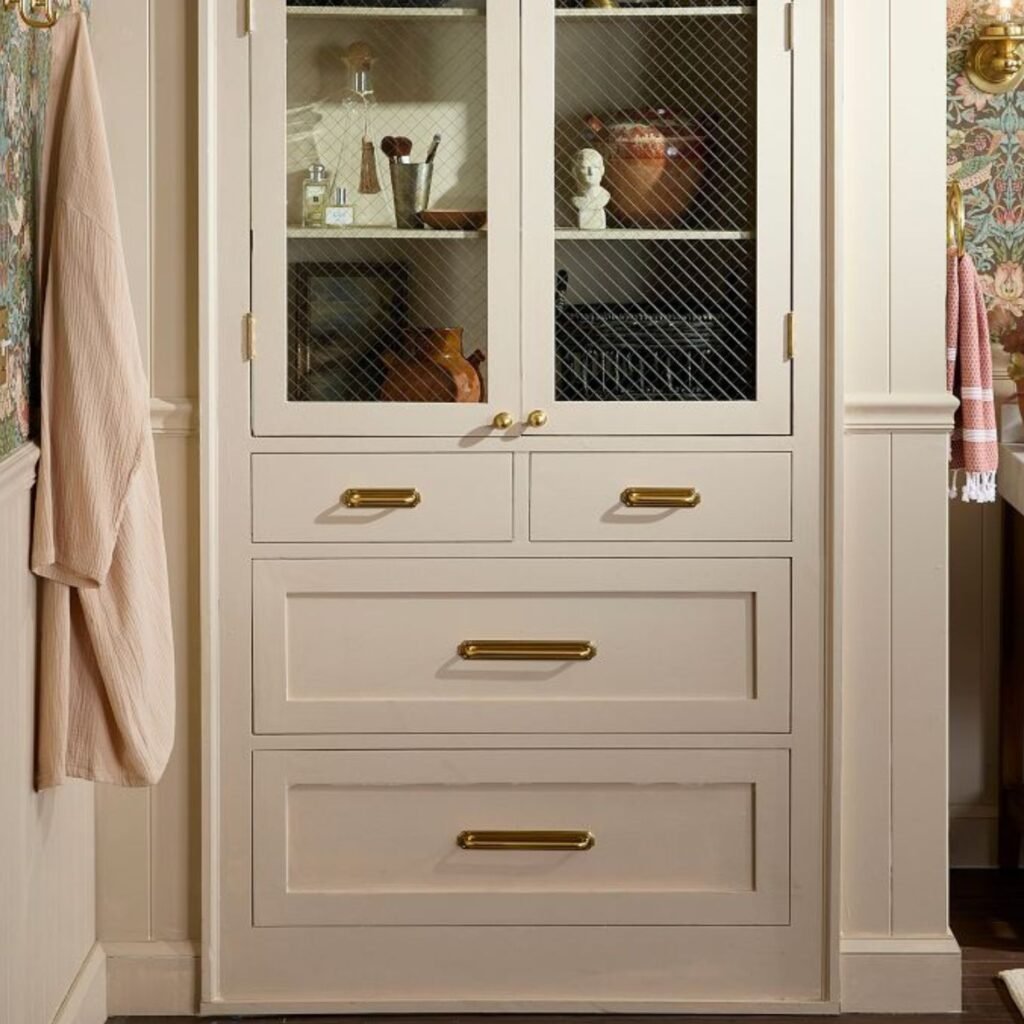
The most traditional of the three — the stepped backplate gives it real period weight. Beautiful on an ornate piece.
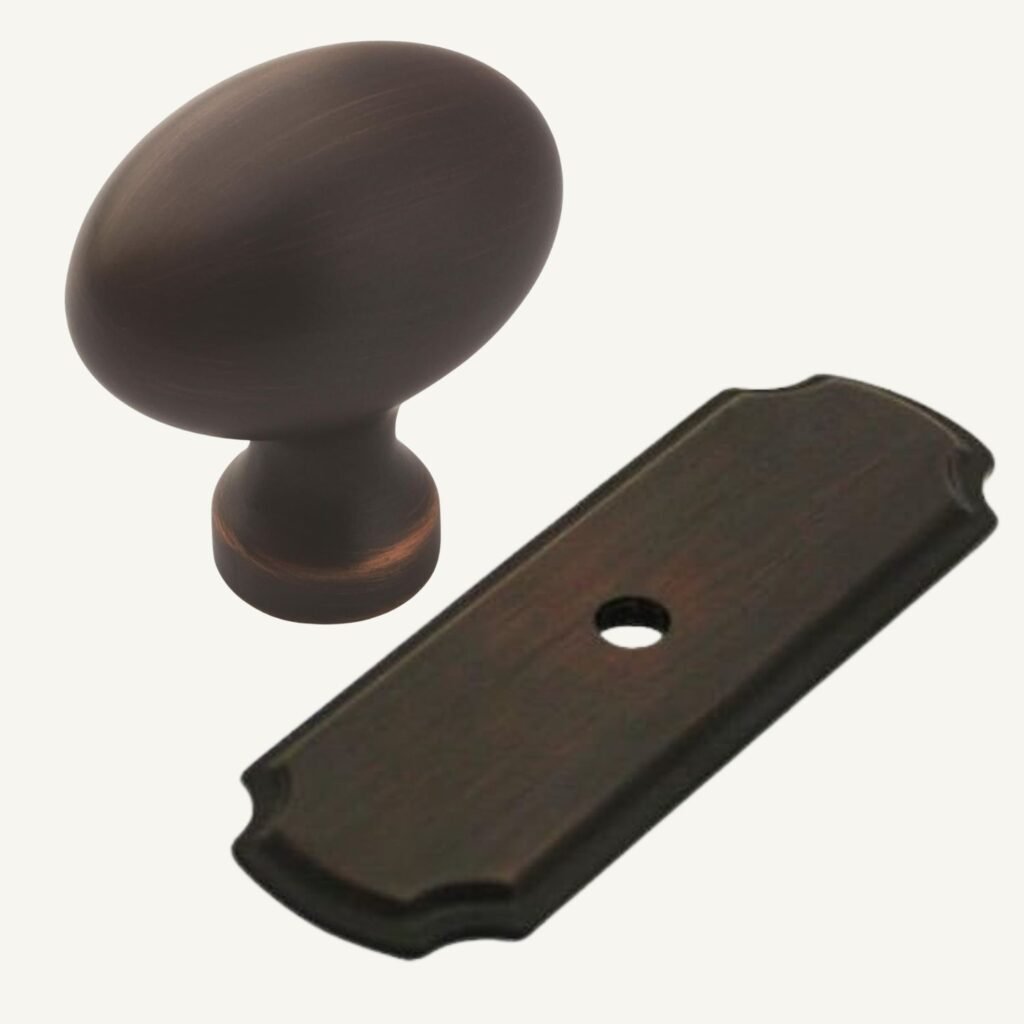
This is a relatively inexpensive solution (separate knob and backplate) very similar in look to the hardware we have in the guest cottage bathroom.
Want the Old-House-appropriate backplate shortlist? → Skip to the full shop section
Why I Became a Backplate Convert
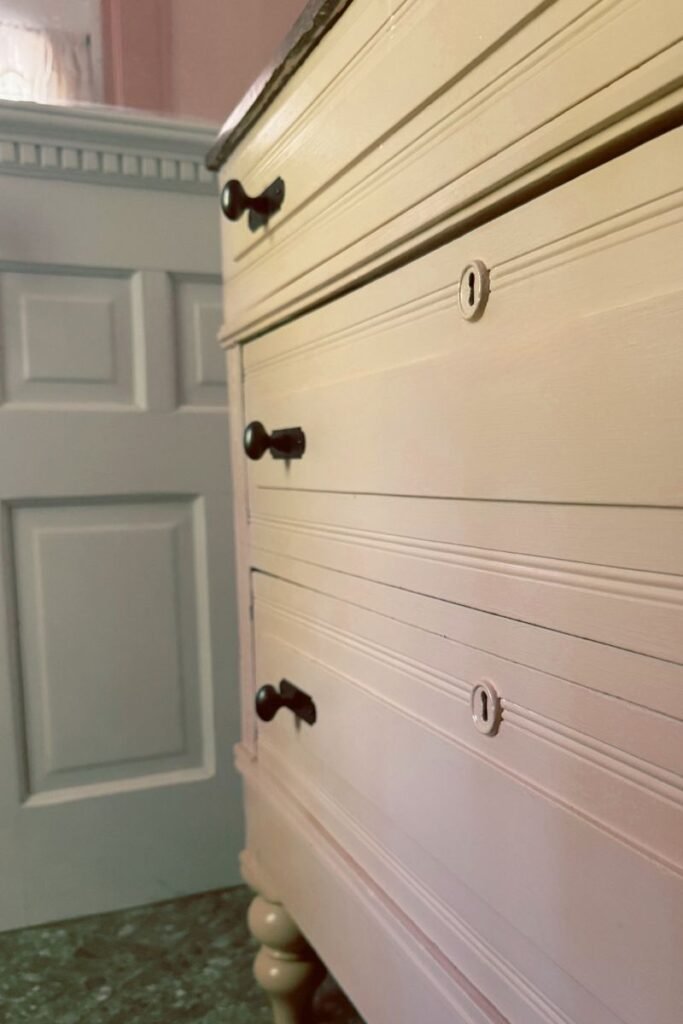
It’s a more sweet & cottage-y than anywhere else at Rosemont.
Backplates used to seem like the hardware equivalent of a throw pillow — a nice idea, not a necessity. I skipped them for years, opting for clean, simple hardware. Then I renovated the guest cottage bathroom vanity at Rosemont and they became non-negotiable.
That vanity is a reworked cottage-y dresser, and had small (in no way original) pulls which were flimsy.
I switched to more solid, bronzey knobs that required me from shift two-hole hardware to single-hole hardware. On a vintage painted piece with layers of finish, filled holes don’t magically disappear. They become filled holes.
And if you don’t do a near-perfect job, those holes stay visible, an unwanted ghost of hardware past.
So, 4″ backplates went on in the same bronze finish, covering the old holes entirely, and the vanity glow up looks finished in a way it wouldn’t have with just the simple knobs in place.
That was my convert moment.
Easier? Check.
More finished? Yep.
Surface protected? YOU GOT IT!
Now I’m doing it again in the master bathroom — going from the existing 4.5” center pulls to an 8” pull on a 24” drawer. Different hole spacing, different problem, same answer. The new hardware won’t land on the old holes. A backplate bridges the gap, covers the old mounting points, and — not nothing — protects the fresh paint from the everyday wear that happens around hardware over time.
If you’re changing hardware on a piece you care about, the backplate question isn’t “is this extra?” It’s “what problem am I solving?”
The 5 Cabinet Hardware Problems Backplates Solve
1 | Switching from Drawer Pulls to Knobs
Two-hole hardware to single-hole hardware. The old holes are in the wrong position for the new knob, and you now have one or two orphaned holes flanking the mount. Fill, sand, repaint — and on a vintage or painted piece, the repair shows. Not because the work was bad. Because filled holes on a layered finish are just rarely invisible. A backplate covers both mounting points. Problem gone.
2 | Swapping Cabinet Knobs for Pulls
The reverse problem, and in some ways harder to hide. You had a single centered knob hole. Your new pull needs two holes at a fixed center-to-center distance. The old hole is almost never in the right place for either of the new ones. Without a backplate, you’re filling the original hole and hoping the new holes land cleanly on either side. A backplate covers the whole zone.
3 | Sizing Cabinet Hardware Up (or Down)
Same hardware type — pull to pull, knob to knob — but different size means different hole spacing. The most common pull spacing is 96mm or 128mm, but older hardware is often non-standard. In the master bathroom at Rosemont, the old pulls were 4.5” center-to-center on a 24” drawer. The new pulls are 8”. The holes don’t overlap. A backplate wide enough to bridge the gap covers both the old and new mounting points cleanly.
4 | Upgrading When Old Cabinet Hardware Has Left Its Mark
Old hardware leaves a ring. Years of use creates a discolored halo — bare wood where the finish wore through, a different sheen, sometimes a stain from the metal itself. You can strip and refinish the whole drawer face. Or you can put on a backplate that covers the evidence and lets you move forward. On a piece you’re otherwise keeping as-is, the backplate is the faster right answer. Just don’t use it to avoid a refinish that actually needs to happen.
5 | Creating Visual Interest With Cabinet Hardware
This one has nothing to do with holes. Dark hardware on a light painted piece, or a more ornate backplate under a simple pull — the backplate is doing design work, not corrective work. It creates a visual break between the hardware and the surface, adds a layer of finish interest, and makes what could read as plain hardware read as considered. The contrast isn’t accidental. It’s the point.
When to Skip the Backplate
The piece is very simple and the hardware is the star. A Shaker cabinet with clean, well-chosen pulls doesn’t need another layer. The backplate competes with what should be a quiet, confident moment.
You’re using a backplate to avoid a refinish that needs to happen. Bandage, not a fix. Fine short-term, wrong as the permanent solution on a piece that deserves real work.
The scale is wrong. A backplate too large for the drawer face makes the hardware look overwhelmed. Too small and it draws attention to what it’s failing to cover. Measure first.
Old House Design Decision Guide: How to Choose a Backplate
Match the metal, then verify tone. Aged brass ≠ satin brass ≠ antique brass ≠ unlacquered brass. These are meaningfully different in the real world. Order a sample before committing to a full set. The two-week wait is worth it.
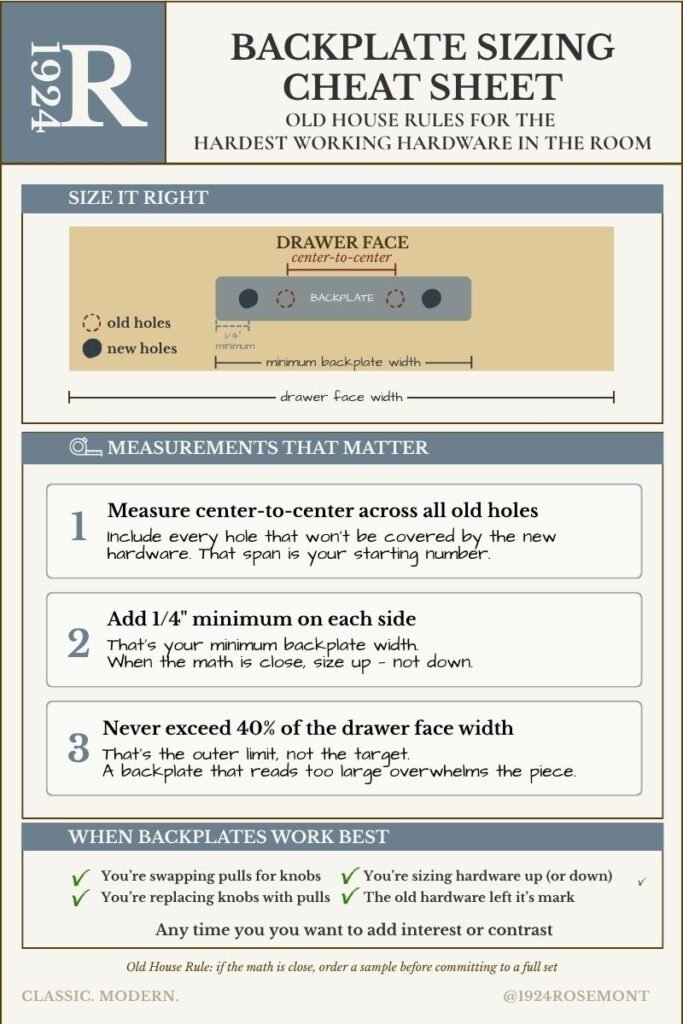
Size to the drawer face, not just the hardware. The backplate should not exceed 40% of the drawer face width — and that’s the outer limit, not the target. Start smaller than you think you need.
Oval vs. rectangular. Oval backplates read more period-correct on Victorian, Edwardian, and Colonial Revival pieces. Rectangular works on Craftsman, transitional, and mid-century pieces. The geometry matters more than most people realize.
Raised profile vs. flat. A raised backplate adds shadow and depth, looks more substantial, and reads more period-appropriate against old house woodwork. Flat is cleaner for Shaker-adjacent or contemporary-leaning pieces. In a pre-1940 house, raised is almost always the right call.
Decide before you shop: set or separate? Some manufacturers sell pull + backplate as a matched set — two pieces, sold together, designed to pair. Others sell backplates separately. Sets are the cleaner buy when you’re already replacing the pull.
Separate backplates are the just-right move when you love the hardware you have, but you want to add a little visual interest.
Related: Cabinet Hardware Placement Guide: Where Drawer Pulls + Knobs Actually Go
Shop Backplates for Old Houses
Some links may be affiliate links, meaning I may earn a small commission if you choose to purchase — at no additional cost to you.
Pull + Backplate Sets
The cleanest buy when you’re already swapping hardware. Two pieces, designed to pair, sold together.
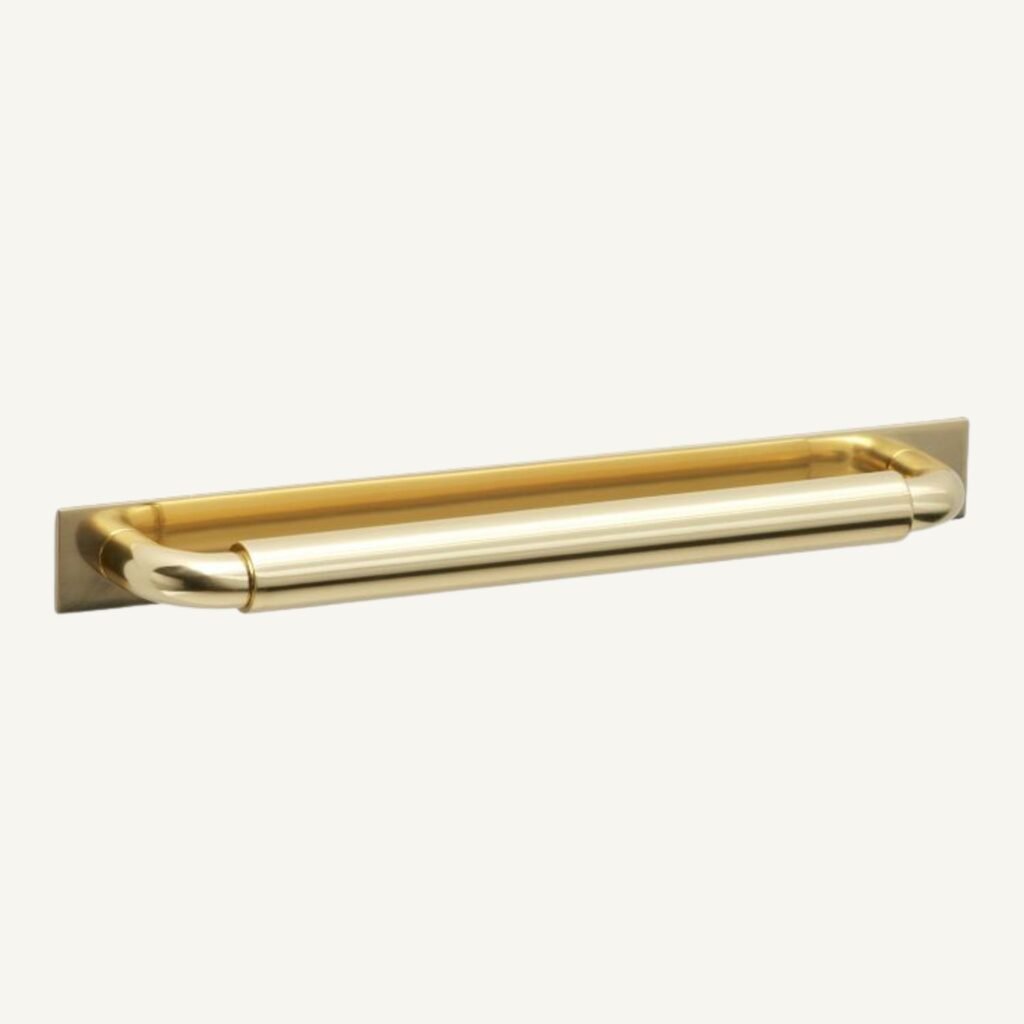
What we’re using at Rosemont — master bathroom: 8” polished nickel. Bridging a 4.5” to 8” hole spacing change on a 24” drawer. The backplate covers old mounting points making the proportions work better. Polished nickel is our finish, which will patina beautifully over time.
Multiple finish options at Rejuvenation.
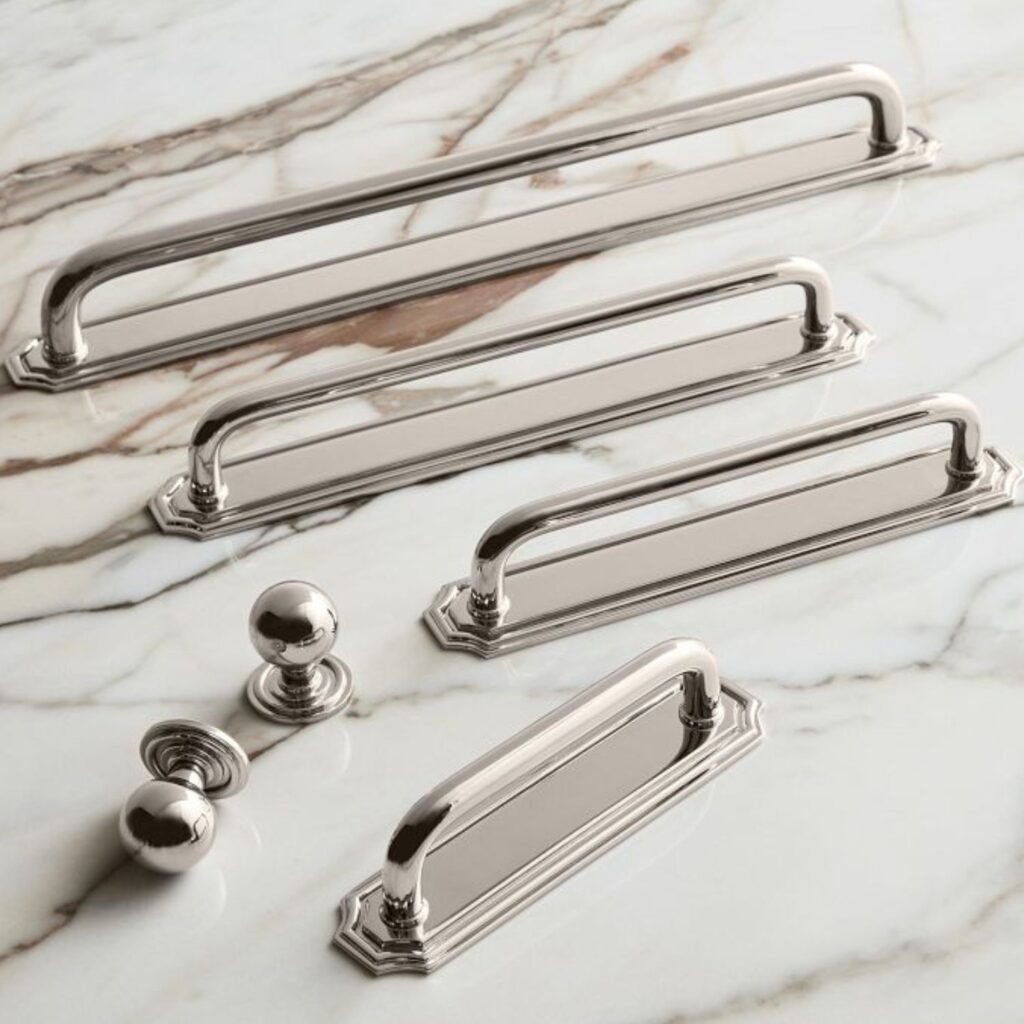
The most traditional option on this list. The stepped, faceted backplate gives it real period weight — exactly right on an ornate or substantial piece.
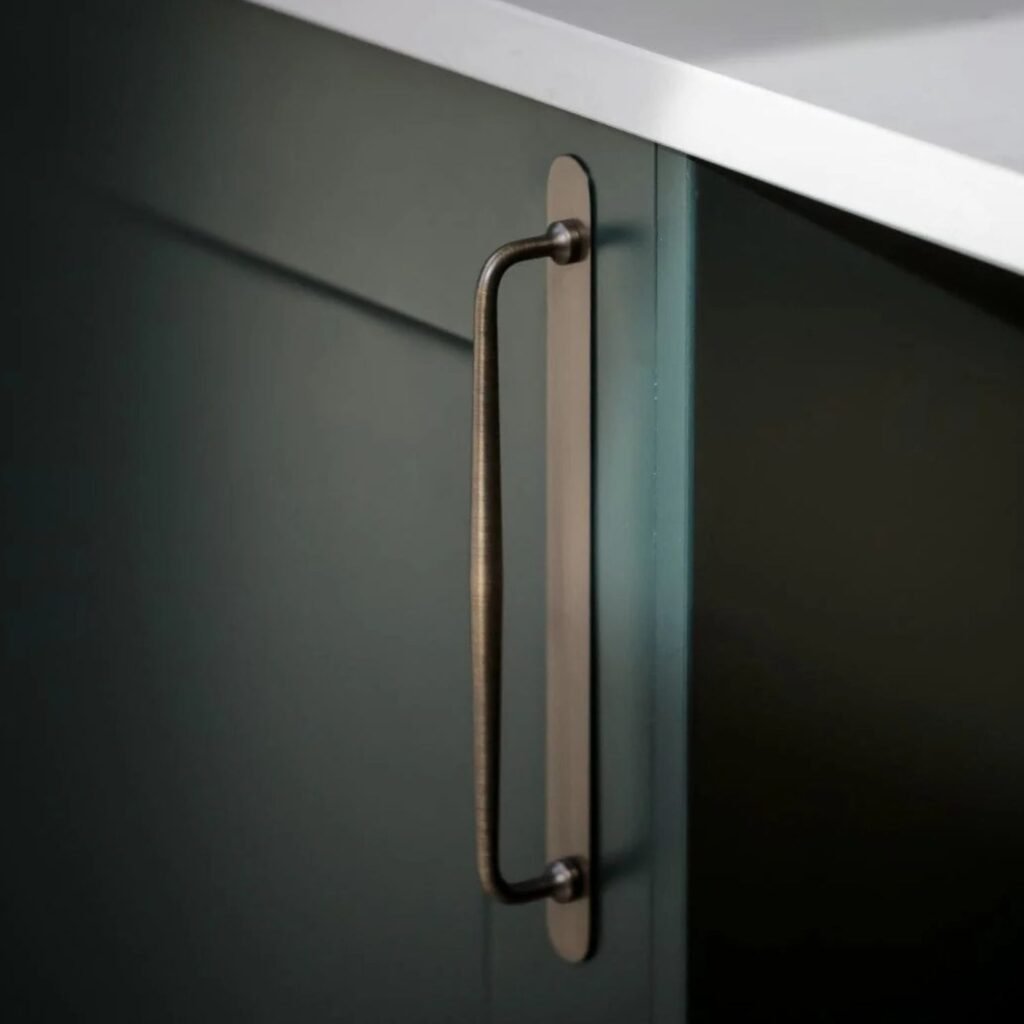
Simple and clean in polished nickel, moody in antique brass. The backplate is part of the design — it protects the finish from wear and makes the hole-coverage look intentional rather than corrective.
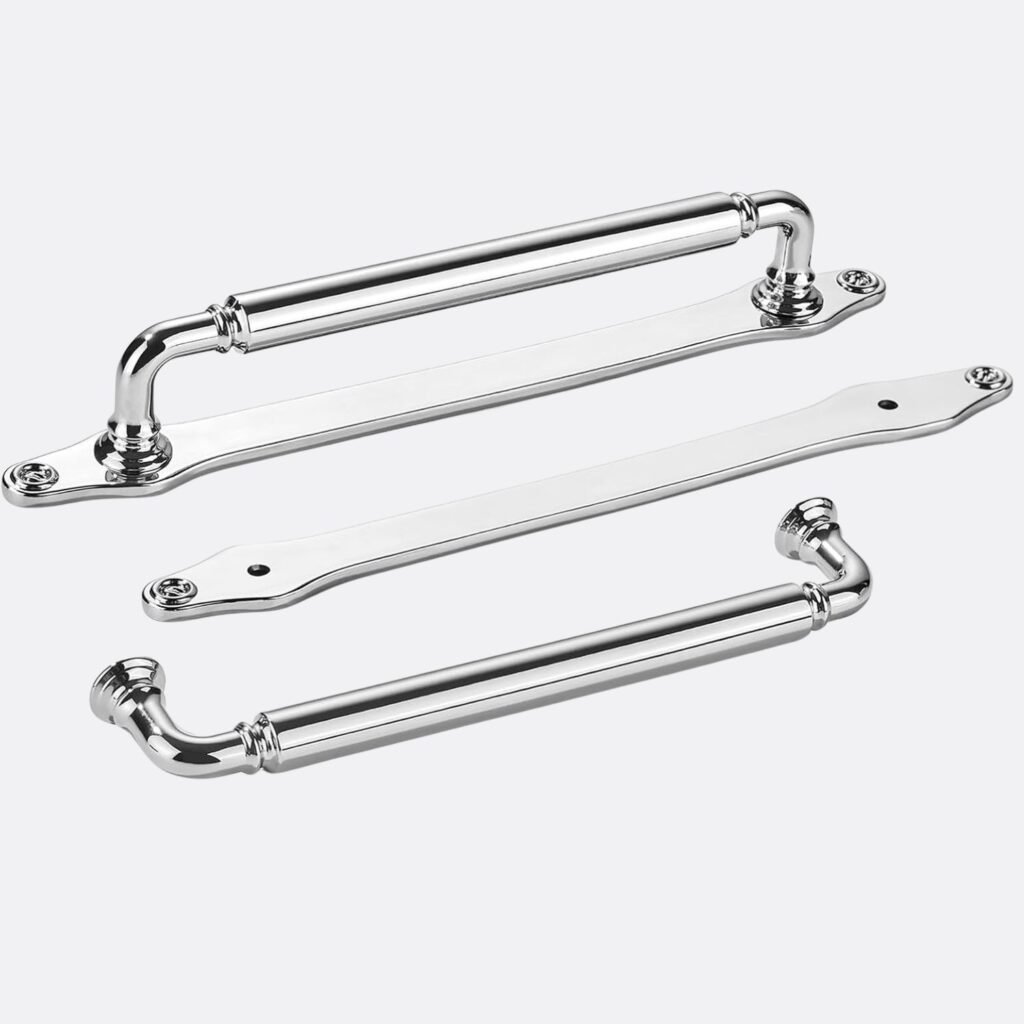
A highly-rated budget pick. Works especially well when you have polished chrome or nickel fixtures to match.
Standalone Backplates
Buy separately to pair with hardware you already have, or when you want full control over the combination. A few inspired by the Rosemont vanity (all have multiple finishes available online):
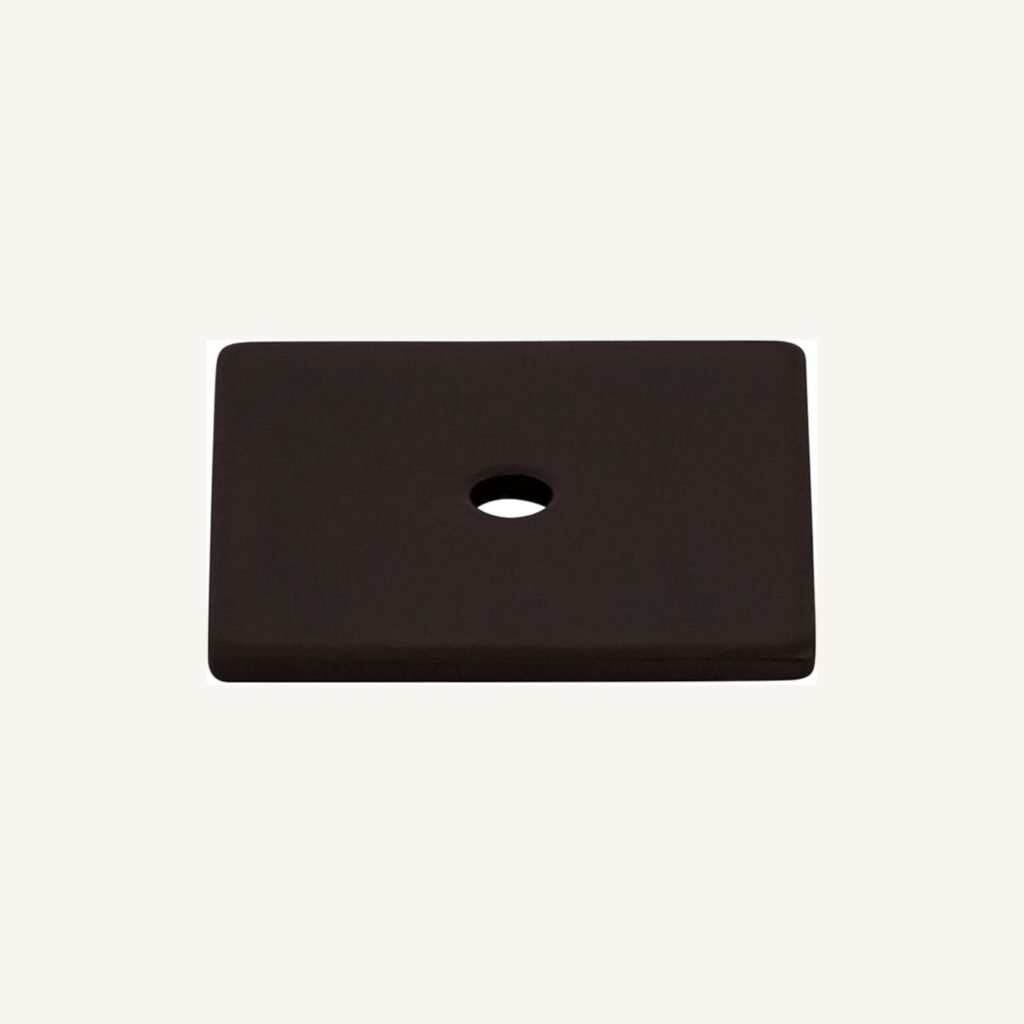
German Bronze finish — warm, dark, and period-appropriate for Victorian and Craftsman pieces. A good contrast option when polished finishes are too bright for the piece.
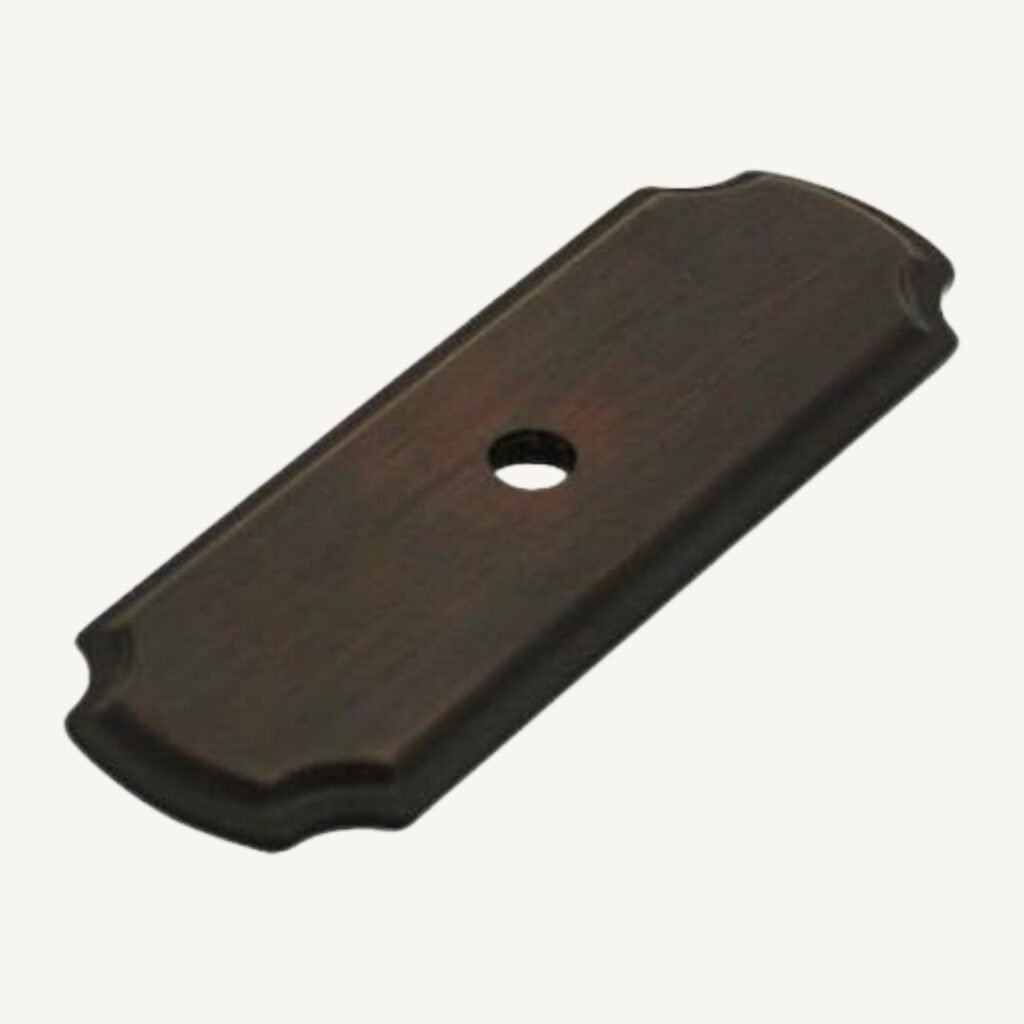
Specifically sized for knobs, not pulls — the right choice when you’re going from a pull to a knob and need a backplate scaled to the new hardware.
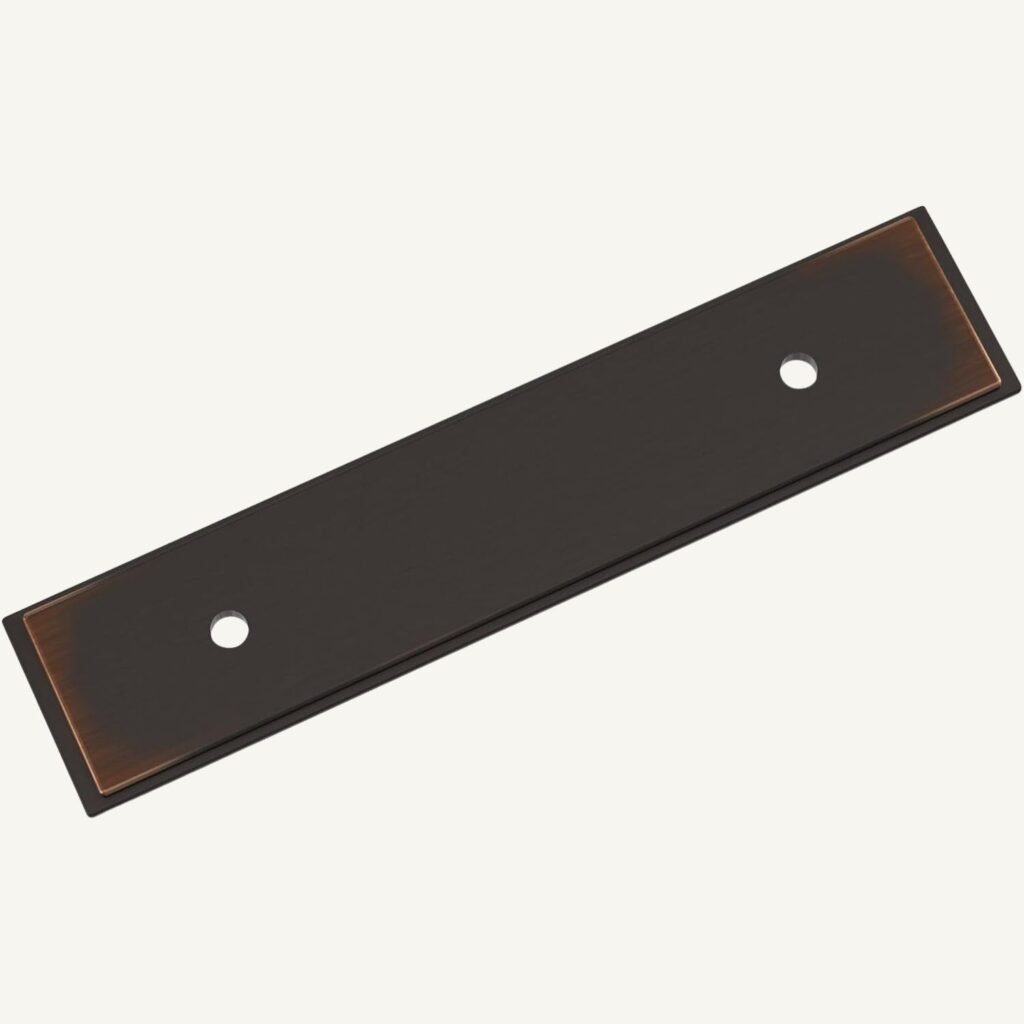
Clean rectangular profile in oil-rubbed bronze. Pairs naturally with traditional pulls in dark finishes; straightforward coverage without adding visual noise.
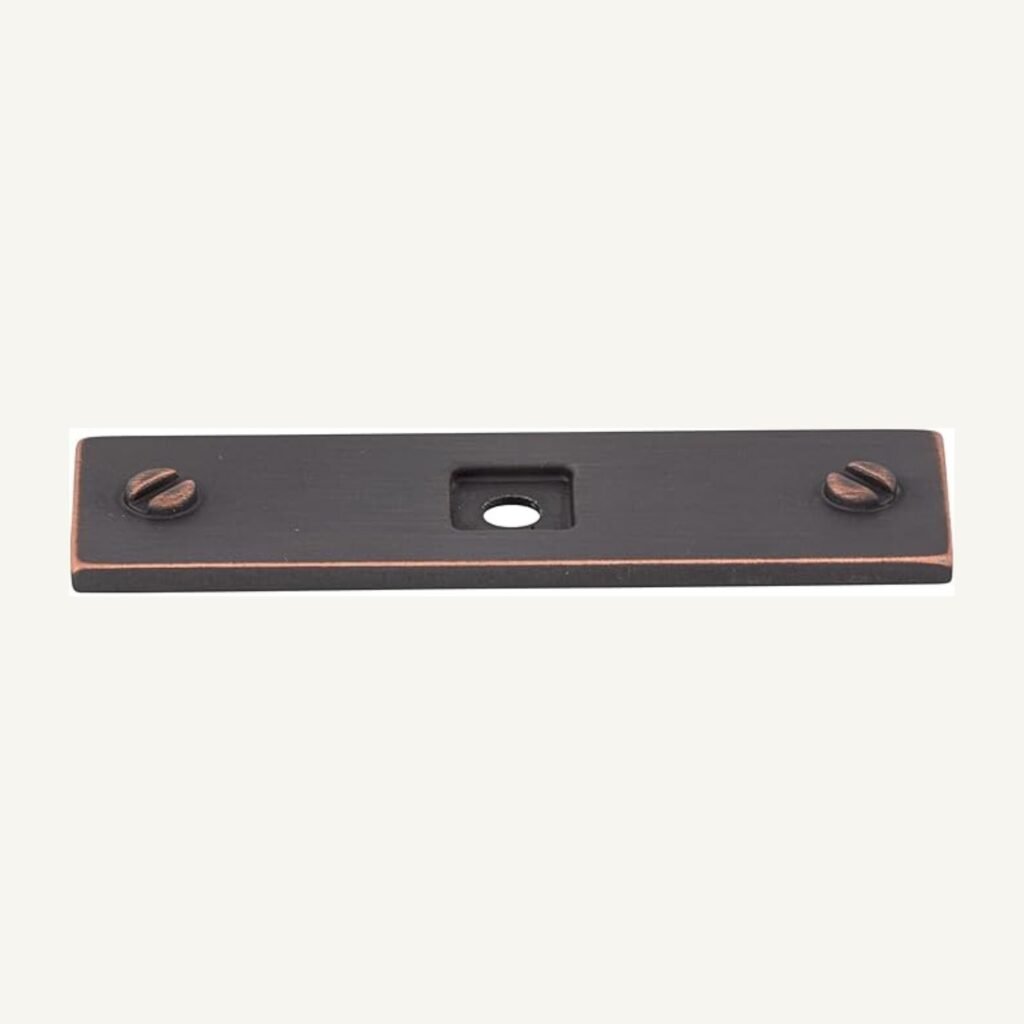
Simple, solid, classic — comes in multiple finishes. The reliable standalone option when you love your existing knobs and just need to cover old holes or add visual weight.
Statement + Contrast Hardware with Backplates
No hole problem to solve. These are doing design work — a finish moment, a visual break, a layer of interest under a simple pull.
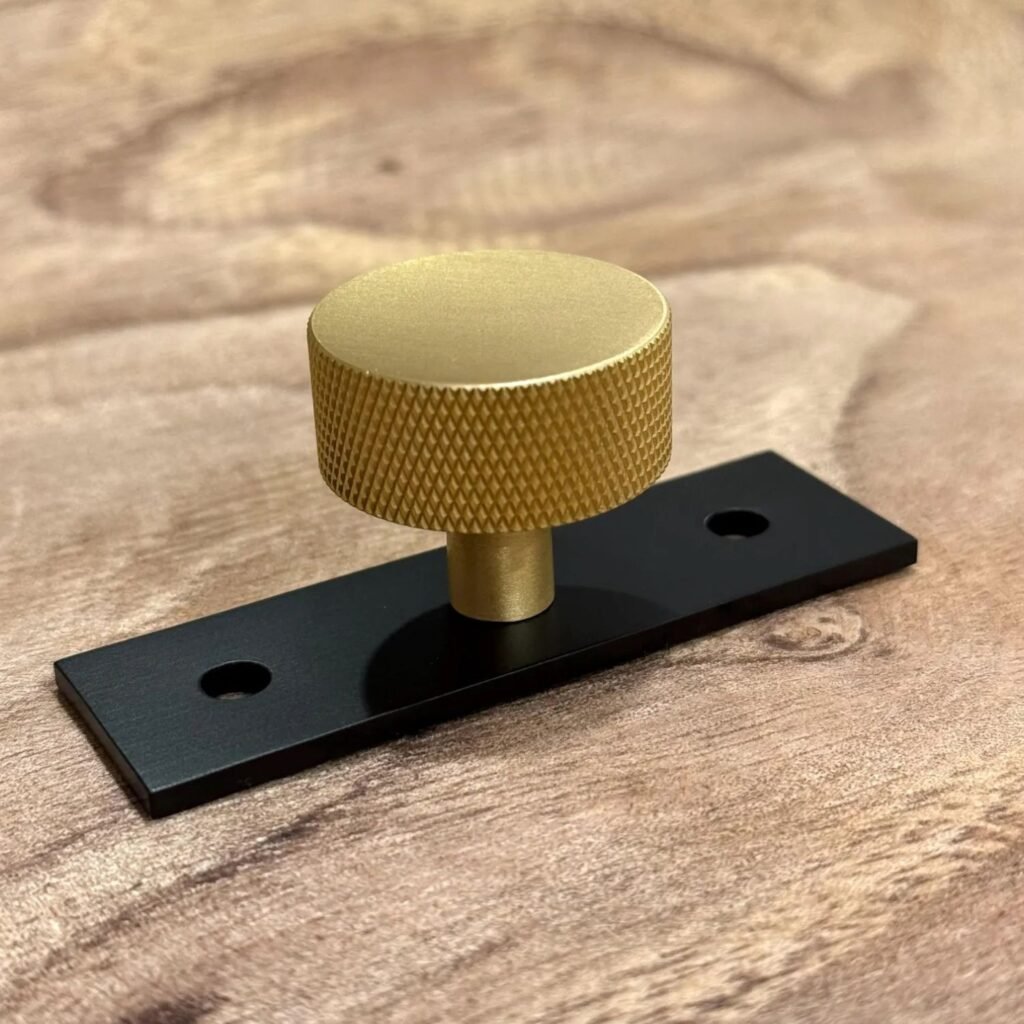
The contrast is the whole point. Warm knurled brass on a matte black backplate — if you want the hardware to be a moment, this is it.
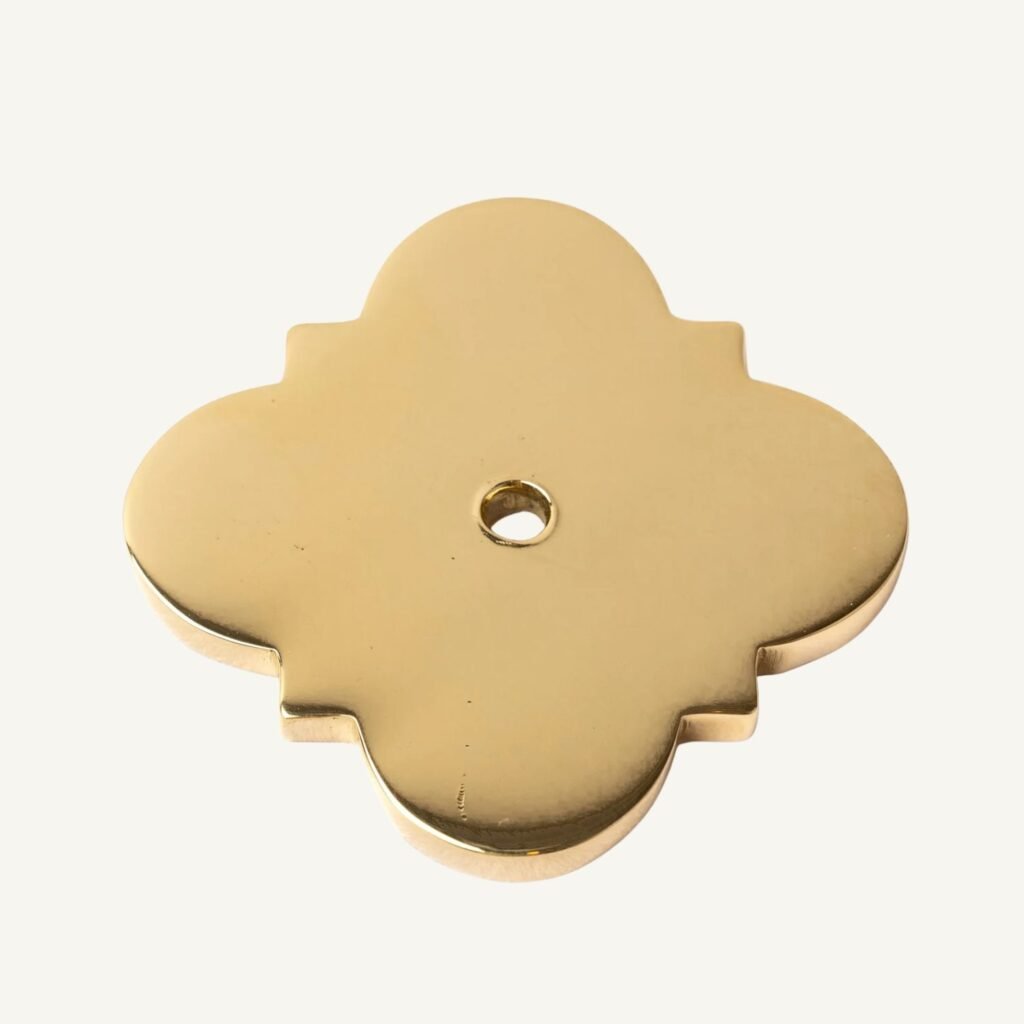
The shape IS the statement. Available in brass, bronze, and more — pair it with a simple knob and the backplate does all the design work.
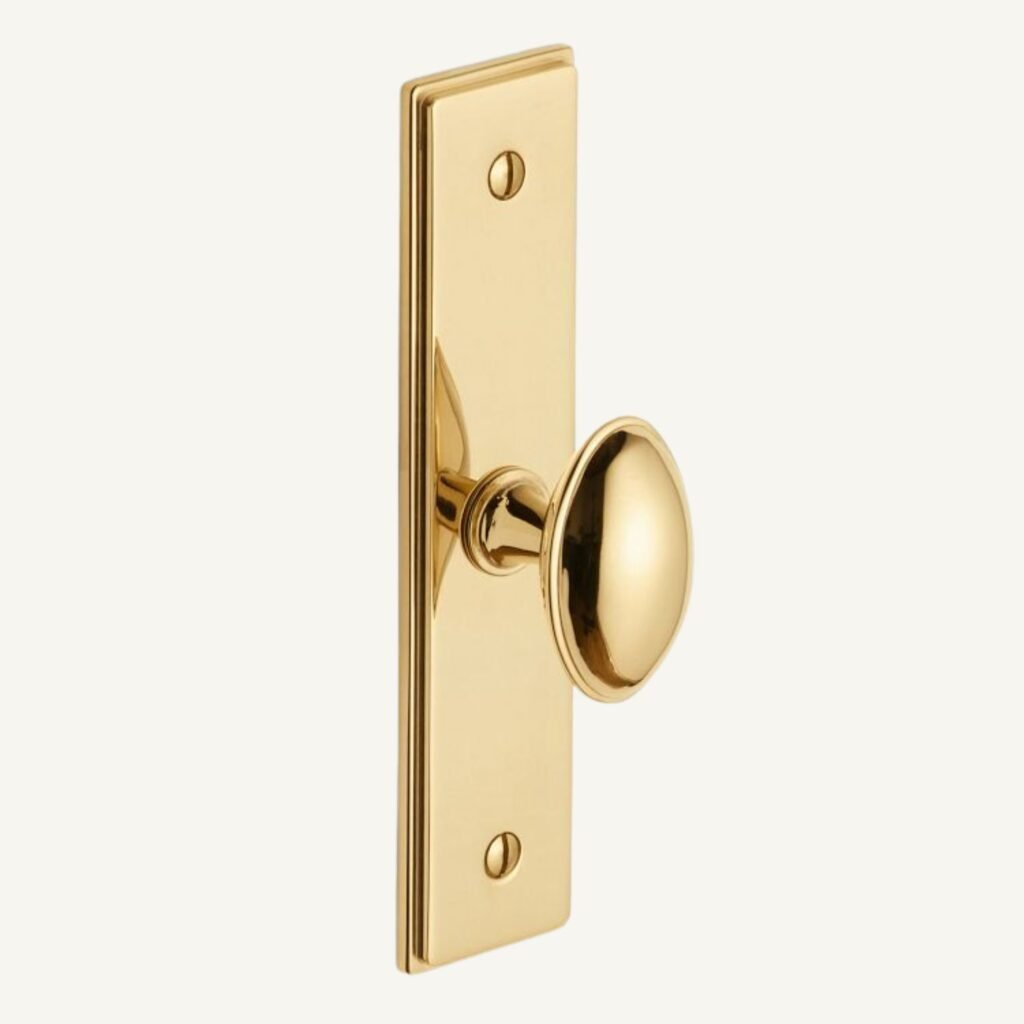
The whole Lenox series is traditional with modern restraint in solid brass. I love the look. It makes a statement that whispers, “I care about the little details”.
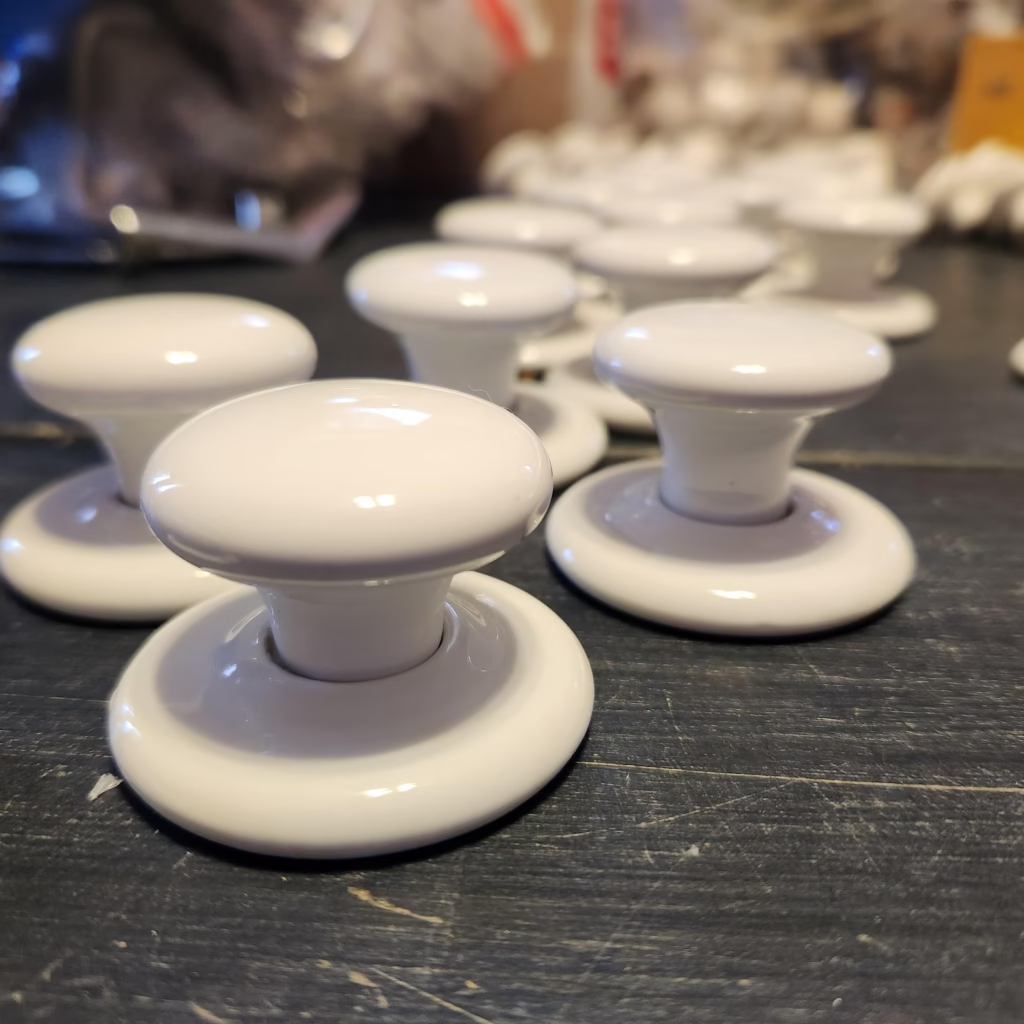
You know these vintage porcelain knobs would look incredible on both natural wood and painted finishes. BUT THEY WOULD FEEL INCREDIBLE in the hand. Winners I want to find a place for in my house.
Related: Cabinet Hardware Refresh: How to Update Without Replacing
FAQ
Do you need a backplate with cabinet hardware?
No. A backplate earns its place when you’re covering old drill holes that won’t fill cleanly, hiding wear damage around an old mount, or making a finish contrast intentional. On a clean install with no old holes and hardware that’s right for the scale of the piece, a backplate is a design choice — not a necessity.
Can a backplate cover any size hole configuration?
Almost always, but size it right. Measure center-to-center across all the old holes, then add at least ¼” on each side for coverage — that’s your minimum backplate width. If you’re going from a two-hole pull to a knob, measure from the far edge of each old hole. When the math is close, size up. Oval backplates often cover more footprint than their listed dimensions suggest.
Do backplates work with both knobs and pulls?
Yes. The backplate sits flush against the cabinet surface; the knob or pull mounts through it. The main compatibility check: make sure the pull’s bolt length works through the added depth of the backplate. When in doubt, buy the pull and backplate from the same manufacturer.
Should I buy a matched cabinet hardware set or buy the backplate separately?
If you’re already replacing the pull, a matched set is the easier path — designed to pair, finish guaranteed to match, one order. If you love the hardware you have and only need to cover old holes or add visual interest, a standalone backplate gives you more flexibility. Just verify finish tone carefully before ordering — aged brass and antique brass are not the same thing.
What finish works in an old house?
Match your hardware finish, then verify the specific tone before committing — aged brass, antique brass, and satin brass are three different things. For Victorian and Edwardian pieces, aged or antique brass and oil-rubbed bronze read most period-appropriate. Colonial Revival and neoclassical spaces do well with polished or satin nickel. Chrome depends entirely on the room and what you’re matching to.