
This post is for you if…
- You’re considering slate floors and you want to avoid costly mistakes
- You’ve already decided on slate and you want to avoid heartbreak
- You want to love your slate floors when they’re fully installed
Hate the story but want the top questions to know when considering slate?
→ get the top 10 questions now
Some links in this post may be affiliate links, meaning I may earn a small commission if you choose to purchase — at no additional cost to you. I only share products I genuinely like, would use in my own home, or have researched and feel confident recommending.
I’m not a slate expert. I *am* a homeowner with a cautionary tale.
I know so much more about slate now than I did when I first chose it for my primary bathroom renovation.
The original plan featured porcelain tile for the floors. A warm, stone-look tile I spent weeks agonizing over. Unfortunately, the tile got damaged in the shipping process, something we discovered when the installer had already put in the heated floor system and was ready to lay the tiles.
So I had to make a quick decision: wait weeks for a replacement shipment, or pivot. Knowing what I know now, I’m still not sure what I’d tell “past me” to do.
Past me pivoted from porcelain and chose black slate.
A genuinely beautiful, natural stone. Lush and charcoal-y from The Tile Shop, called Adoni Black. It’s historically appropriate in our 1924 house, and the sample sealed the deal as soon as I brought them into the room. It was stunning.
I didn’t fully understand then that my choosing a new material and my installers knowing how to install it were very different things.
And the gap between happiness and expensive regret is when those two things don’t line up.
Jump to the top slate questions, answered
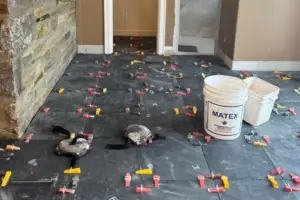
Full disclosure: I’m writing this cautionary tale from the messy middle.
My contractors have excellent reviews, from happy customers who I know personally and trust deeply. They’d already done beautiful, precise work on the porcelain tile in my bathroom shower earlier in the project. When I asked if they could handle the pivot to slate, they said yes. I had no reason not to believe them. And I didn’t know much more about what to ask.
Working with natural stone requires a specific skill set.
Slate is cleft — it has natural texture variations that need to be worked with, not against. It needs a particular thinset, particular sealing, particular care during cleanup. A contractor who is excellent with pristine porcelain tile installs doesn’t automatically have the experience to install slate or natural stone with the same skill.
My plans changed unexpectedly in the middle of the job. I’d chosen my pros carefully before the project started. But when the materials changed mid-project, I didn’t take the time I needed to confirm the team was still right for the job.
This is the thing nobody tells you, and it’s the mistake that set everything else in motion on my job.
Slate or porcelain, don’t let the finish get rushed
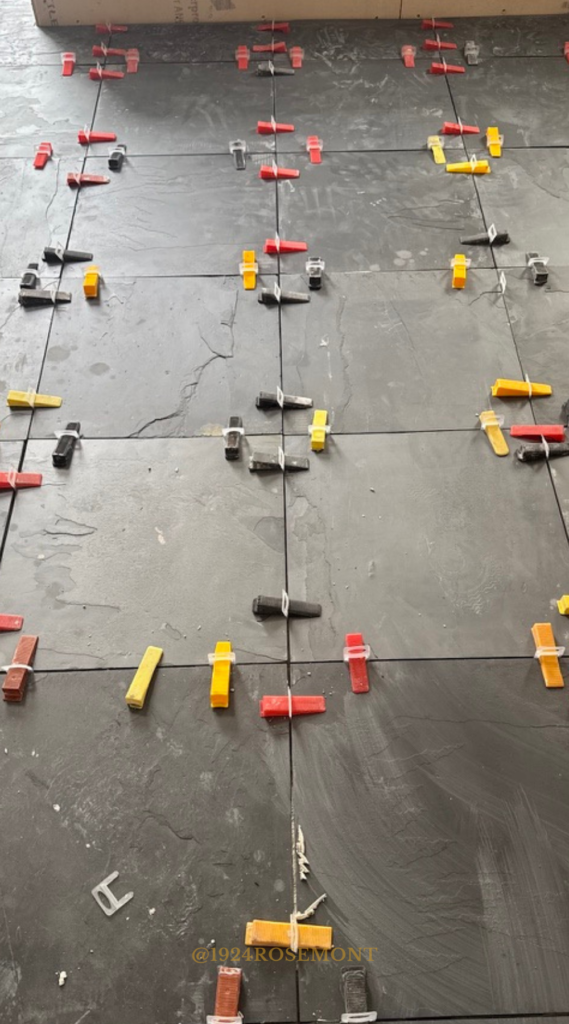
I knew they were moving too fast on what was supposed to be the last day of the job. I could feel it. I could *hear* it, as they worked in the room which is directly over my office. I didn’t stop them.
That’s a mistake I won’t make again. And something I hadn’t faced before. I’ve had tile installed in other projects, never had a really bad result. Until this project.
Sticking the landing on a tile install is where natural stone installations succeed or fail. They “finished” after dark on a Friday.
Slate specifically is unforgiving of shortcuts made in the job’s finishing moments.
Grout haze left to cure on slate doesn’t wipe off easily. And once cured, it may need to be professionally removed. Excess water on uncured grout washes dirty, colored water over the surface of the slate and leaves permanent residue in the natural clefts of the stone. Your installer’s precision in sealing, grout cleanup, and tile cleaning dictates what your room will look like when they leave.
If something feels rushed, it probably is. As the homeowner, we’re completely allowed to slow it down when things seem off. We’re allowed to say, “this needs to take another day”.
Because the outcome is what we live with when the contractors leave. It outlasts the inconvenience of requiring the pros to take the time the job really requires.
Jump to the top slate questions, answered
Hold your final payment until you can see the work
My installer wanted final payment the night they added grout. I’d heard them rushing around as it got later and later. When I went to look at the room, the floor was sopping wet. Because it was already dark out, I couldn’t see the work clearly. But immediately I noticed potential issues. My slate is nearly black. So is the grout we used. I didn’t want to guess.
And I didn’t know if I what I was seeing was just sloppiness cleaning up or real issues. So I told them I’d release the final payment when I could see the work in daylight.
It was the single smartest decision I made.
A decision that gave me the only leverage I had when, in the morning, it was very, very clear things had gone wrong.
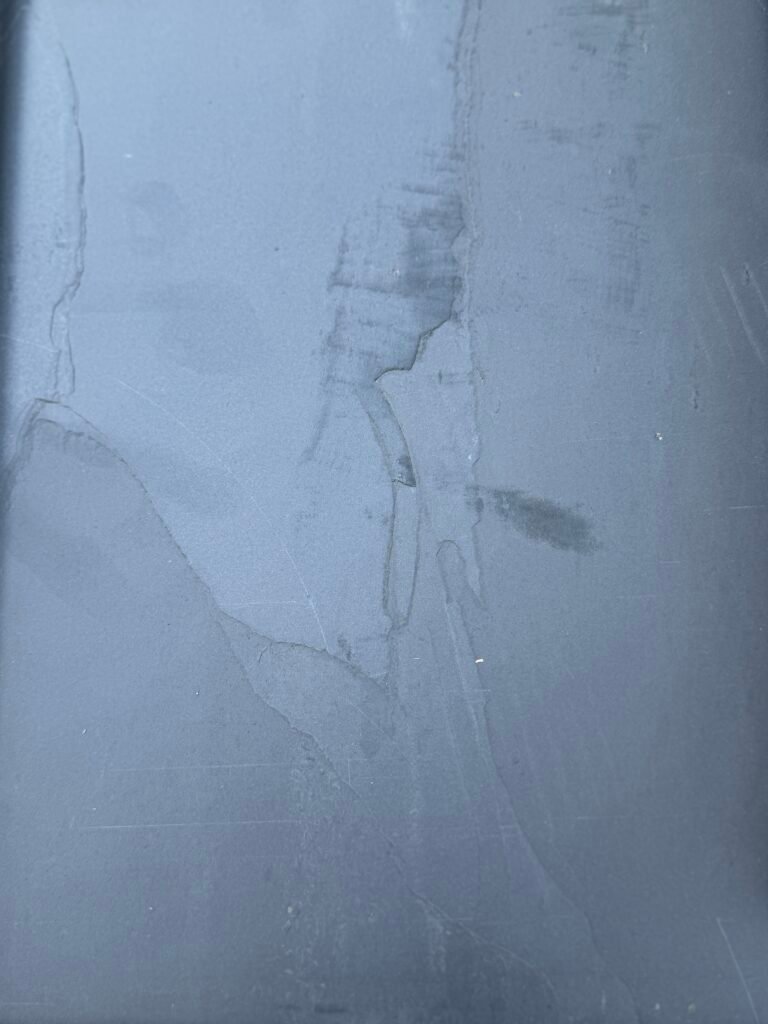
I walked into a room with clearly damaged tiles in the center of the room. And thick haze already showing up. My once smooth charcoal tiles with clean edges had jagged edges and a cloudy finish. I was sick. I was over budget. I was out of energy.
Mainly I couldn’t believe how sad the slate looked compared to the stack of new tiles still stacked neatly in my bedroom next door.
I was glad I hadn’t already settled up. That I’d held my ground until the sun was out, and I could see the state of the slate.
So don’t release final funds until you’re satisfied your job is final per the contract. It’s not ‘being difficult’. It’s the standard.
Of course, be sure you understand what’s legal in your state. ChatGPT helped me figure out the what the laws were and how to navigate job closeout, linking me to the details I needed that weekend.
Jump to the top slate questions, answered
Document everything. Especially when words fail you
When the daylight showed what had actually happened. Cloudy slate where it’d been smooth, chipped and gouged where it had been square, grout haze dried into every cleft. I was too upset to form coherent sentences.
So I took pictures. Dozens of them. I photographed the damage next to an untouched tile from the leftover boxes. I sent them to the contractor without commentary.
The photos said everything I couldn’t.
During the days that followed, my in-progress photos were the only reason I could prove that two tiles with large missing corners hadn’t been installed that way. The contractor tried to tell me that was “just slate”. I pulled up photos from before he laid them. He had no response.
Take pictures throughout. Of the materials before installation, during, and after. You may never need them. If you do need them, you’ll be glad to have them.
Know when to stop pushing
I had my installers come back twice. On the first trip, two very damaged tiles were replaced. They’re now, genuinely, the only pretty tiles in the room, which is almost more heartbreaking. The second trip, for “haze removal”, ended up being a wet mop of a fully cured floor. It did nothing.
Once I understood they had no remaining skill to offer, that they had done everything they knew to do to “fix” the floor, I negotiated a reduction on the final balance and let them go. It won’t be enough to cover remediation. But I needed to be done with them so I could move to the real fix.
Holding on past the point where they could actually help wasn’t serving me. And the stress of the still-unfinished room was actually breaking my heart daily.
What’s next to fix my slate?
‘m having a stone restoration specialist give me an estimate on what it will take to fix my new floor. I tried to do it myself with gentle stone cleaners and some elbow grease, and the haze didn’t budge. The stone restoration specialist has years of 5 star reviews, helping other people get their stone looking gorgeous again.
He comes this week. After he’s done, I’ll post a follow-up. What the process actually looks like, what it costs, and whether it’s worth it. And hopefully, the glow-up shots that make it all worth it.
Jump to the top slate questions, answered
So, would I choose slate again?
Absolutely. In fact, I’m more ready now than I was then. I know what to ask. I know what to figure out before choosing a pro.
And I know what to look out for.
And that’s what I’m sharing with you (and will keep sharing as I learn).

Questions to ask before, during, and after your slate tile installation
The answers you need to know. From finding the right contractor, to considering slate vs. porcelain, and what to do if something goes wrong.
How to find a contractor who can install slate tile
Ask specifically about natural stone experience. Not just tile work. Ask for photos of completed stone installations, and confirm that the installer doing your job is the one with that experience, not a crew member who wasn’t a part of the work in those photos. Then ask for references from homeowners who had slate installed and call them. Slate is unforgiving of inexperience in a way that porcelain just isn’t.
Can old houses handle slate tile floors?
Yes, with the right subfloor. Your subfloor and framing need to be checked out first. Slate is heavier than porcelain, and older homes often have joists that flex more than modern construction. It also requires much less flex than a porcelain floor can take. A contractor experienced with natural stone in older homes will check for movement and deflection, confirm the joist size and span can handle the extra weight, and recommend the right underlayment so the stone and grout don’t crack over time. If a contractor skips this conversation entirely, that’s a red flag.
Should slate tile be sealed before grouting?
Absolutely! It’s one of the most important things to confirm before work starts. Slate is porous. Pre-sealing the tile before grouting minimizes grout and wash water from absorbing into the surface and leaving permanent stains in the natural clefts of the stone. An experienced stone installer will do this as a matter of course. If your contractor has never heard of pre-sealing slate, stop there.
How can you prevent grout haze on slate tile?
Grout haze on slate is a serious problem because once it cures in the natural clefts of the stone, it can’t be removed with standard cleaning alone. And it might need professional remediation (read: more money). The way to prevent that is frequent wiping with clean cloth/pads during installation, protecting high-traffic paths while work is ongoing, pre-sealing the tile before grouting, and using gentle pads and clean water for final cleanup. The answer is never aggressive scraping or acidic cleaners that can etch the surface.
Be sure to ask your contractor to walk you through their cleanup plan before they start.
What thinset and sealer should be used for slate tile?
Your chosen pro should be able to name the specific products designed for natural stone. It may not be the thinset (or sealer, or cleaner) they use for everything else. Ask what grout they’re planning to use, when they plan to seal, and how they’ll work with you to choose the right sealer finish for your space. A contractor who gives you vague answers here might not have the natural stone experience your job deserves.
How do you avoid uneven slate tile installation?
Slate tiles are naturally imperfect. That’s part of what makes them wonderful. Their thickness varies, edges aren’t always perfectly square, and surfaces have texture. A good installer plans the layout to account for this, chooses the right grout joint size for the specific tile, and uses proper leveling systems so edges don’t stick up or create trip hazards. If a contractor tells you lippage is just what slate looks like, ask to see their past installations before you make it official.
How do you clean grout off slate tile without damage?
It depends on whether the grout has cured. Fresh grout can be removed the same day while it’s still pliable. It will come off with gentle wiping using clean water and a soft cloth or non-abrasive pad. If grout cures into the natural clefts of slate, your options get very narrow. Standard household tile cleaners and acidic grout haze removers might etch or permanently stain the stone surface. At that stage, a pH-neutral stone cleaner is your safest starting point.
But if the haze is significant, professional stone restoration is often the only way to fully address it without causing additional damage. That’s the situation I’m in. And why I’m documenting the restoration process in a follow-up post. So you can avoid feeling anything but extremely happy with your slate.
How can I tell if a contractor damaged my slate tile?
Compare the installed tiles to any leftover tiles from the same shipment. New, undamaged slate shows you exactly what the surface should look like. Smooth where it should be smooth, with natural cleft texture that’s consistent across the stone. If your installed tiles look cloudy, show grout haze in the clefts, or have chipped or missing corners that weren’t present in your pre-installation photos, the damage happened during installation. Take photos throughout your project — before, during, and after — so you have documentation if you need it.
What does slate tile restoration cost?
It depends on the extent of the damage and the size of the floor, but professional stone restoration including haze removal, resealing, and any tile replacement isn’t going to be cheap. I’m in the process of getting estimates for my own floor and will update this post with real numbers when I have them. What I can tell you is that the cost of remediation will be higher than the cost of slowing the installation down and doing it right the first time.
And the cost on how I feel about the room, seeing the brand new tile I fell in love with look awful? It’s too high.
Slate vs porcelain tile: which is better for bathroom floors?
Both can be great. They just require different things from you and your installer. Porcelain is more forgiving during installation, more uniform in thickness and surface, and generally less expensive to maintain. Slate brings warmth, character, and historical authenticity that’s hard to replicate (especially in a pre-1940 home) but it demands a contractor who knows natural stone and a homeowner who understands the maintenance it requires. I’ve written a full comparison if you’re still deciding.
One more thing, slate takes longer to heat up if you’re installing heated floors, but retains heat much longer than porcelain does.
Protect Your Slate Investment & Your Happiness
If your potential installer is defensive, brushes off your questions, or only shows photos or gives referrals for ceramic work, that’s your cue to keep looking. A seasoned stone installer will be glad you asked, and will walk you through their process with confidence.
You’ll be happier for it. Your slate will look gorgeous. And your installer will have another gorgeous floor for their brag book.