

Why the wrong light switch and outlet cover breaks your whole room’s design language. What we use at Rosemont, room by room, and what we covet.
This post is for you if…
- You’ve renovated a room, loved the result, and still felt like something was off — and you can’t name what
- You’re about to redo a bathroom, update a living space, or start a full renovation and want to get the details right from the start
- You have an old house and you’re slowly, deliberately making it feel like itself again
Start Here: The Light Switch We’d Put in Any Old House
If you only look at five options, look at these. Each one works in a pre-1940 house. Each light switch and outlet cover is available in the US.
Want MORE switches that actually work? → Shop the full story
~$60–80, House of Antique Hardware
What we use at Rosemont. Genuine mother-of-pearl, works with dimmable LED. The one.
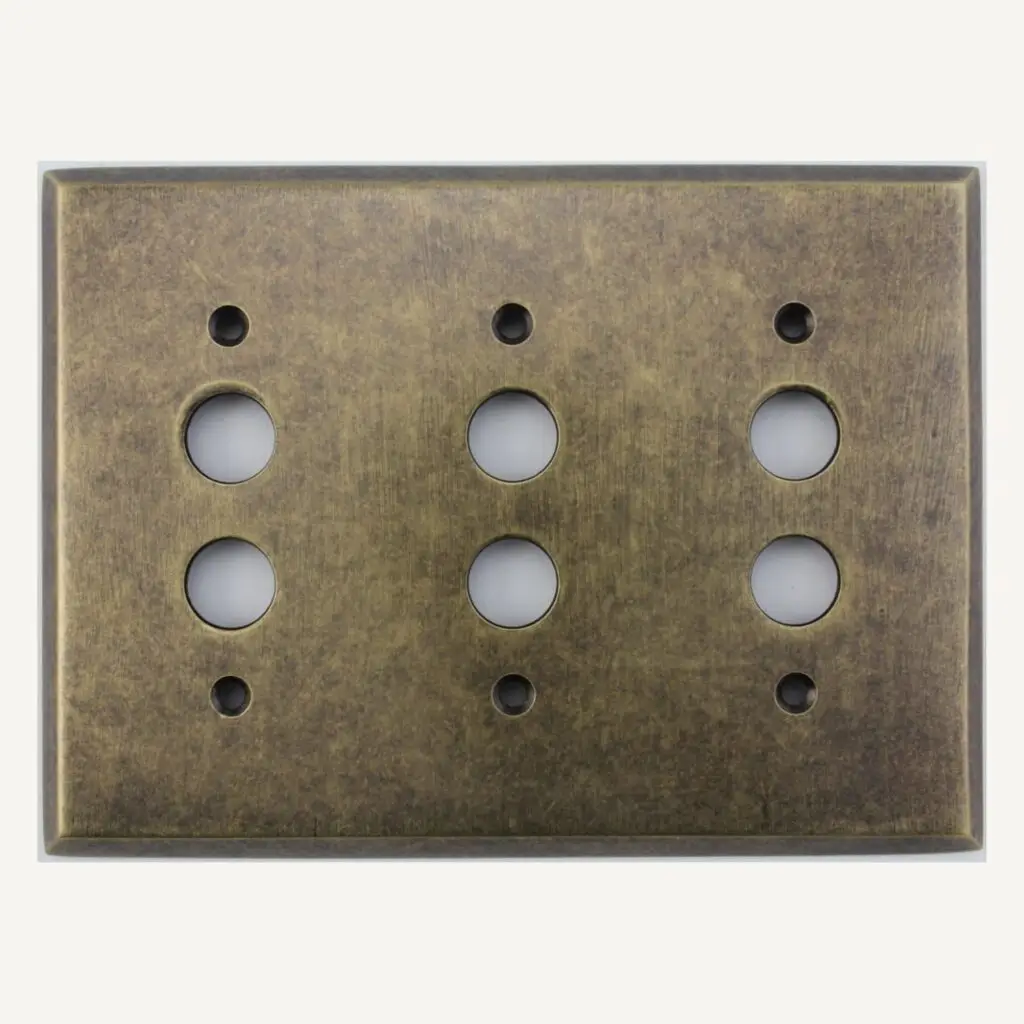
~$10–30, Amazon
Heavy solid brass at more accessible prices. Multiple options, configurations, and styles.
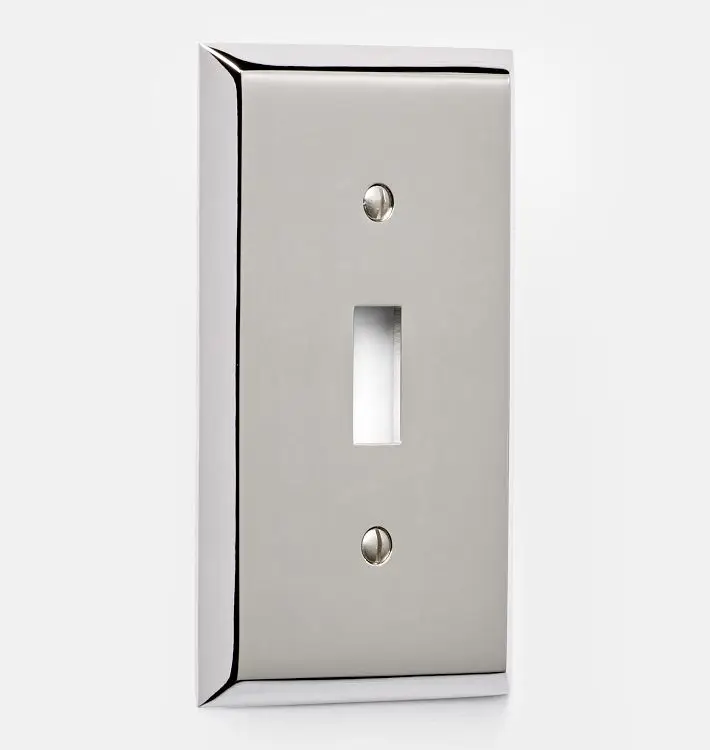
~$25–40, Rejuvenation
Hot-forged brass, slim profile, beveled edges. The whole-house workhorse if you’re sticking with traditional toggle switches.
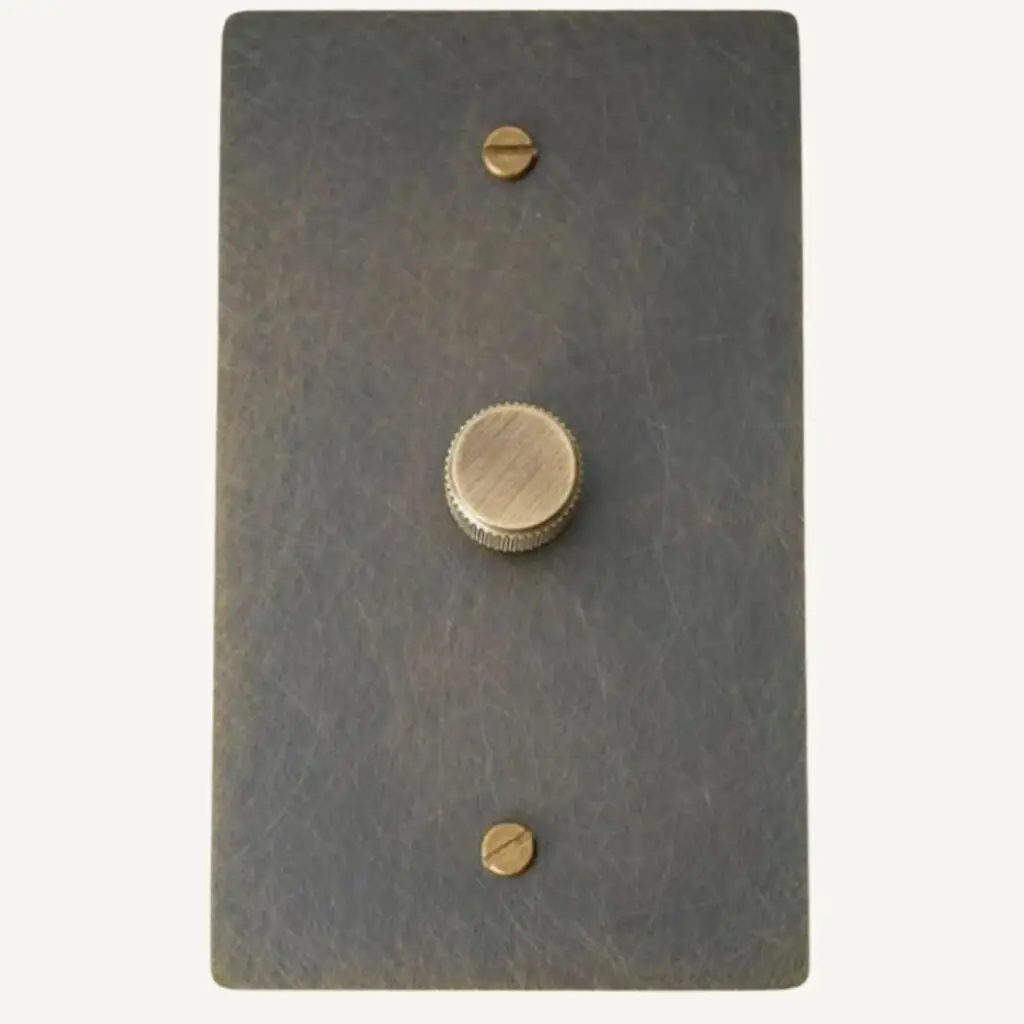
~$60–80, Handle Shop Couture
Solid brass, cross-knurl pattern, UL certified, 1–5 gang. Half the price of Buster + Punch.
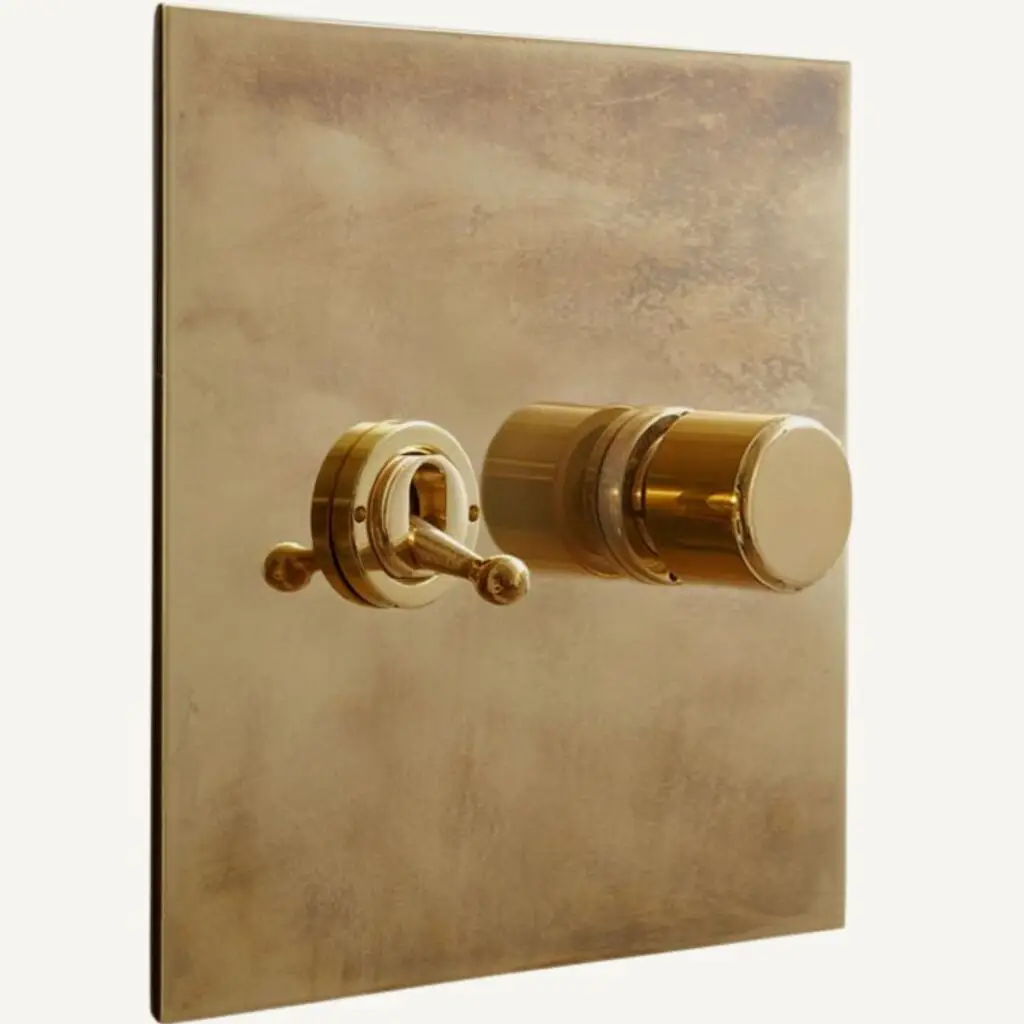
via Rejuvenation
~$80–120, Rejuvenation
Aged Brass arrives antiqued and patinas further.
Some links may be affiliate links, meaning I may earn a small commission if you choose to purchase — at no additional cost to you. I only share products I genuinely like, would use in my own home, or have researched and feel confident recommending.
Why Old Houses Still Have the Wrong Light Switches
Every old house is already saying something interesting.
The plaster walls, the trim profiles, the door hardware, the window proportions. It’s a story that started a hundred years ago and has building ever since. Your job as the steward of that house isn’t to rewrite it. It’s to keep editing it.
Most of us interrupt the story constantly without realizing it. We spend money on the right tile, the right fixtures, the right paint color and then we slap a $5 white plastic outlet cover on the wall and call it a day.
I’ve been thinking about this since I started living in old houses. When I moved into Rosemont, I got a skosh obsessed with getting the electrical hardware right. Not because switches are glamorous (they’re probably not), but because they’re one of the last details most people get to.
But they’re one of those things we touch, literally, every single day.
Here’s the thing about old house electrical hardware: there’s more available in the US right now than there has been in decades, across a wider range of budgets. My Pinterest feed is filled with TONS of sexy outlets and switches (there, I said it).
You don’t have to choose between period-correct and affordable. You don’t have to choose between looking right and functioning well. But you do need to know what you’re looking for because the default at most hardware stores is wrong for old houses.
The Rule Before the Rules
Your switch hardware should speak the same design language as your other hardware.
If your door handles are unlacquered brass, your switches should be warm metal. If your bathroom is chrome and ceramic, your switch should be chrome or nickel — not bronze, not brass, not white plastic. If your house is a 1910 Craftsman with mission tile and dark woodwork, you have different options than a 1924 colonial with plaster walls and painted trim.
The single most common mistake isn’t choosing the wrong switch. It’s choosing a switch without considering what language the room is already speaking.
Know what’s right for the house first. Then consider the room’s language next. Then shop.
Push-Button Light Switches: For Pre-1940 Houses and Old House Lovers Everywhere
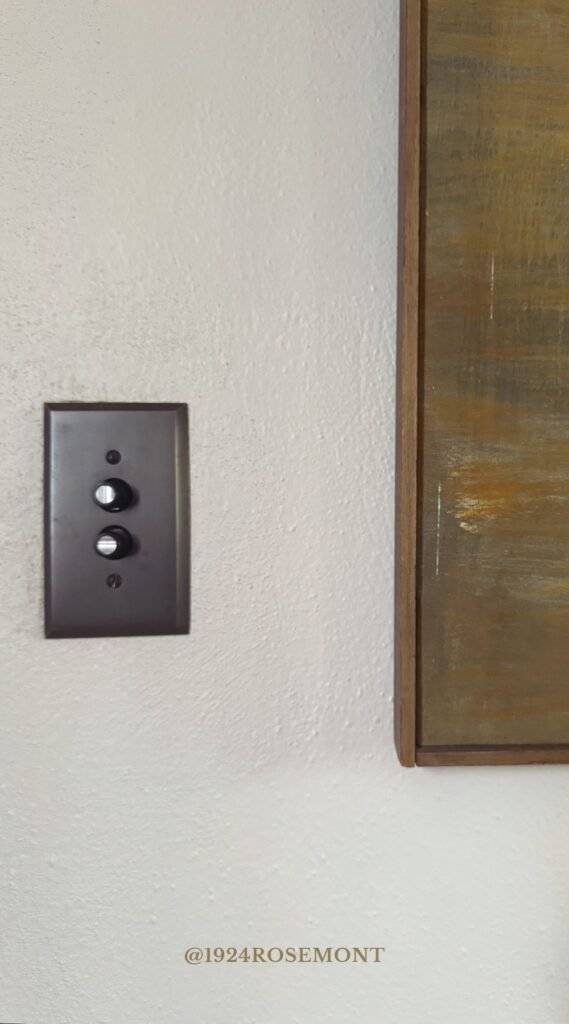
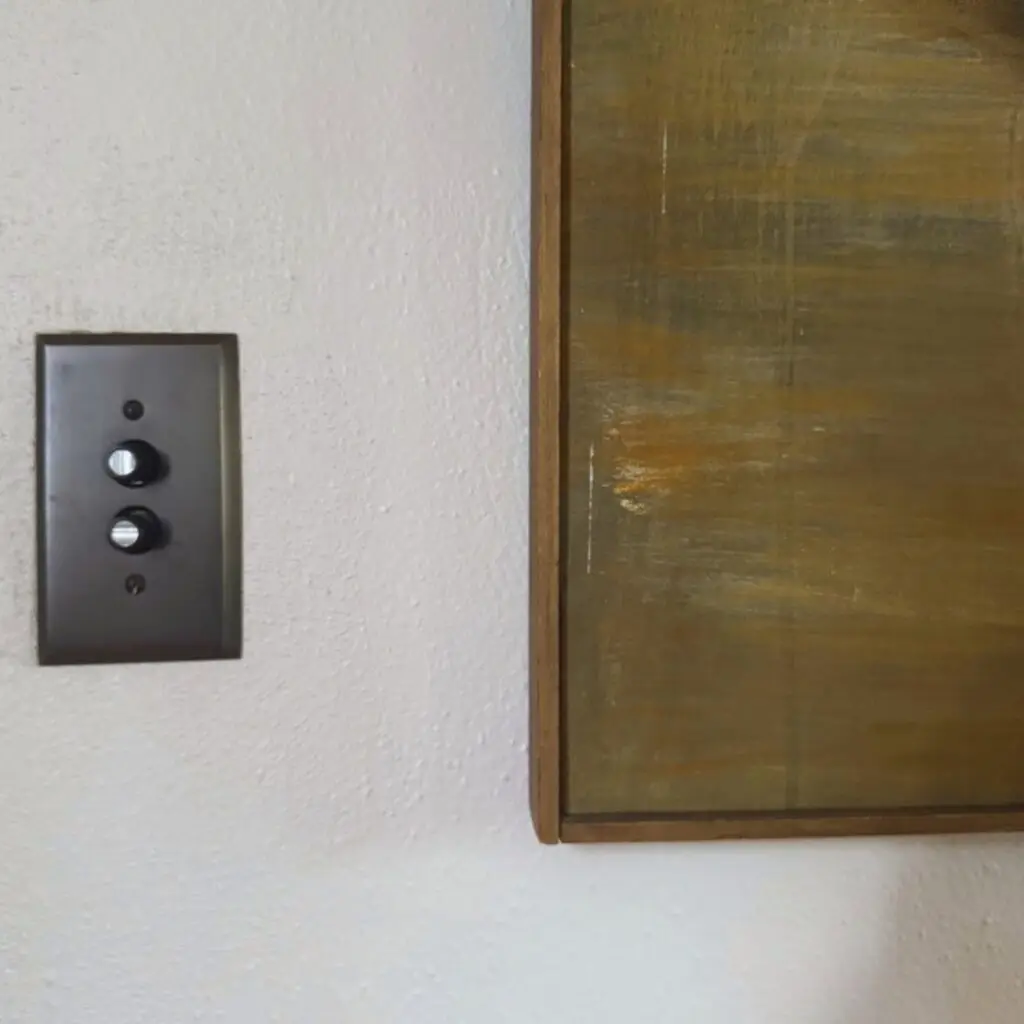
Push-button switches were standard in American homes from roughly 1890 through the 1930s. If your house was built before 1940, push-button hardware is period-correct. Not a costume, not an affectation.
It’s what belongs there.
The modern reproduction options are genuinely good. They wire into standard US electrical boxes, work with dimmable LED bulbs, and meet current safety standards.
The switches we use at Rosemont
The House of Antique Hardware Premium 3-Way Push Button Dimmer with Mother-of-Pearl Inlays, paired with their Distressed Bronze single push-button switch plates. The combination reads as something original to the house. That’s exactly what we wanted.
House of Antique Hardware is what I’d call premium tier. These push-button switches have genuine mother-of-pearl button accents, smooth operation, and the authentic snap. If you’re doing a careful restoration, or just love the feel of a solid “CLUNK” when you turn on the lights, this is the one.
Classic Accents is the accessible tier. They’ve been making reproduction push-button switches since 1984, available in 10+ colors, with three-way and dimmer options. The mechanism is solid. The price is significantly lower.
Kyle Switch Plates is the specialist. If you have an oddball mid-century system (Despard brackets, Sierra Biplex outlets, discontinued configurations), Kyle is where you go. They custom-make covers for systems nobody else touches.
Can’t replace the outlet cover … yet? There’s a fix for that, too.
Kyle also makes a push-button insert for Decora rocker plates. They’re a retrofit solution that snaps into your existing rocker cover and gives you the push-button action without touching the plate. Perfect for rentals, or anyone who wants to test the feel before committing to a full swap.
Solid Brass Toggle: The Most Versatile Light Switch Cover Category
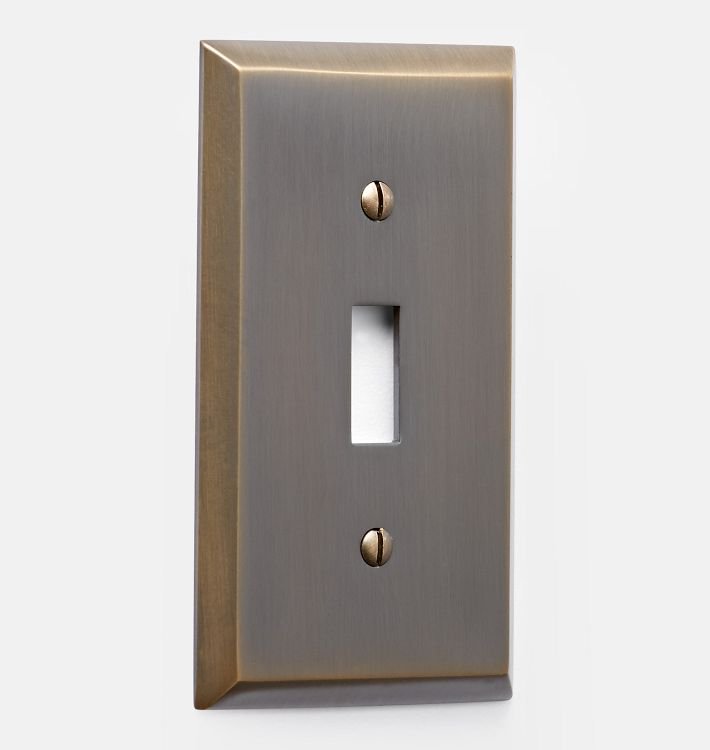
This is the category most old house owners might start with, especially if you’re not doing a strict period restoration. A well-made solid brass toggle plate reads as considered and intentional in a pre-1940 house without requiring you to rewire anything or commit to a single aesthetic.
Rejuvenation’s Lewis Collection is the workhorse of this category. Hot-forged brass, seven finishes (including polished chrome, aged brass, unlacquered brass, oil-rubbed bronze, brushed nickel, polished nickel, and burnished antique), every configuration you need — single, double, triple, GFCI, outlet, blank, dimmer.
If you want to do the whole house in one consistent system without spending Buster + Punch money, Lewis is it.
The polished chrome Lewis is specifically the right answer for a chrome-and-ceramic bathroom. Warm enough to not read as cold modern, period-adjacent enough to not look wrong in a 1920s tile bathroom.
House of Antique Hardware’s Art Deco forged brass line is worth knowing for houses with 1930s DNA. Streamlined design, unlacquered brass that will patina because of their solid construction.
Jump to → More Light Switch Covers
Knurled and Rotary: The Design-Forward Light Switch Category
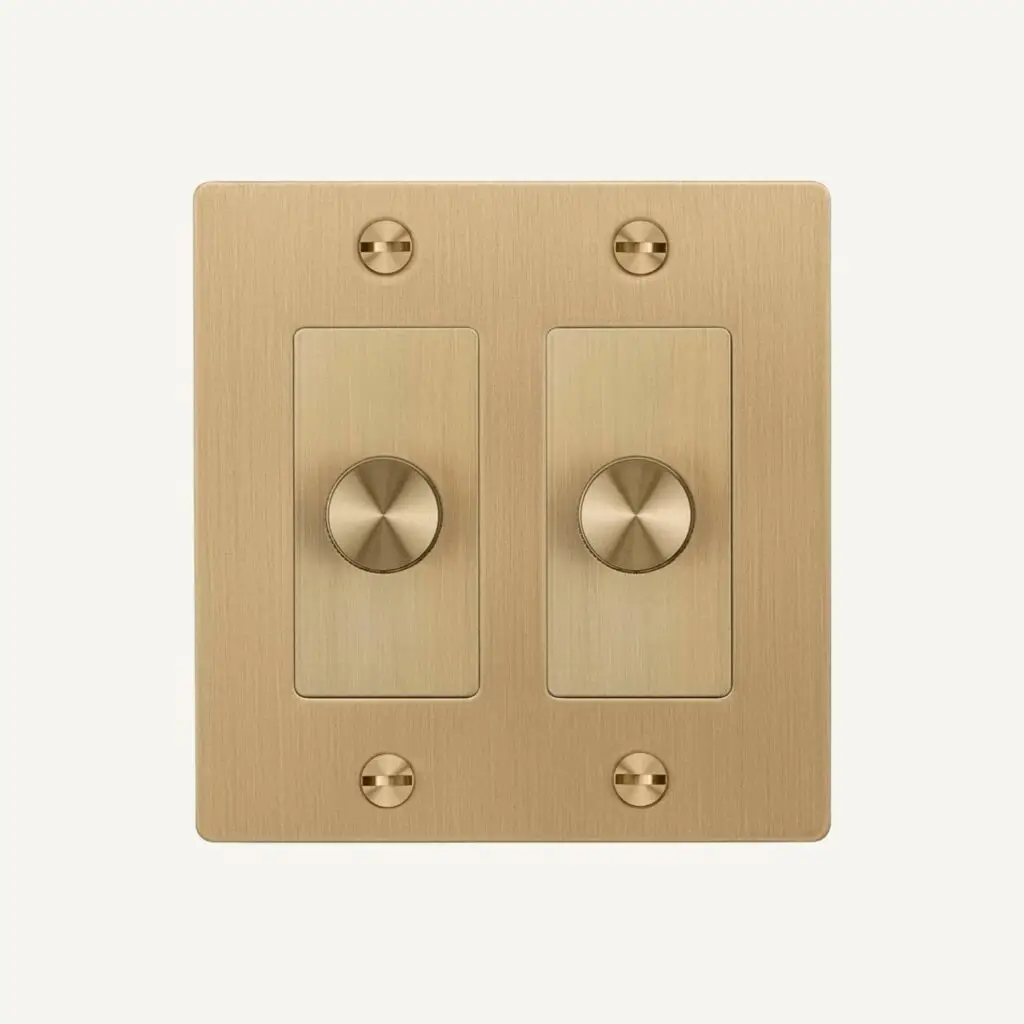
This category is newer and it’s earning its place.
The knurled metal switch — a toggle or rotary knob with a diamond-cut grip pattern machined into solid metal — has a visual lineage that reads as mechanical, pre-war, and intentional.
While it’s not strictly period-correct for any American house style, it’s not wrong either. Think of it as the design-forward interpretation of the same instinct.
KLAS by Handle Shop Couture is the find of this category. A solid brass rotary dimmer with a cross-knurl pattern, UL certified for US and Canada, installs in standard gang boxes, available in 1- through 5-gang configurations with matching outlets and toggle switches. Reviewers describe the brass as arriving clean and unscratched, with a satisfying click. At roughly half the price of Buster + Punch, it’s the right entry point for this look.
The honest caveat on rotary dimmers across this category: dimming action can be slightly jumpy depending on your bulbs. Test with your specific fixtures before committing to the whole house.
Buster + Punch is the splurge benchmark — solid metal, five finishes, a following among designers. The brass version develops a living patina. The honest review from multiple buyers: the toggle feels and sounds slightly less substantial than the price suggests. Buy one for a statement room. Not the whole house.
Jump to → More Knurled & Rotary Switches
Heritage British: The Aspirational Light Switch and Outlet Cover Tier
Two British brands have US-compatible lines worth knowing about.
Forbes & Lomax has been making heritage electrical hardware since 1987.
Their Aged Brass finish is designed to arrive looking antiqued and patina further over time. The effect is hardware that’s always been part of the house.
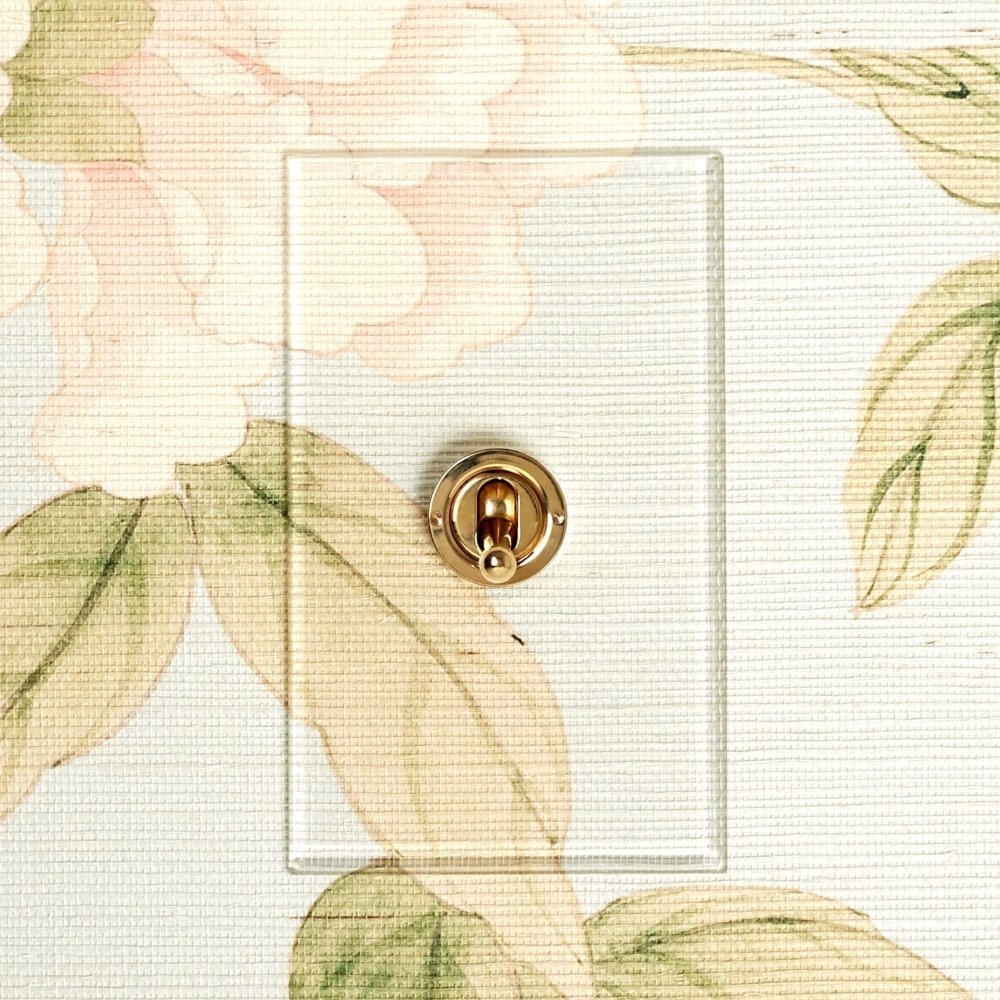
Their Nickel Silver finish (warmer than chrome, cooler than brass) is the right answer for silver-toned bathrooms. And the Invisible Lightswitch is a clear acrylic plate with a metal toggle inspired by 1930’s glass switch covers that disappears into wallpaper completely. Nothing else in the US market does that. Rejuvenation also offers some Forbes & Lomax products on their site.
Corston Grove is the retrofit specialist.
Solid brass plates, precisely machined, screwless (they clip in place), compatible with existing boxes without modification. Ships from Chicago. If you don’t want to touch your existing electrical boxes, Corston Grove is designed for exactly that situation.
Jump to → More Heritage Options
Ceramic and Tile Switch Plates: The Wildcard Category
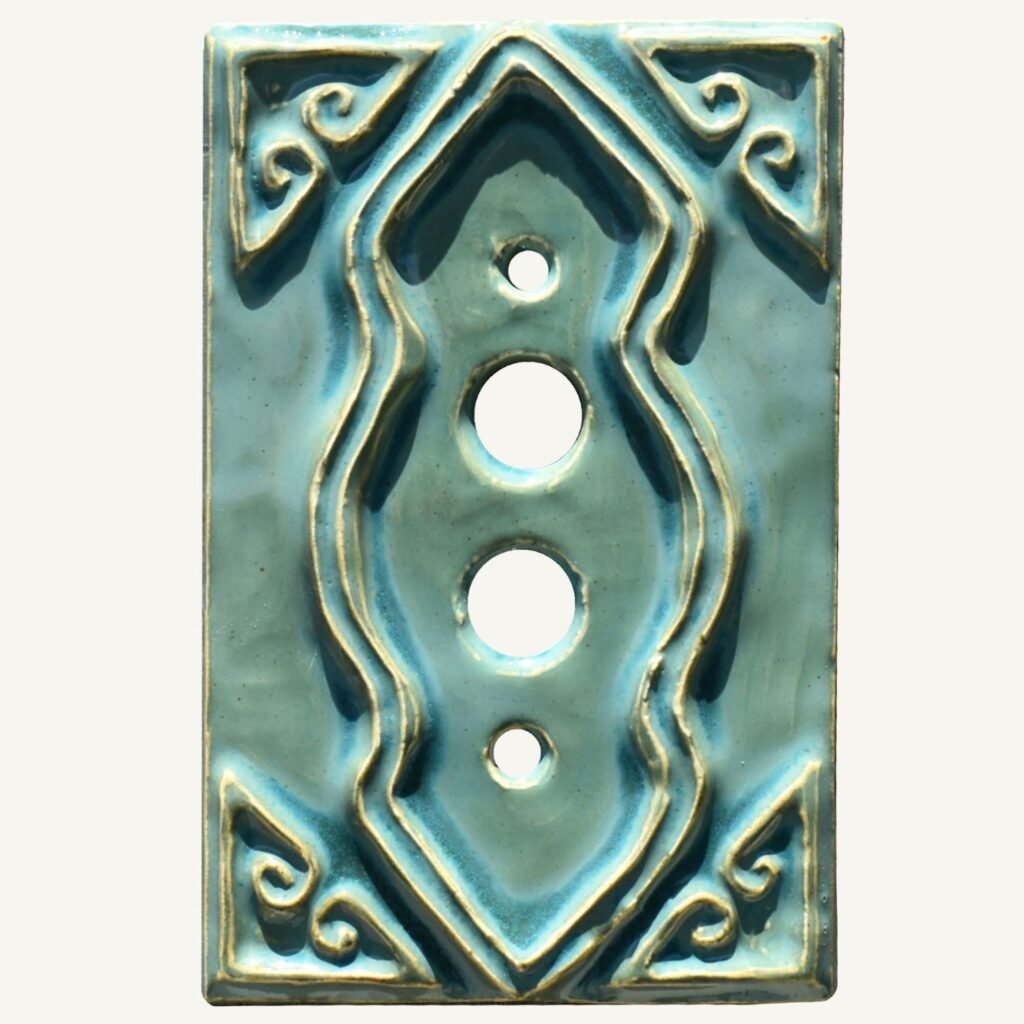
For kitchens with subway tile, bathrooms with heavy tile work, Arts and Crafts houses, or any room where you want the switch to feel like a found object rather than a hardware selection — ceramic is an answer most people don’t know exists.
Switch Hits makes ceramic switch plates in eleven configurations and ten color choices, specifically designed to coordinate with kitchen and bathroom tile.
Honeybee Ceramics (Santa Cruz, CA) is the artist option. Handmade ceramic switch plates in Moroccan arabesque patterns, kiln-fired glazes in antique teal, dark blue, patina green, and more. She also makes a ceramic push-button plate that pairs the reproduction push-button form with hand-glazed ceramic in colors that read as collected, not purchased.
Jump to → More Ceramic and Tile Switch Plate Covers
The Light Switches I Wish Existed in the US
This is the Dyke & Dean Verna — a handmade porcelain electrical switch made in the Czech Republic by Katy Paty, available in a number of switch types and roughly twenty colors including green, mint, azure, carrot, sand, and more.
It is genuinely beautiful and unlike anything available in the US market. And I would love to have this in kitchens and bathrooms at my house.
Here’s the honest situation: it technically works on US voltage (250V covers 110-120V), but it’s not UL-listed, requires European-sized circular back boxes rather than standard US gang boxes, and the dimmer version is incompatible with US wiring entirely. Installing these in a US home means opening walls and setting new boxes. Doable — not trivial.
There is no US-made equivalent. A color-saturated, enameled porcelain integrated switch with a fat modern-retro button simply doesn’t exist here yet. The closest domestic option is Honeybee Ceramics a cover plate over a standard push-button switch, not an integrated porcelain body, but the closest thing available without an electrician and a wall demo.
I’m watching this space. When a US-compatible version lands, you’ll read about it here first.
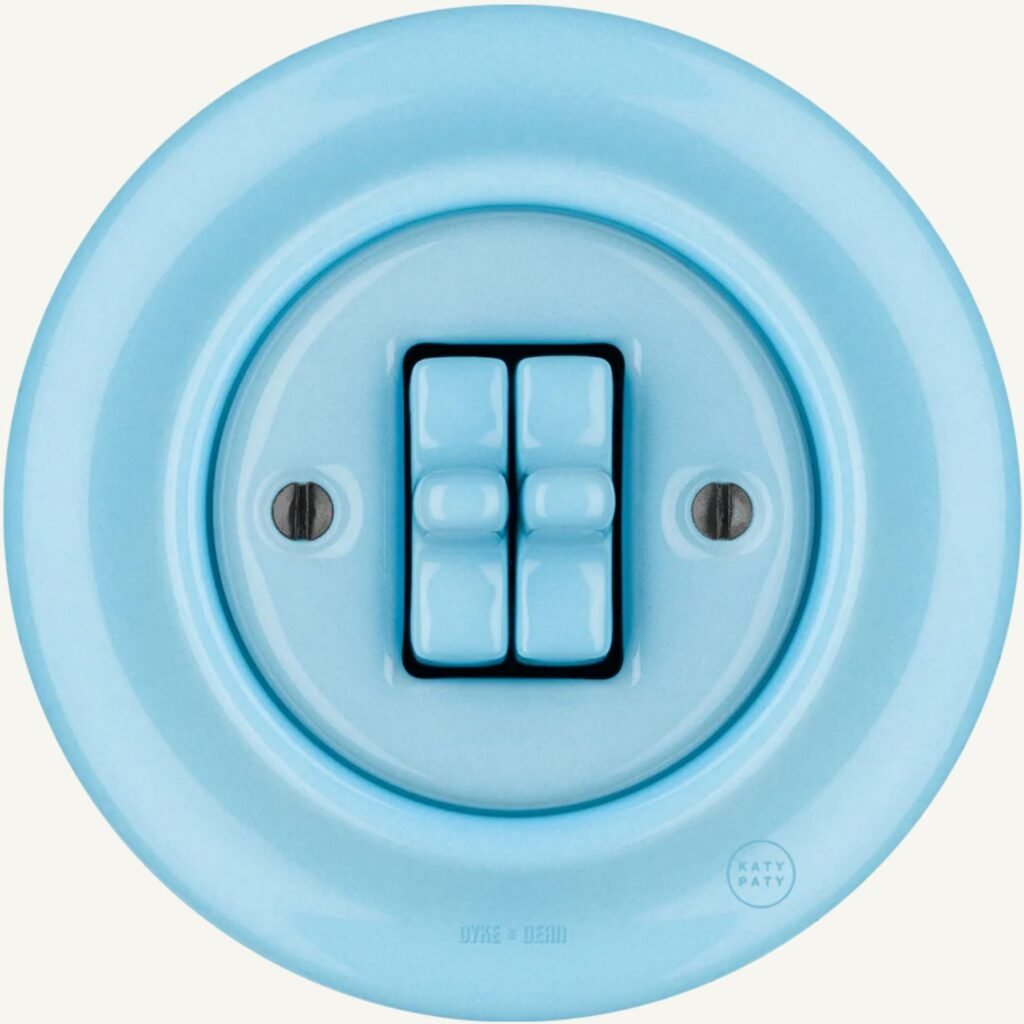
2-Gang Porcelain Toggle Switch
Related: 15 Bathroom Accessories That Won’t Ruin the Old House Look
Switch Missteps in Old Houses
Most switch mistakes in old houses come down to four things.
Don’t….
Default to white plastic Decora rockers. The rocker switch — that wide paddle that clicks to one side — is a 1970s invention. It is the single most common anachronism in renovated old houses. It’s not that it’s ugly. It’s that it’s from the wrong century.
Mismatch your hardware finishes. Bronze switches with nickel door hardware. Chrome outlet covers with brass faucets. The room feels unresolved and you can’t name why. Name it: the hardware isn’t speaking the same language.
Use cover plates without the right switch. Dropping a beautiful cover plate over a standard plastic toggle is better than nothing, but it’s not the same as replacing the switch itself. The plate and the switch are a system. Treat them that way.
Go room by room, randomly. The biggest mistake is treating each room as an isolated decision. Your switch hardware is whole-house infrastructure. Choose a whole-house point of view first and adjust your room-by-room logic before you start buying.
Instead…
Work with your budget. Decora switches all over the house? It’s just a fact of Old House life. There are options for interim upgrade from Kyle that give you the opportunity to “step up” and try before you make a bigger investment.
Decide on which finishes you’ll use together. We have bronze and unlacquered brass throughout most of the house, with nickel and chrome in bathrooms. Having this planned helps us quickly focus on design, not spiral on finishes.
Upgrade as you can. Sample your outlet covers and switch plates in a single room to live with them and upgrade room by room as you can afford the work.
Define the whole-house point-of-view. Consider your electrical switch and cover point of view first and adjust your room-by-room logic before you start buying. Upgrading room-by-room, over time? It’s exactly how we’re doing it, keeping our point of view in mind.
Frequently Asked Questions
Do I need an electrician to replace my light switches?
For a straight switch swap — same box, same wiring configuration — many homeowners are comfortable doing this themselves with basic electrical knowledge and the power off at the breaker. For dimmer switches, three-way wiring, or any situation where you’re not sure what’s in the box, hire an electrician. Don’t risk a wiring mistake on an $80 dimmer.\
Are reproduction push-button switches safe for modern wiring?
Yes, when purchased from reputable US sources. The switches from House of Antique Hardware and Classic Accents are UL listed and built to modern electrical standards. The vintage look is reproduction — the safety specs are current.
What’s the difference between unlacquered brass and aged brass?
Unlacquered brass will patina naturally over time — starting bright and warming to a deeper, more golden tone as it oxidizes. Aged brass is pre-treated to accelerate that process, arriving already looking mellowed and antique. For a period house, both are better choices than lacquered brass, which never changes. The unlacquered and aged options live in the room rather than sitting on top of it.
Can I mix switch styles in one house?
It’s your house, YES! But do it thoughtfully. The most common approach is a consistent system for main living areas and a room-specific choice for bathrooms, kitchens, or statement spaces. What you want to avoid is random variation with no organizing principle. Pick your main system first, then make deliberate exceptions.
What about smart switches and home automation?
Most of the switches in this post are compatible with smart dimmer modules or can be paired with smart bulbs rather than replacing the switch itself. Forbes & Lomax makes a retractive toggle module for smart home systems. If home automation matters to you, check compatibility before buying — and consider pairing a beautiful switch with smart bulbs rather than replacing the switch with something that looks wrong.
We’re HUGE fans of Phillips HUE smart bulbs and accessories to make routines easy, lighting the yard and spaces in the house without switches.
Related: 5 Bathroom Mirrors That Make Your Old House Bathroom Shine
Old House Rules: Light Switches
Pick your whole-house system first. Make deliberate room-by-room exceptions. Never random ones.
Know your room’s hardware language before you shop. Brass, chrome, nickel — pick one (or your finish companions) and commit.White plastic Decora rockers are from the wrong century. There is always a better option. Upgrade as you can to honor your home’s history.
The plate and the switch are a system. A beautiful plate over a plastic toggle is half a solution.
Push-button is period-correct in pre-1940 houses. It’s not a costume. It’s what belonged there.
If it’s not UL-listed, know what you’re getting into. Beautiful isn’t always code-compliant. Don’t risk your well-being for out-of-compliance design.
Shop This Story
Some links may be affiliate links, meaning I may earn a small commission at no additional cost to you.
What We Use at Rosemont
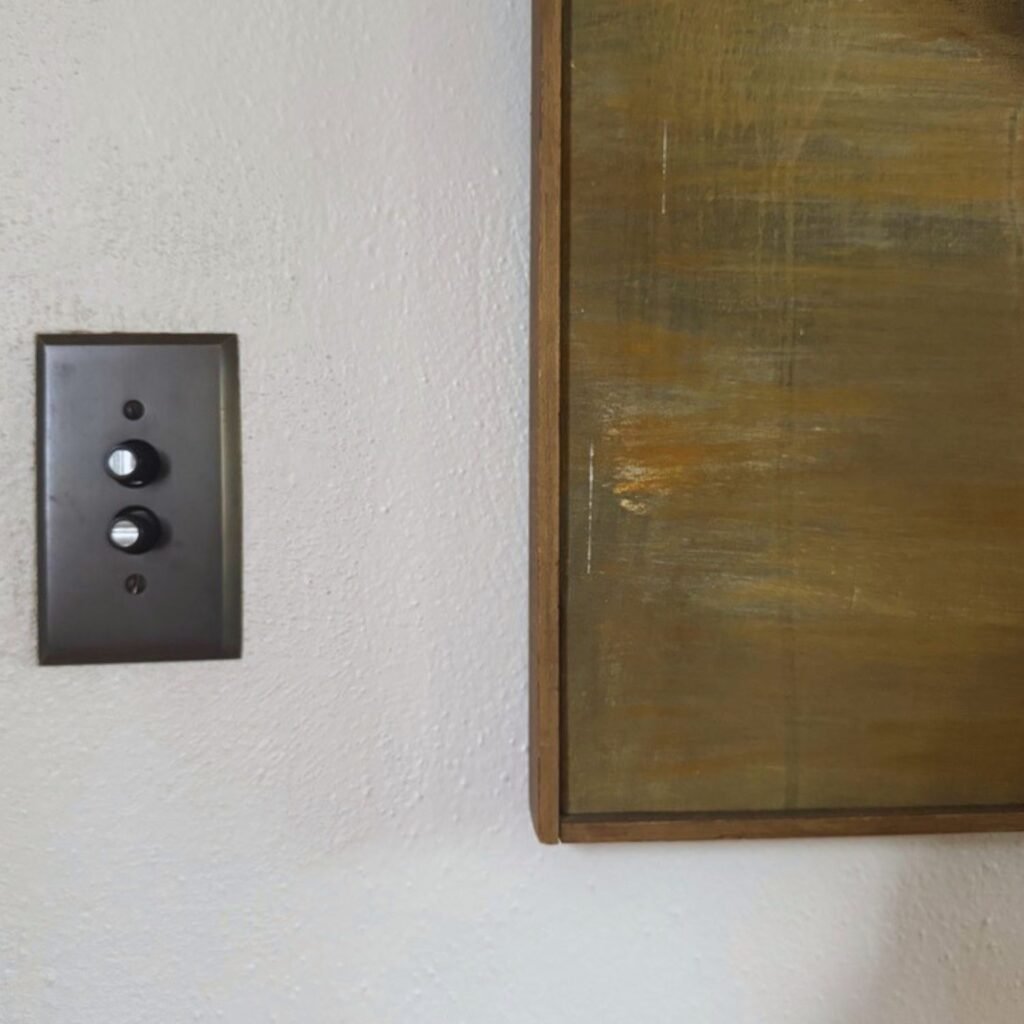
House of Antique Hardware Premium 3-Way Push Button Dimmer with Mother-of-Pearl Inlays
~$60–80, House of Antique Hardware
The one. Mother-of-pearl inlay, modern dimmer function, authentic snap. UL listed. Works with dimmable LED.
House of Antique Hardware Distressed Bronze Single Push Button Switch Plate
~$20–30, House of Antique Hardware
Cast solid bronze, plain design, rustic patina that reads as original. Paired with the dimmer above.
Push-Button Light Switches & Reproduction Switch Plates
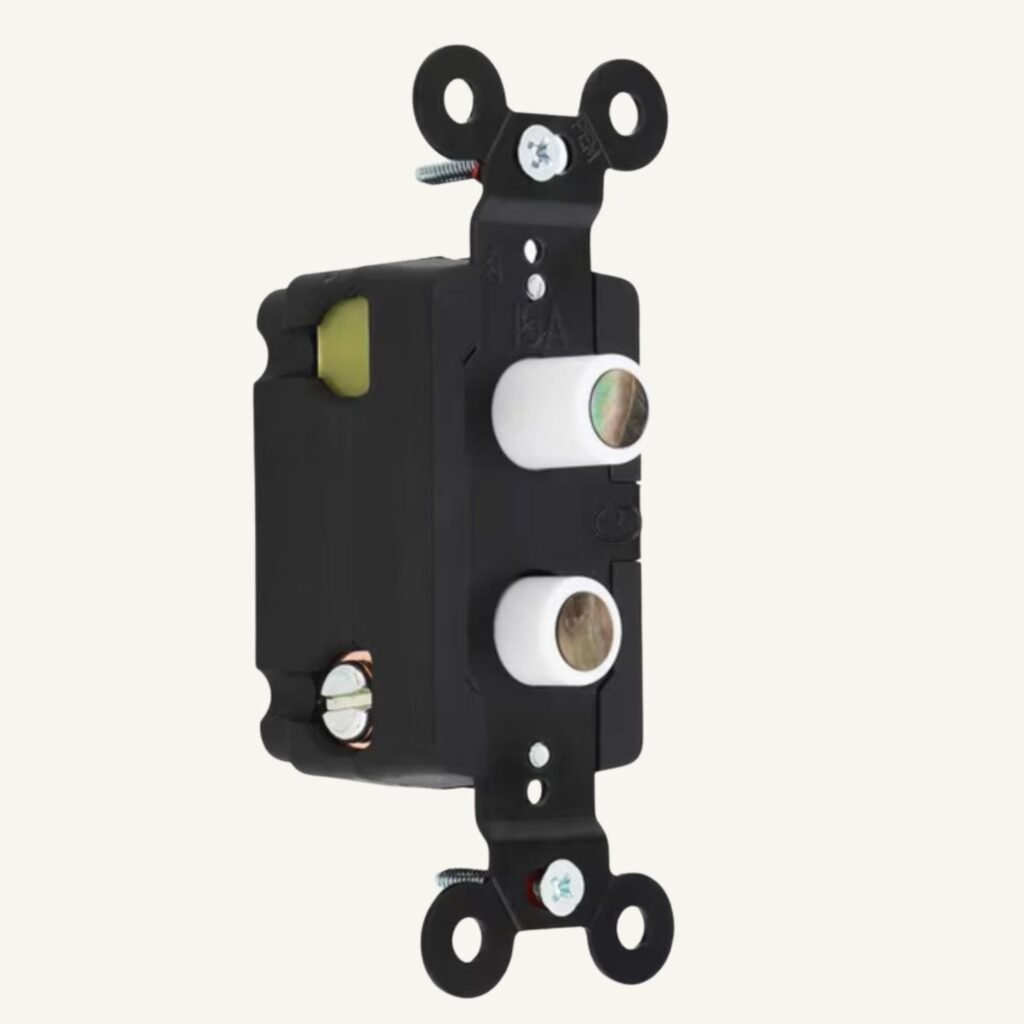
House of Antique Hardware Premium White Push Button Switch
~$30–50, House of Antique Hardware
The white button options are just right for lighter rooms and painted woodwork.
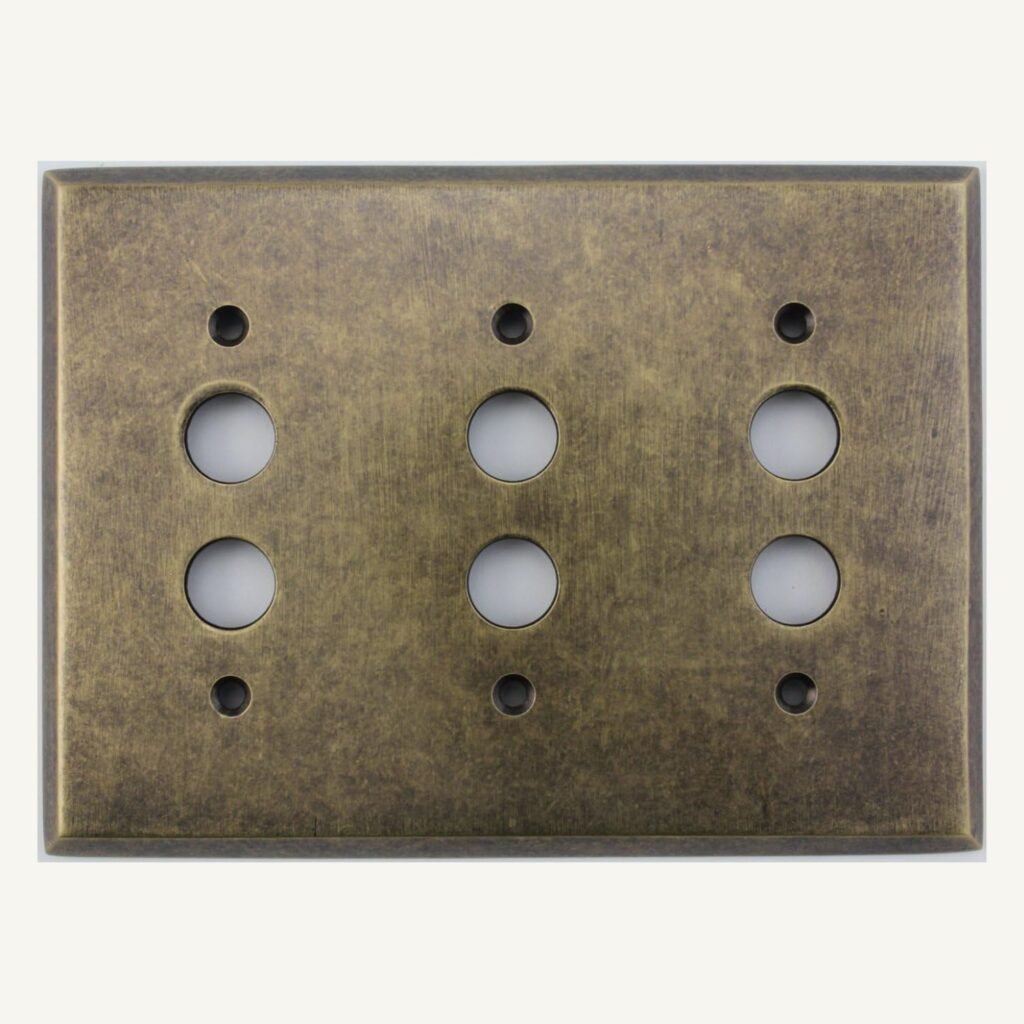
Classic Accents Reproduction Push Button Light Switch
~$15–25, Classic Accents
Thirty-plus years of making these. Available in 10+ colors. The accessible entry-level price point.
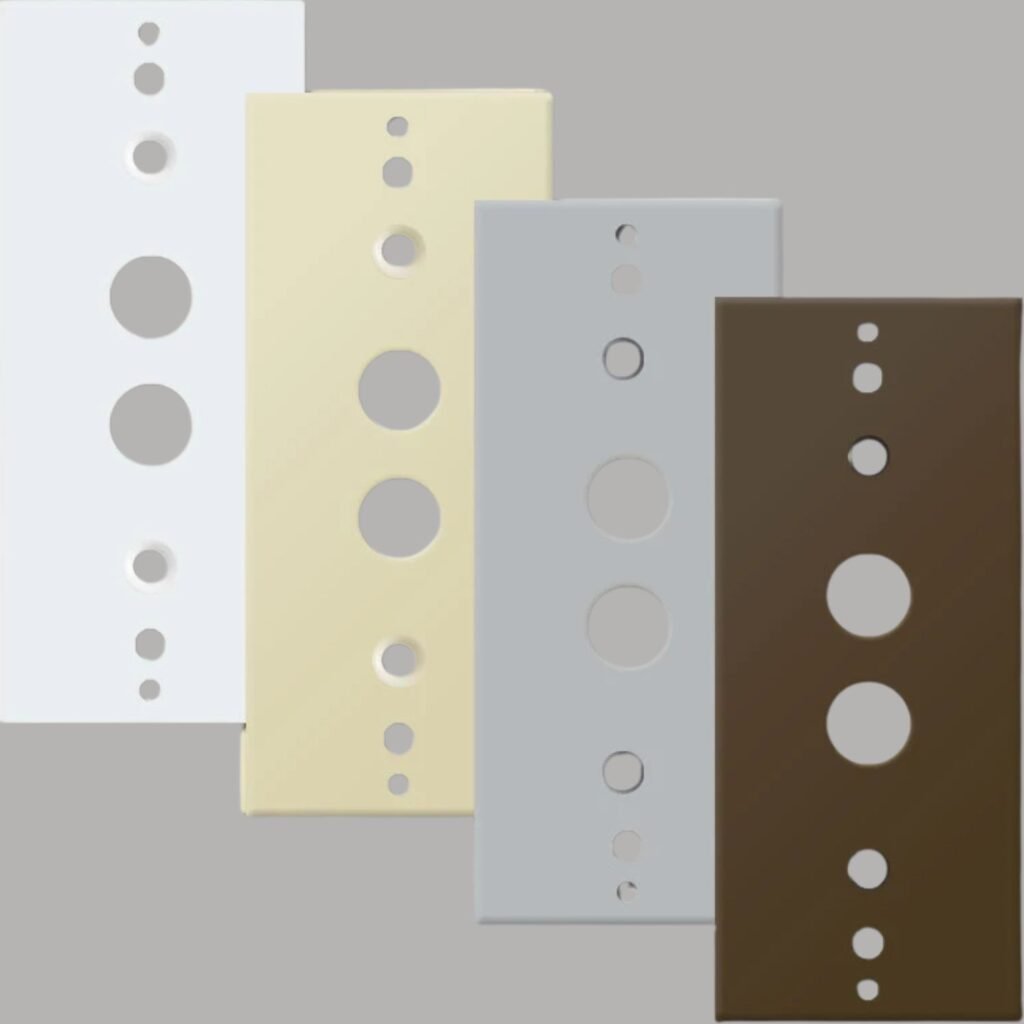
Kyle Switch Plates, Custom Reproduction Covers
Price varies, Kyle Switch Plates
The specialist for discontinued configurations and odd mid-century systems nobody else fits.
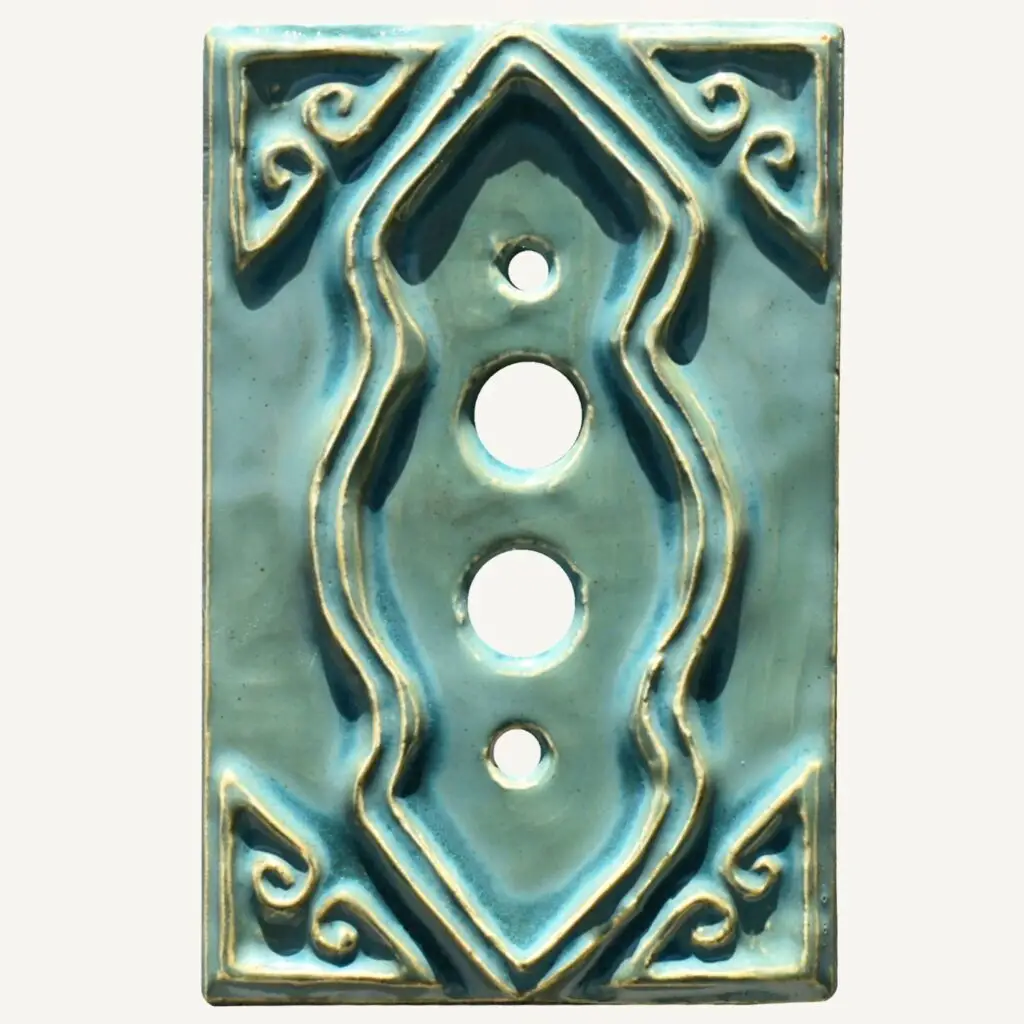
Honeybee Ceramics Moroccan Antique Push Button — Ceramic
Price varies, Honeybee Ceramics
Handmade ceramic, Moroccan arabesque pattern, kiln-fired glaze. The statement room pick.
Solid Brass Switch Plates & Outlet Covers
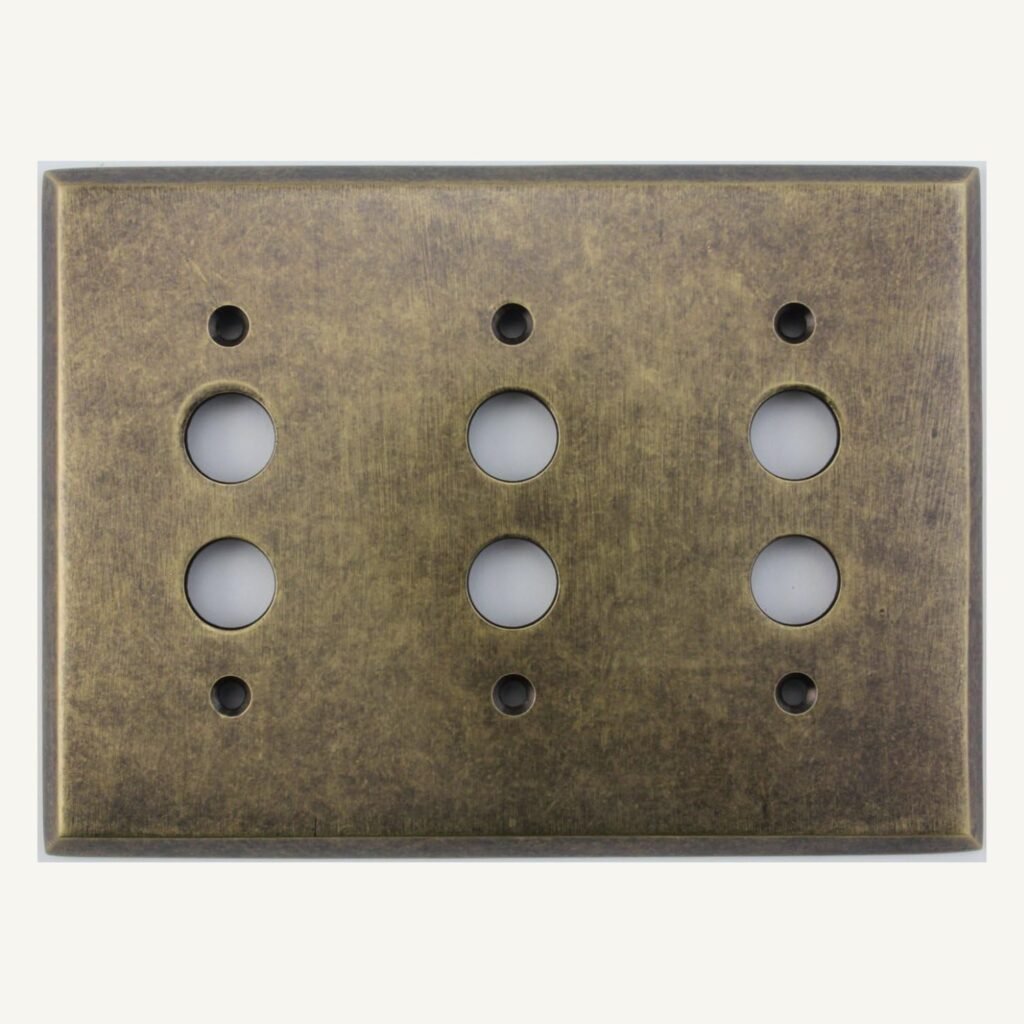
Classic Accents Aged Antique Brass 3 Gang Push Button Switch Wall Plate
~$10–30, Amazon
Heavy solid brass at more accessible prices. Multiple options, configurations, and styles.
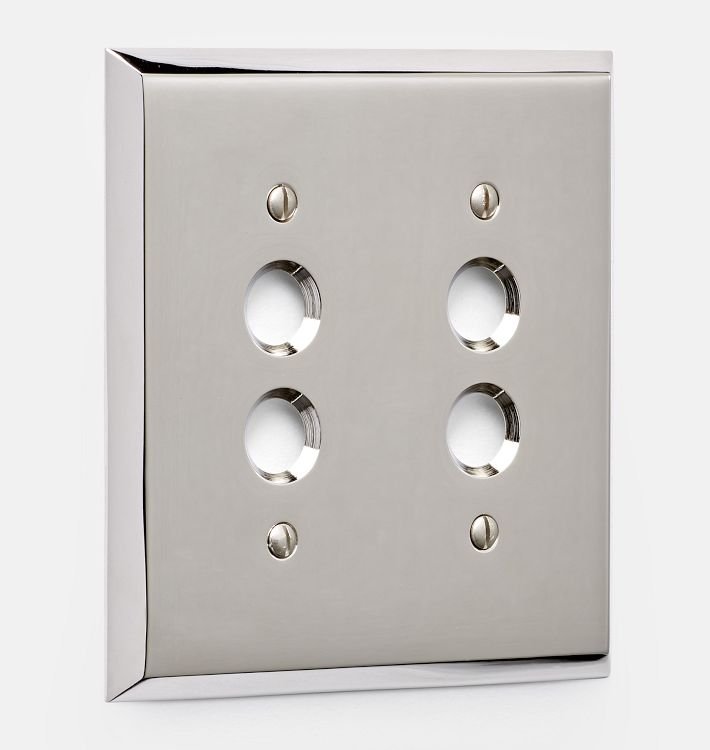
Rejuvenation Lewis Push-Button Switchplate — Polished Nickel
~$30–50, Rejuvenation
Seven finishes. Tons of configurations. The Nickel version is our bathroom remodel choice.
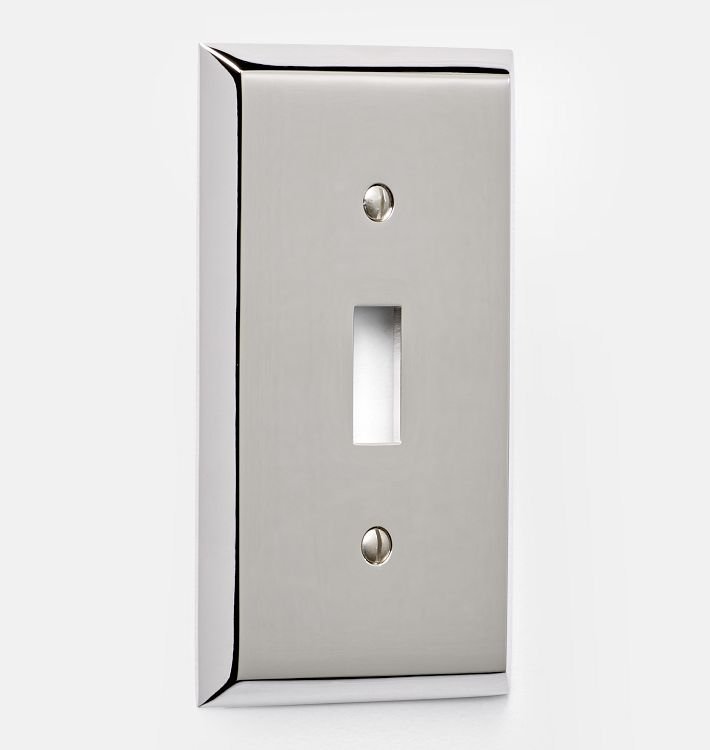
Rejuvenation Lewis Single Toggle Switchplate
~$25–40, Rejuvenation
Hot-forged brass, slim profile, beveled edges. The whole-house workhorse if you’re sticking with traditional toggle switches.
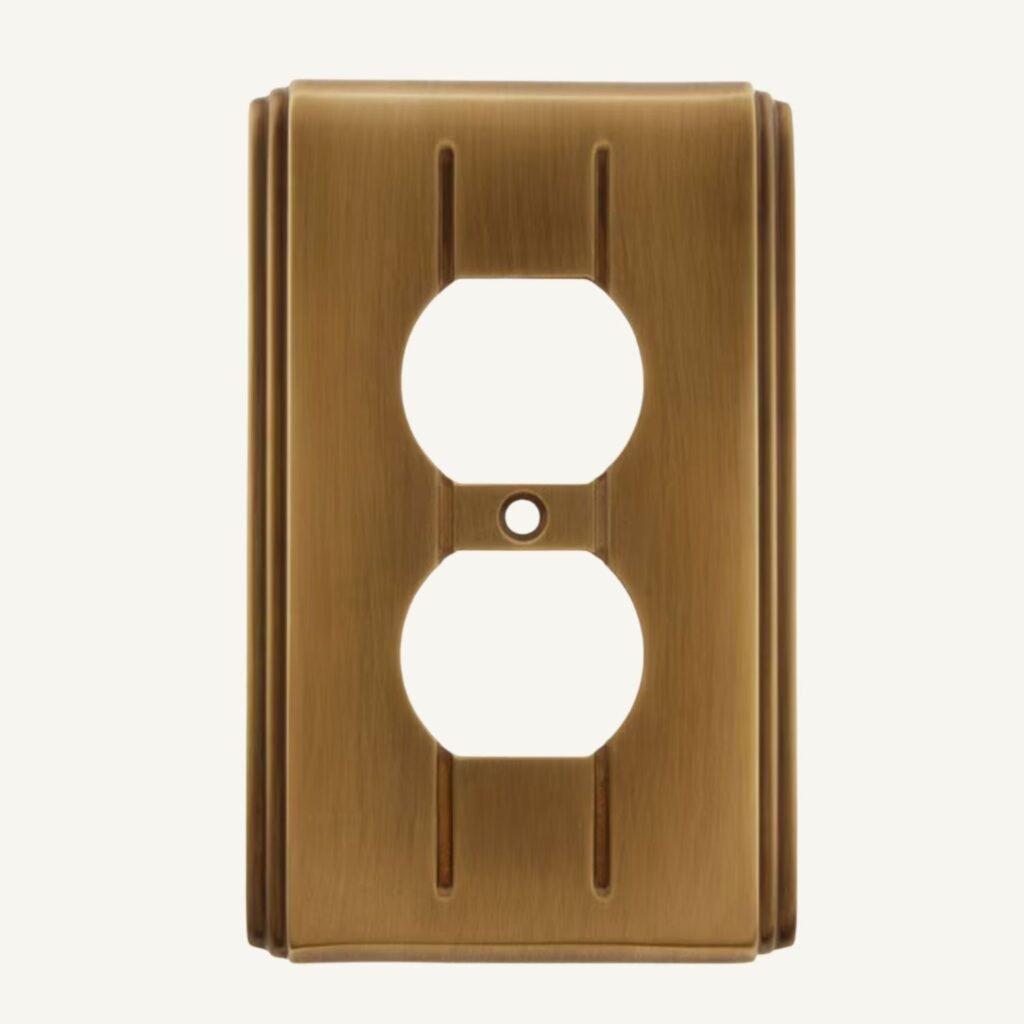
House of Antique Hardware Art Deco Forged Brass Cover
~$25–40, House of Antique Hardware
Streamlined 1930s design. Unlacquered brass or polished nickel.
Knurled and Rotary Electrical Switches & Heritage British Toggle Switches
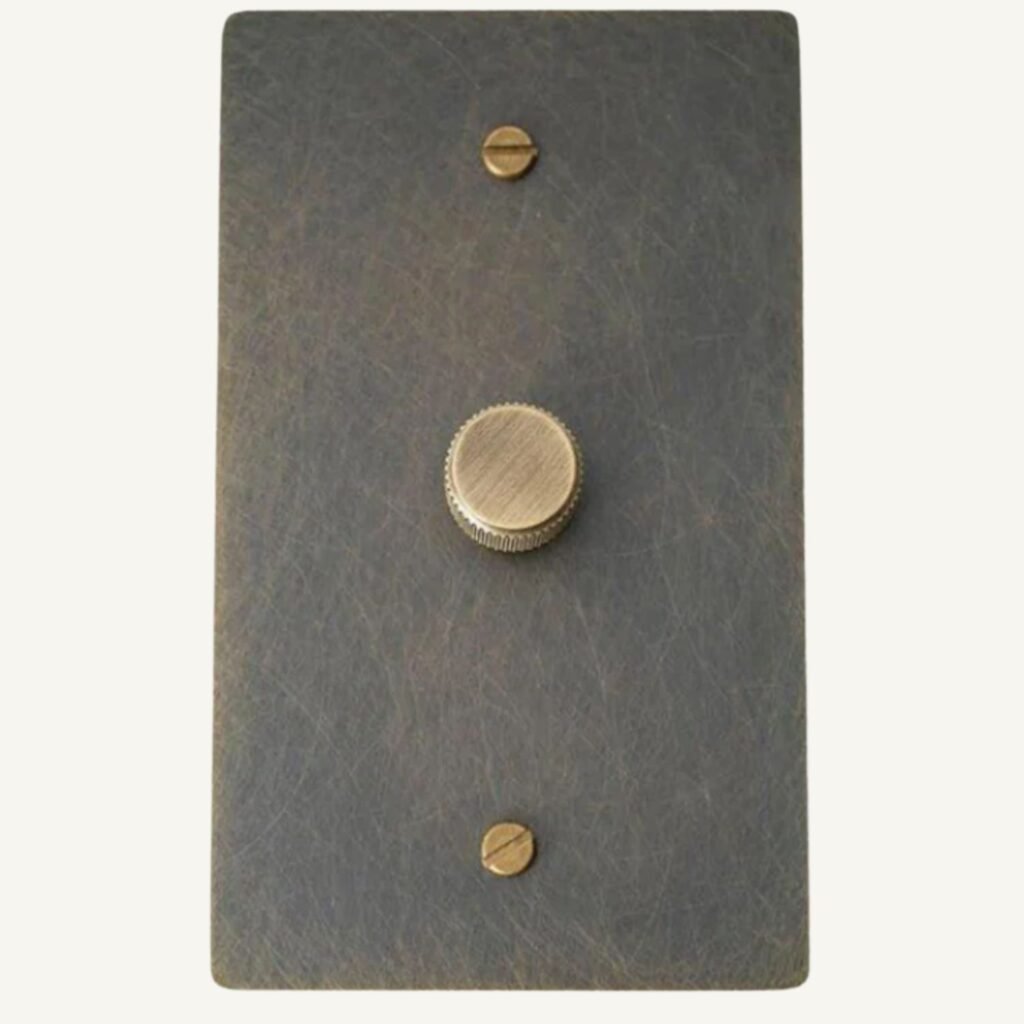
KLAS Brass Rotary Dimmer Switch — Handle Shop Couture
~$60–80, Handle Shop Couture
Solid brass, cross-knurl pattern, UL certified, 1–5 gang. Half the price of Buster + Punch.
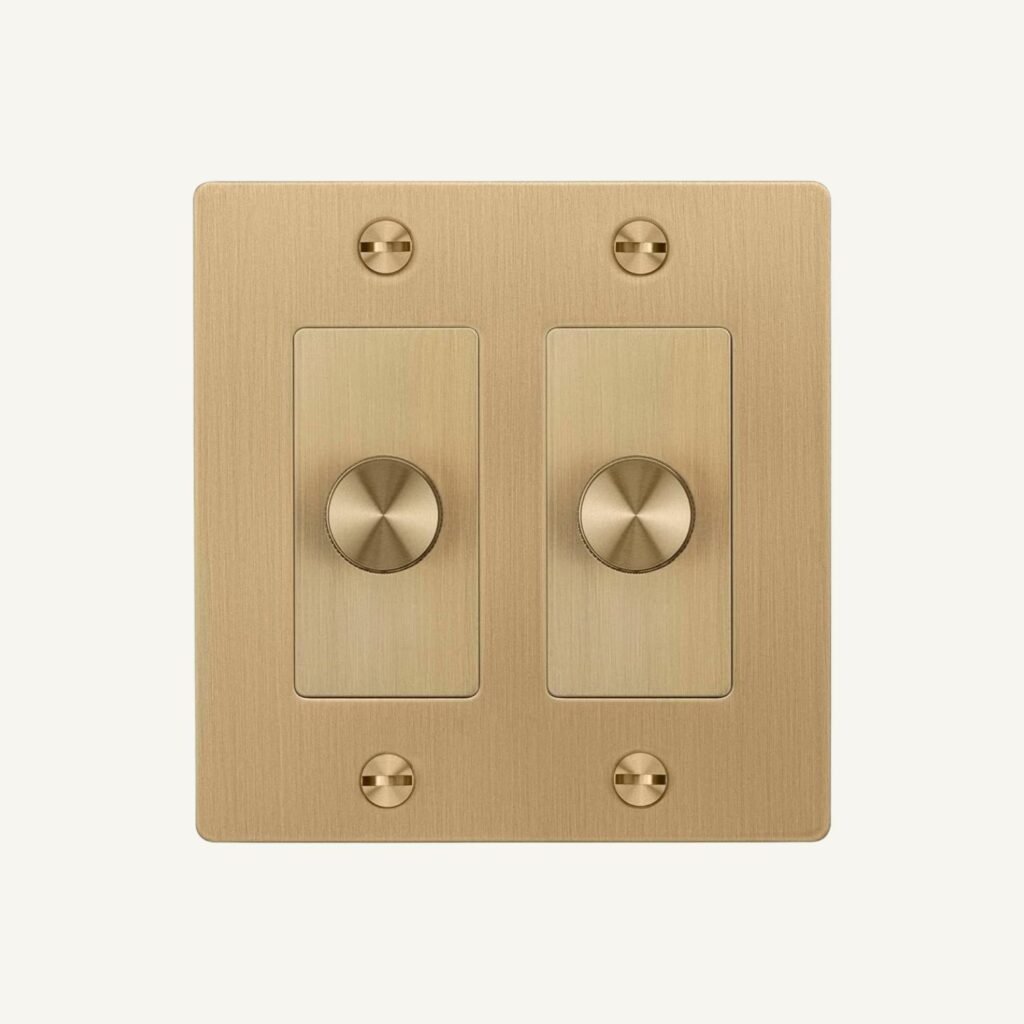
Buster + Punch 1-Gang Complete Toggle Switch
~$107–650, Buster + Punch
A without-a-doubt splurge. Solid metal, five finishes, living patina on brass. Buy one for a statement room.
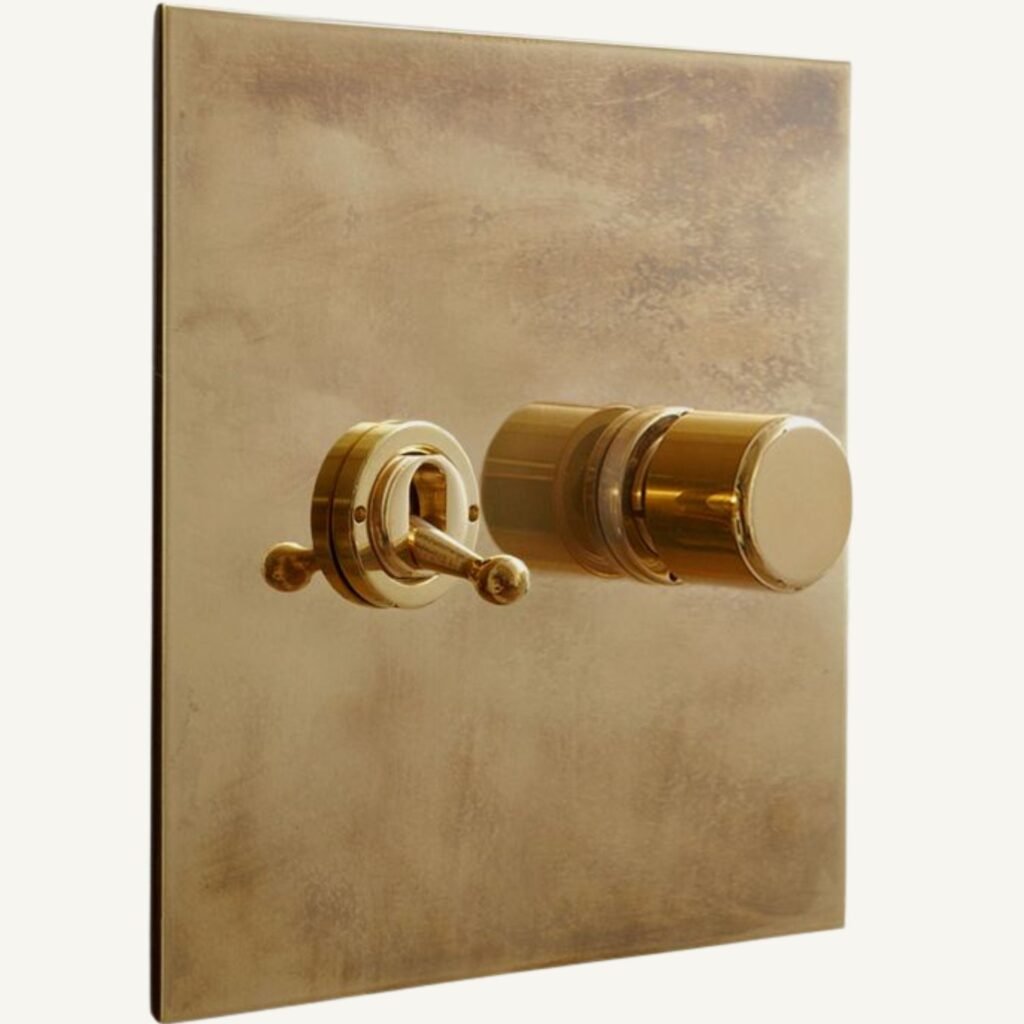
Forbes & Lomax Toggle Dimmer — via Rejuvenation
~$80–120, Rejuvenation
Aged Brass arrives antiqued and patinas further. The Invisible plate disappears into wallpaper.
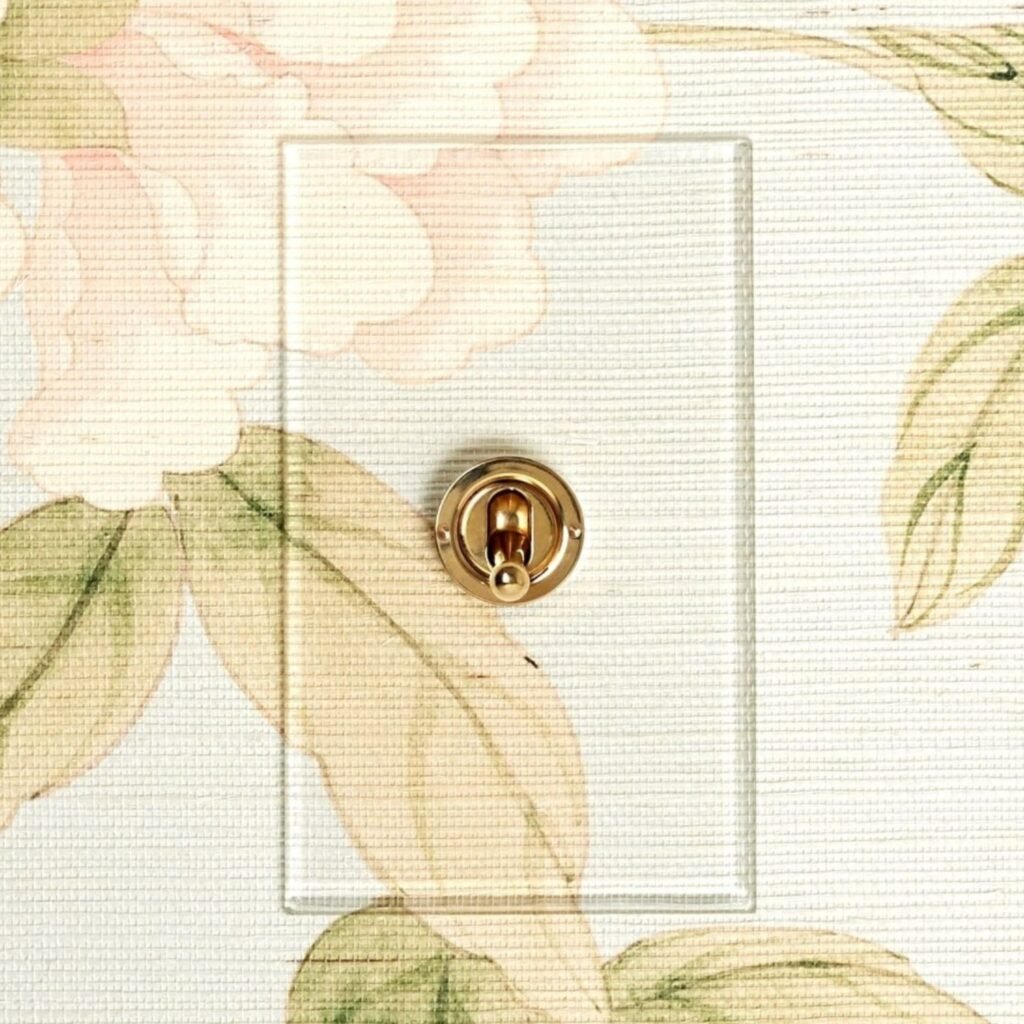
Forbes & Lomax Invisible Toggle Dimmer
Price on request, Forbes & Lomax
Well, we love these. Inspired by glass switch plates used in the 1930s. These invisible plates disappear into wallpaper.
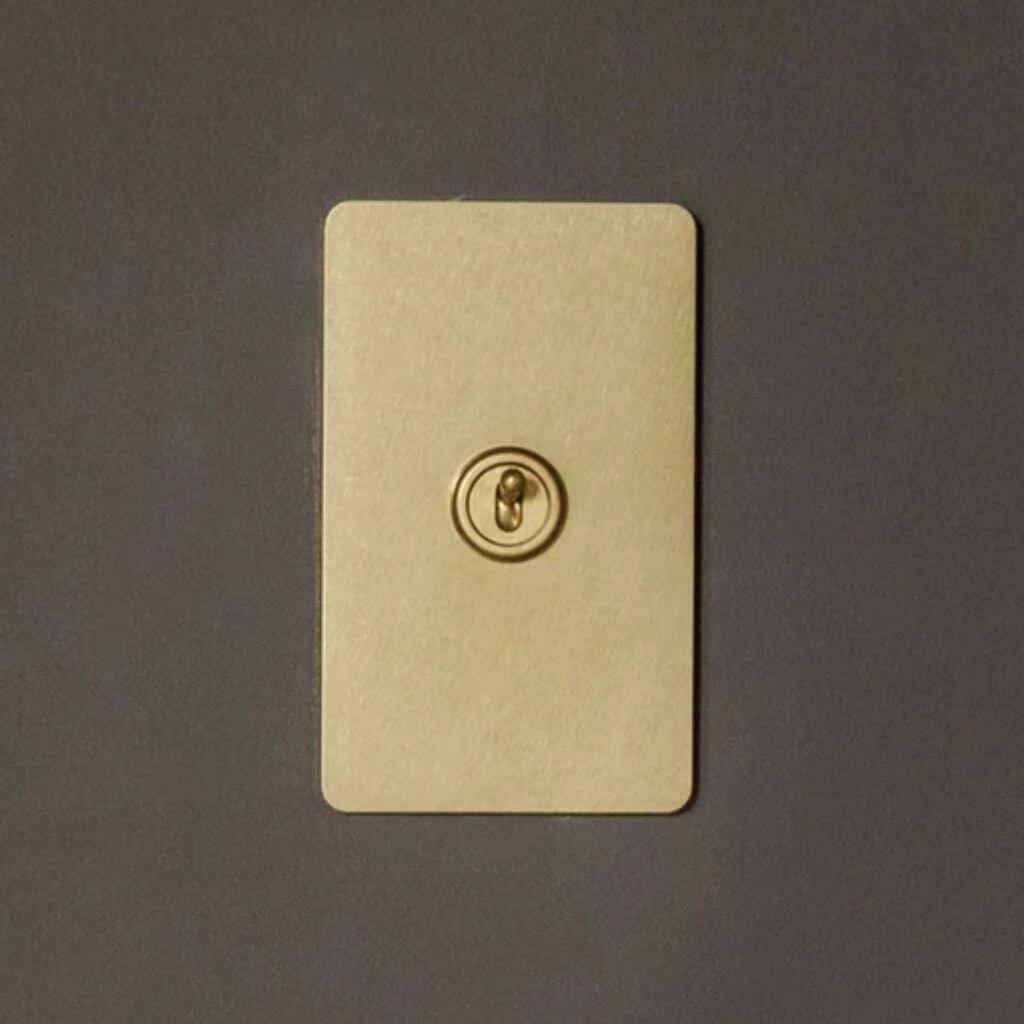
Corston Grove Antique Brass Toggle Switch
Price varies, Corston
Screwless, the Grove range works with existing boxes, ships from Chicago. The retrofit specialist.
Ceramic and Tile Light Switch Plates
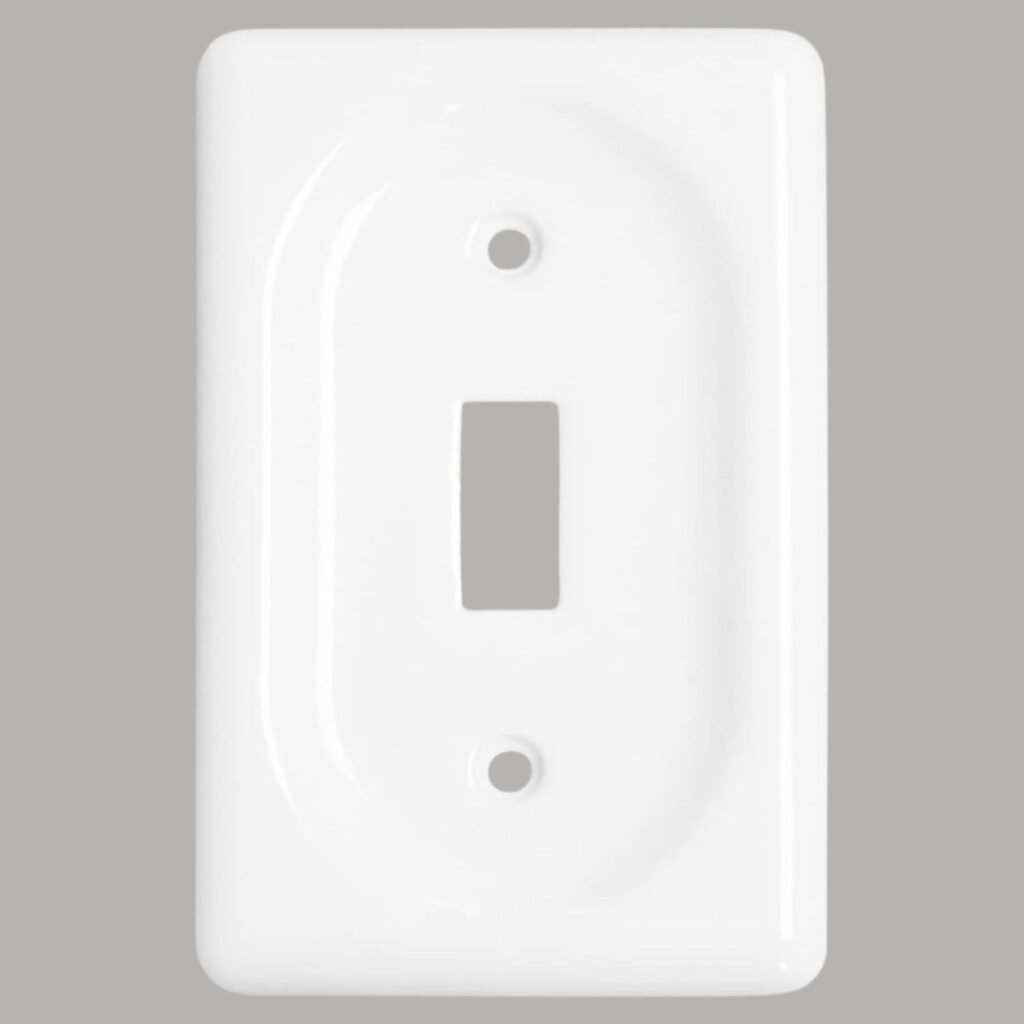
Ceramic Switch Plates Outlet Covers
Price varies, Amazon
Multiple configurations, highly rated and a step (way) up from plastic. Entry-level pricing and honest materials.
Honeybee Ceramics — Moroccan Ceramic Switch Plates
Price varies, Honeybee Ceramics
Handmade, kiln-fired, arabesque patterns. Toggle, rocker, GFCI, and push-button configurations.
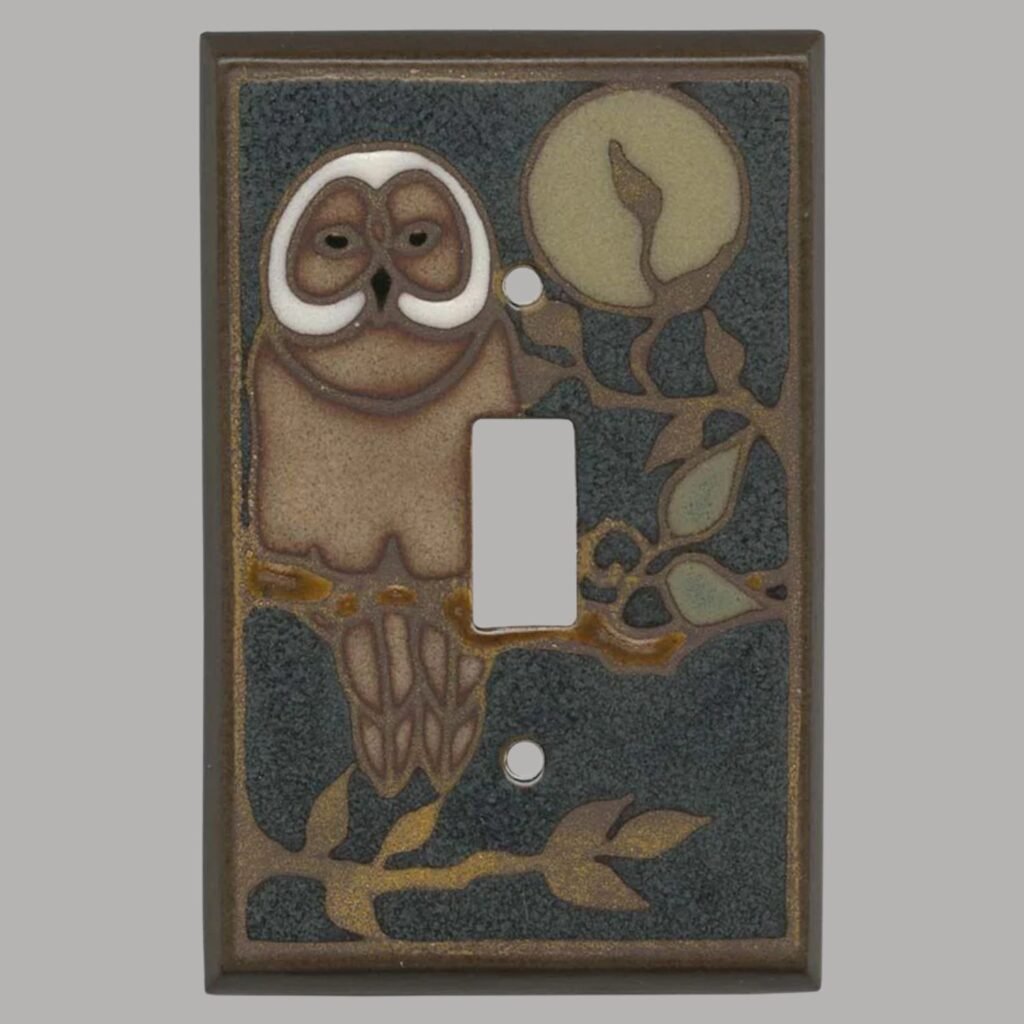
Switch Hits — Ceramic and Stone Collection
Price varies, Switch Hits
The largest selection of ceramic covers in one place. Hand-painted animals, florals, Art Deco, mission tile patterns.
The Porcelain Switches I Wish Existed in the US
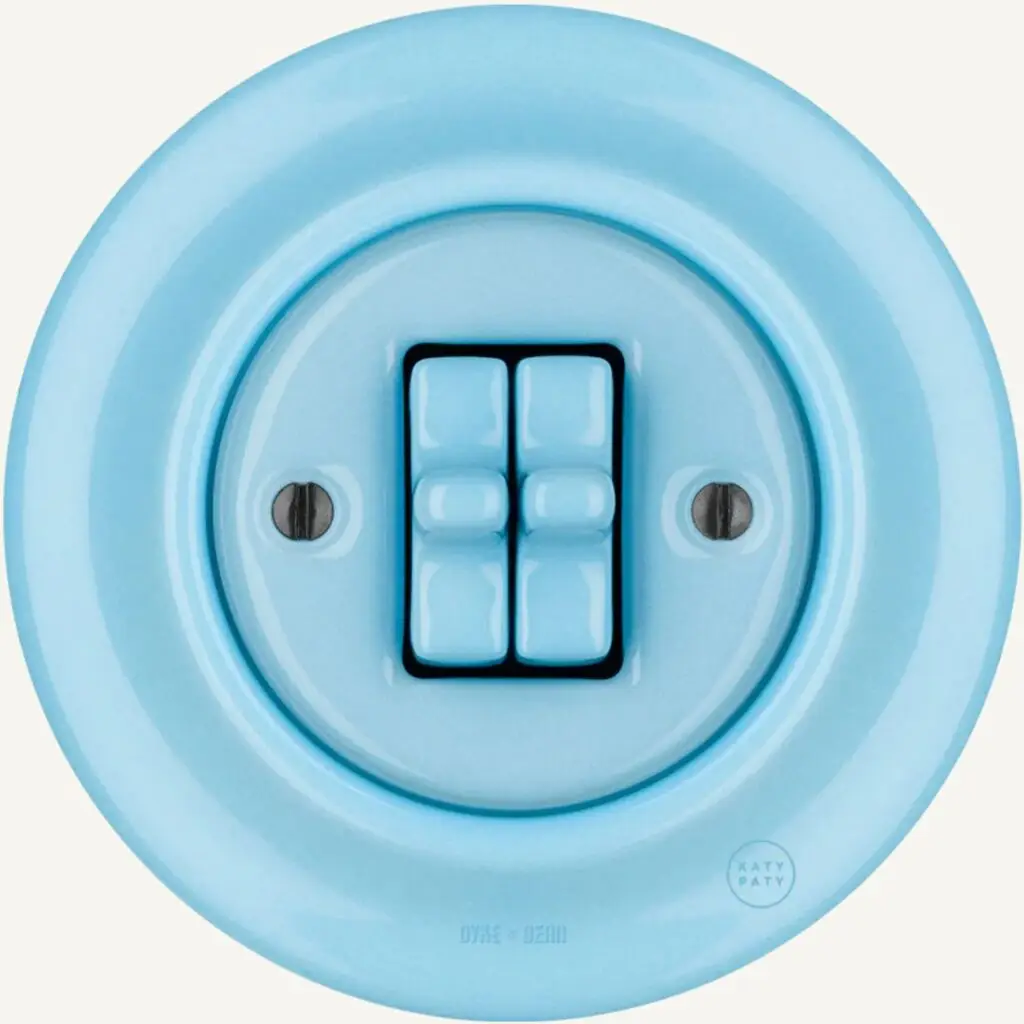
Dyke & Dean — Katy Paty Verna Porcelain Fat Button Switch
~$85–110, Dyke & Dean
Not UL-listed so the dimmer won’t work on US wiring.
Requires European back boxes.
Feature it, covet it, know the workarounds or – if you’re like me – wait for someone to bring this to the US market properly.