
This post is for you if…
- You have no idea which metal finishes in your Old House to polish and which to leave alone.
- You need the Old House metal care roadmap to help you clean without stripping character and patina from the metals in your home.
- You’re looking for one clear routine per finish, not a rabbit hole of confusing advice.
Hate the story but want the exact sources? → shop the proven, trusted old house metal care kit
Some links may be affiliate links, meaning I may earn a small commission if you choose to purchase — at no additional cost to you.
I only share products I genuinely like, would use in my own home, or have researched and feel confident recommending.
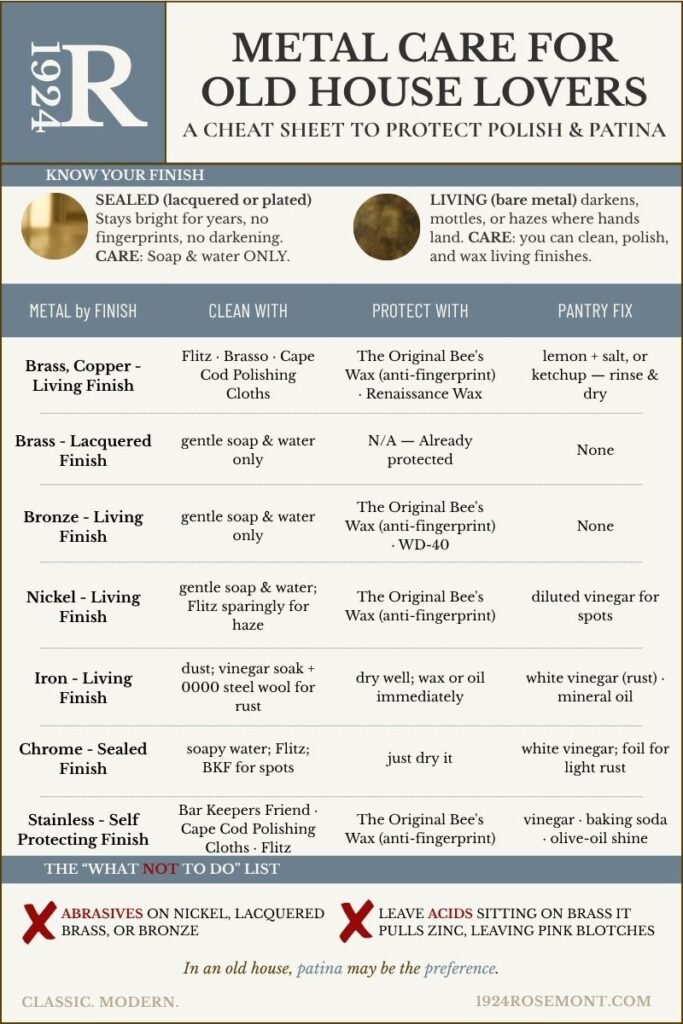
Know Your Metal Care Intentions
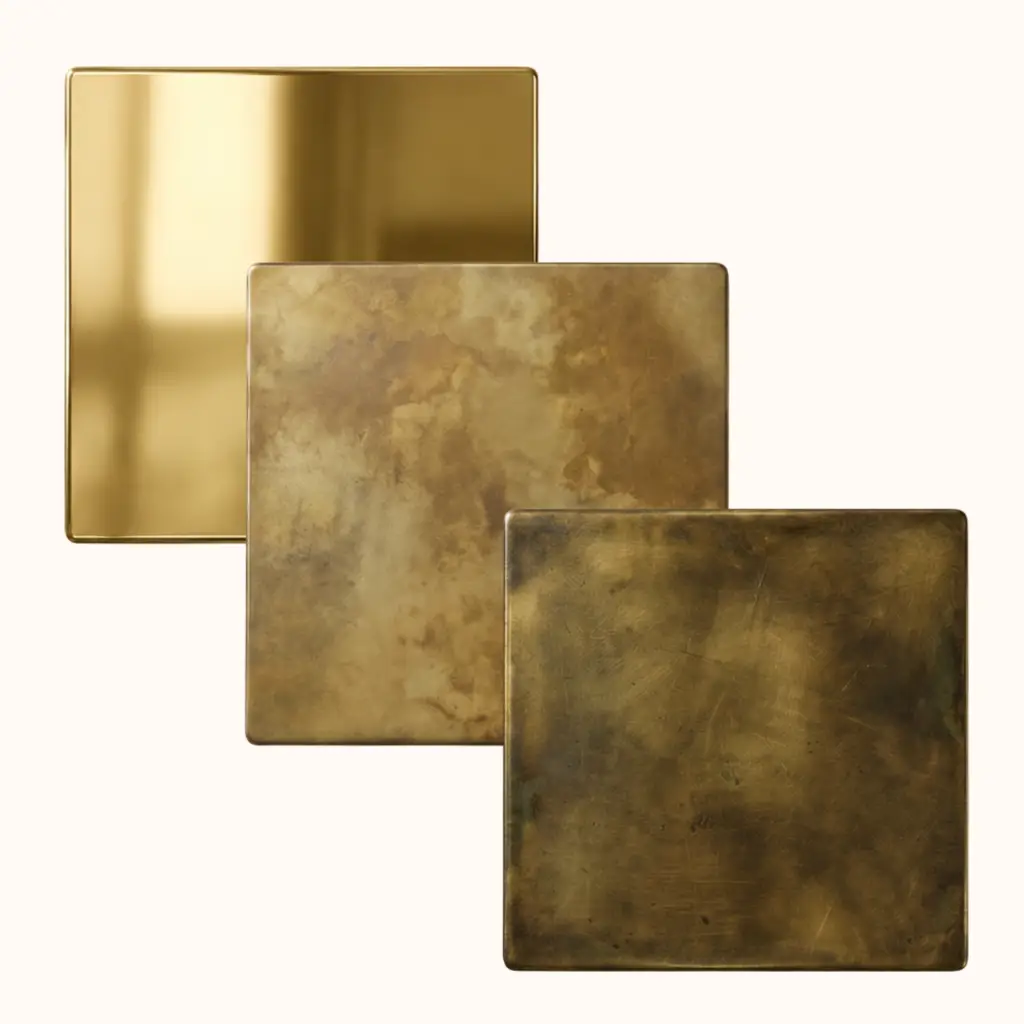
Most Old House metal care advice centers on how to keep or make a finish shiny.
As if shiny is always the goal.
In an old house, patina may be the preference.
The first question isn’t, “How do I clean this?”
It’s, “What do I want to achieve? “
Do you want to preserve the patina that’s developed (like me?), hold a finish exactly where it is, or restore it to its original shine?
Decide your intention first; the method follows.
Get it wrong, and you’ll strip a living brass knob you loved, or scrub the character right off of an oil-rubbed bronze hinge.
Care, done right, is mostly knowing when to leave a finish alone.
Step 1 — Know Your Metal’s Finish: Is It Lacquered or Living?
Before you decide how to care for your metals, determine whether the finish is sealed or living. A lacquered piece wants soap and water and nothing else. A bare (or “living”) piece is the one you can wax, patina, or polish. Get it wrong and you risk damaging what you love about the fixture or fitting.
- Lacquered finishes stay perfectly bright for years — no fingerprints, no darkening, no haze. The metal is coated in a lacquer to preserve the finish whether it’s the natural metal or the metal with a finish applied.
- Living or bare metals shift and change where hands land and over time — darkening or mottling (brass, bronze, copper), or dulling with a soft, whitish haze (nickel).
- Failing lacquer finishes may be bright in some spots, cloudy or flaking in others — once a clear coat starts to flake or cloud, it can’t be spot-fixed. Either strip it completely and switch to a living finish, or have it re-lacquered. Polishing over failing lacquer only spreads the blotchiness.
Still not sure? Dab a little brass polish or lemon juice on a hidden corner. If it brightens, it’s likely a living finish – or bare. If nothing changes, the coating is doing its job — it is lacquered, sealed, or self-protecting.
Think differently about chrome and stainless steel.
Chrome is electroplated and seals itself; stainless is solid and self-protecting.
Neither is ever bare and neither patinas. What can go wrong is scratching, or the plating wearing through to the metal beneath.
Step 2 — How to Clean and Protect Each Metal Finish
Once you know whether the finish is living or sealed, the metal care method follows the metal.
Here’s an overview on caring for many of the metal finishes you’ll find in Old House fittings. The products that do the job, and the pantry fix for when you’d rather not buy anything. A core handful of products covers the whole house; you do not need a cabinet of single-use sprays.
How to Care for Brass (Living and Lacquered)
Living (unlacquered) brass is a finish that evolves. It darkens where hands land and goes honey-brown over time. Lacquered brass stays bright behind a clear coat. Confirm which you have before you touch it; the two could not be treated more differently.
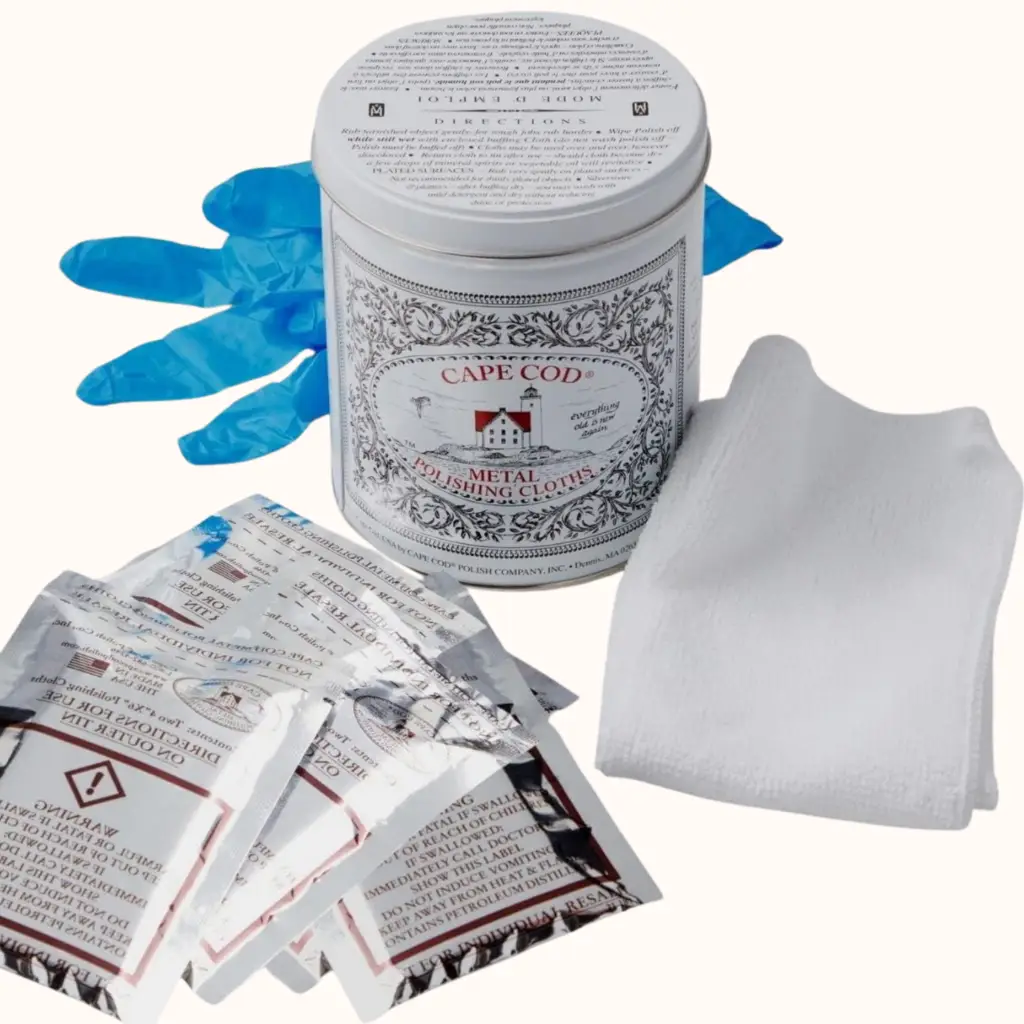
bonus points for the cute tin!
Living Brass Metal Care
- A non-abrasive polish brings the shine back — Flitz, Brasso or Wright’s, or a Cape Cod cloth for a light pass.
- For heavy, neglected tarnish, Colonel Brassy works fast — but it is industrial-strength, so dilute it for anything delicate and always test a hidden spot first.
- Protect: A thin coat of Bee’s Wax stops fingerprints from etching the surface; Renaissance Wax lays down a longer-lasting barrier that slows darkening without changing the look.
- Pantry fix: A paste of lemon and salt (or salt, flour, and a little vinegar) – or ketchup! – will brighten bare brass — but rinse and dry it well. Left on, the acid can pull zinc out of the alloy and leave pink blotches. Never use this fix on lacquered brass.
Lacquered Brass Metal Care
Use hot, soapy water and nothing else.
Don’t use polish on lacquered brass — it scratches the coating.
What we use at Rosemont: the unlacquered brass hooks in our bath get a wax coat and nothing else. I am a patina fanatic, so I let most metals have their character shine through.
How to Care for Copper
Copper behaves like living brass — it patinas warm and brown, and some pieces are lacquered to stop it. Same metal care rule as brass applies here: bare copper you can polish, sealed copper gets soap and water only.
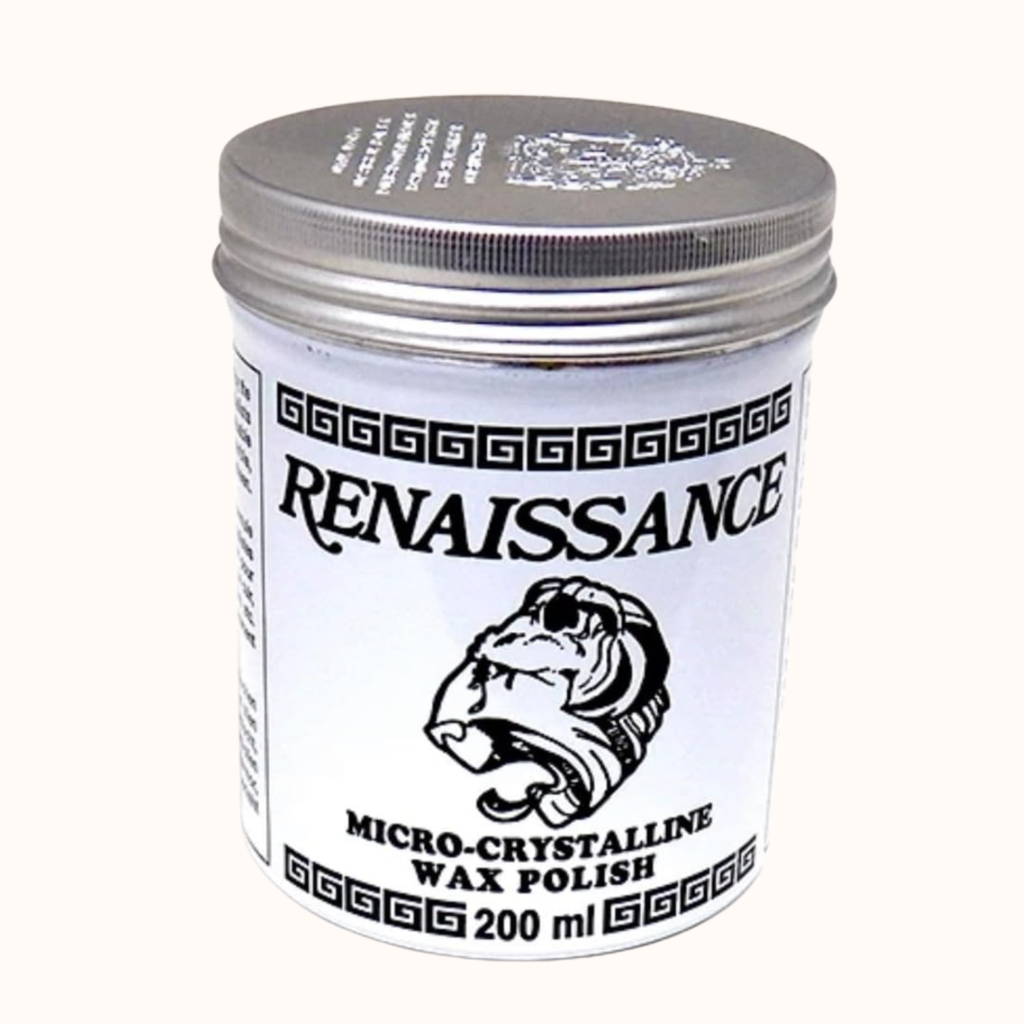
Another stunner tin!
Living Copper Metal Care
- Just like brass, a non-abrasive polish shines copper right up — Flitz, Brasso or Wright’s. Cape Cod cloths get mixed reviews for their effectiveness on copper.
- Protect: Bee’s Wax or Renaissance Wax holds patina where you want it, slowing additional patination.
- Pantry fix: Lemon and salt, or ketchup — the mild acid cuts tarnish. Rinse and dry, and keep it off any lacquered piece.
Lacquered Copper Metal Care
Use hot, soapy water and nothing else.
Dry well and enjoy.
How to Care for Bronze and Oil-Rubbed Bronze
This is a finish people can easily get wrong with the best of intentions. Bronze metal care means understanding that its dark color is a thin coating meant to wear gently at the touch points — it isn’t dirt, and it isn’t meant to shine. Polish or abrasives strip it for good.
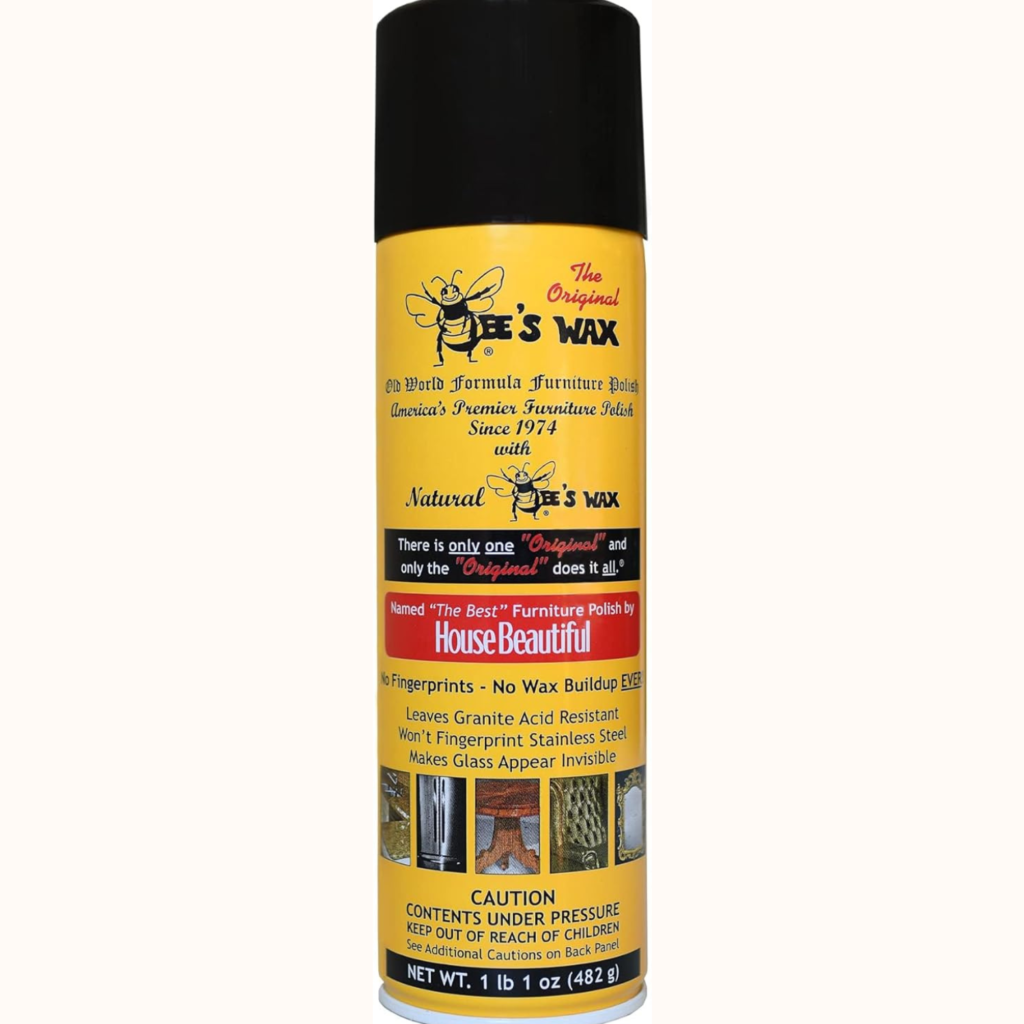
When I tell you I use this all over the house….I mean it!
Bronze Metal Care
- Clean: A soft cloth with warm water and a drop of dish soap. That is the whole routine — no polish, no Bar Keepers Friend, no steel wool, no ammonia or bleach.
- Protect: A very thin coat of The Original Bee’s Wax (do not use any micro-crystalline polish) or an occasional buff of WD-40, deepens the color and guards the high spots.
- Pantry fix: None — keep the acids away. Lemon and vinegar lift the dark right off.
How to Care for Nickel (Living and Lacquered)
Polished nickel is almost always plated, and it ages differently from brass — it dulls to a soft, whitish haze rather than browning. Treat it gently; there is a thin layer of nickel over the base metal, and you do not want to wear through it.
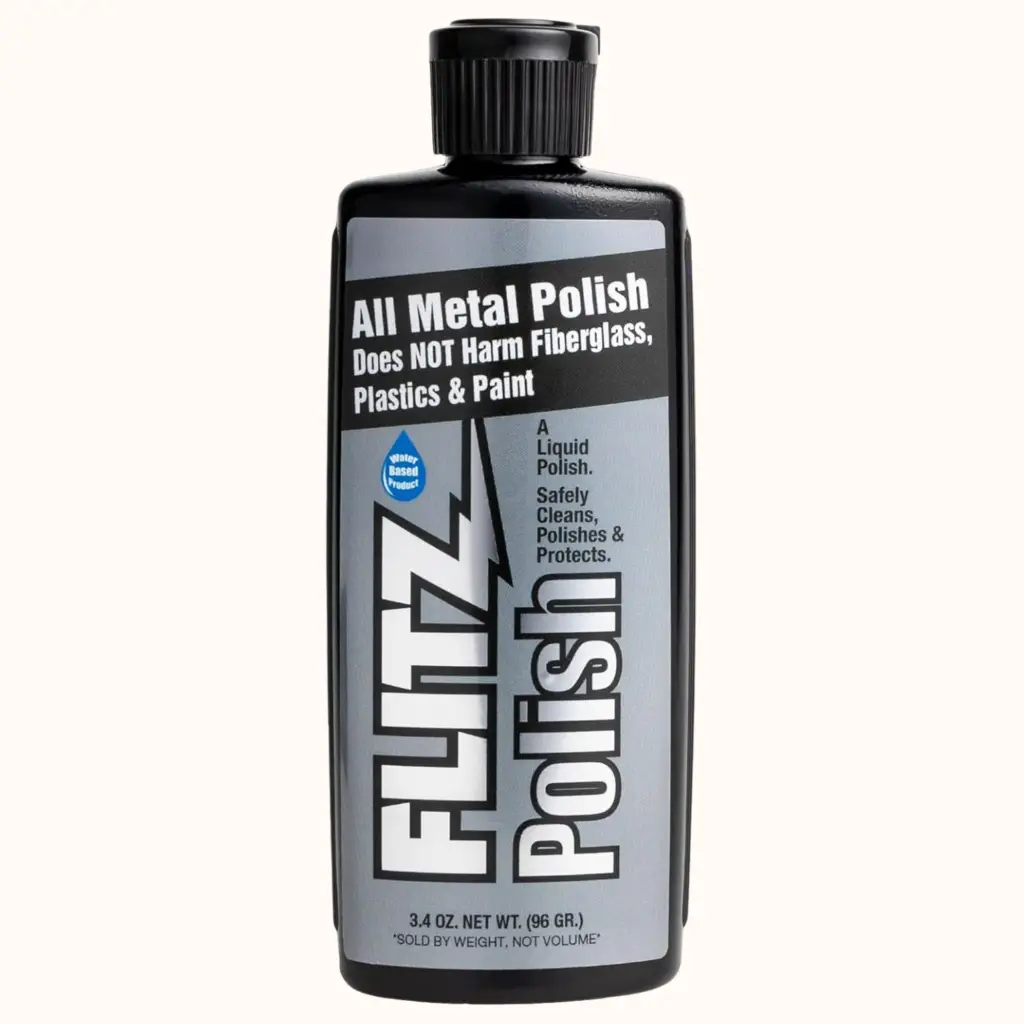
Use it sparingly on Nickel
Nickel Metal Care
- Clean: Warm soapy water for routine care. For haze, a non-abrasive polish like Flitz used sparingly, or a light pass with a Cape Cod cloth. Never Bar Keepers Friend or any abrasive — both micro-scratch plating.
- Protect: The Original Bee’s Wax earns its keep here; nickel shows every fingerprint, and a thin coat keeps them off.
- Pantry fix: Mild dish soap; for water spots, a little diluted white vinegar, then rinse and dry.
How to Care for Iron
Old iron — hinges, latches, hardware, firebacks — is a living dark finish with one enemy: moisture. Keep it dry and it lasts centuries; leave it wet and it rusts.
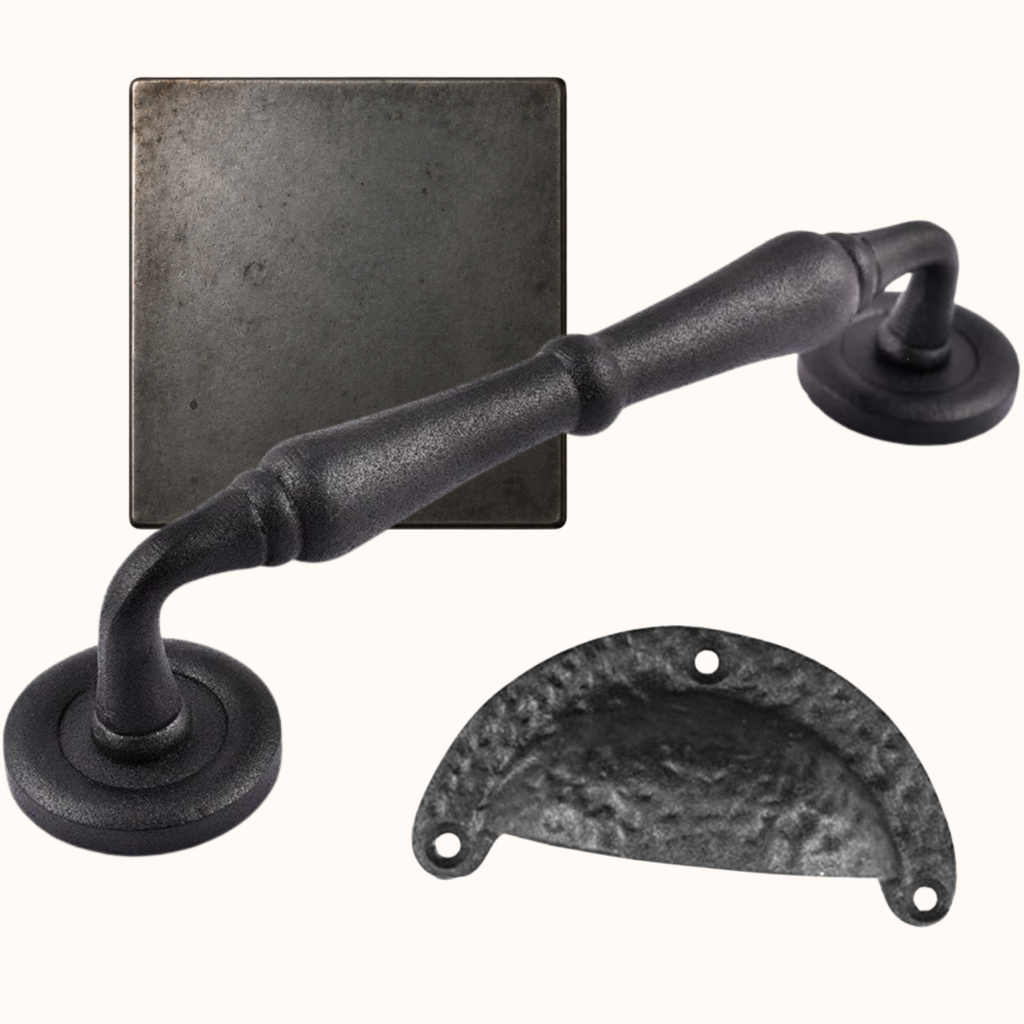
I could see these in my keeping room area of the kitchen.
- Clean: Dust, or wipe with a barely damp cloth and dry at once. For rust, soak the piece in white vinegar (a few hours to overnight), work it with fine (0000) steel wool, then dry it completely.
- Protect: The moment it is dry, seal it — a coat of The Original Bee’s Wax, Renaissance Wax, or paste wax, or a light film of oil or WD-40. Bare iron left unprotected just rusts again. Be sure to only use food safe products on cookware.
- Pantry fix: White vinegar lifts rust; mineral oil keeps it away.
How to Care for Chrome
Chrome is electroplated and seals itself — it never goes bare and never patinas. The only thing that goes wrong is the plating wearing through to the metal beneath, and that’s a re-plating job, not a care step.
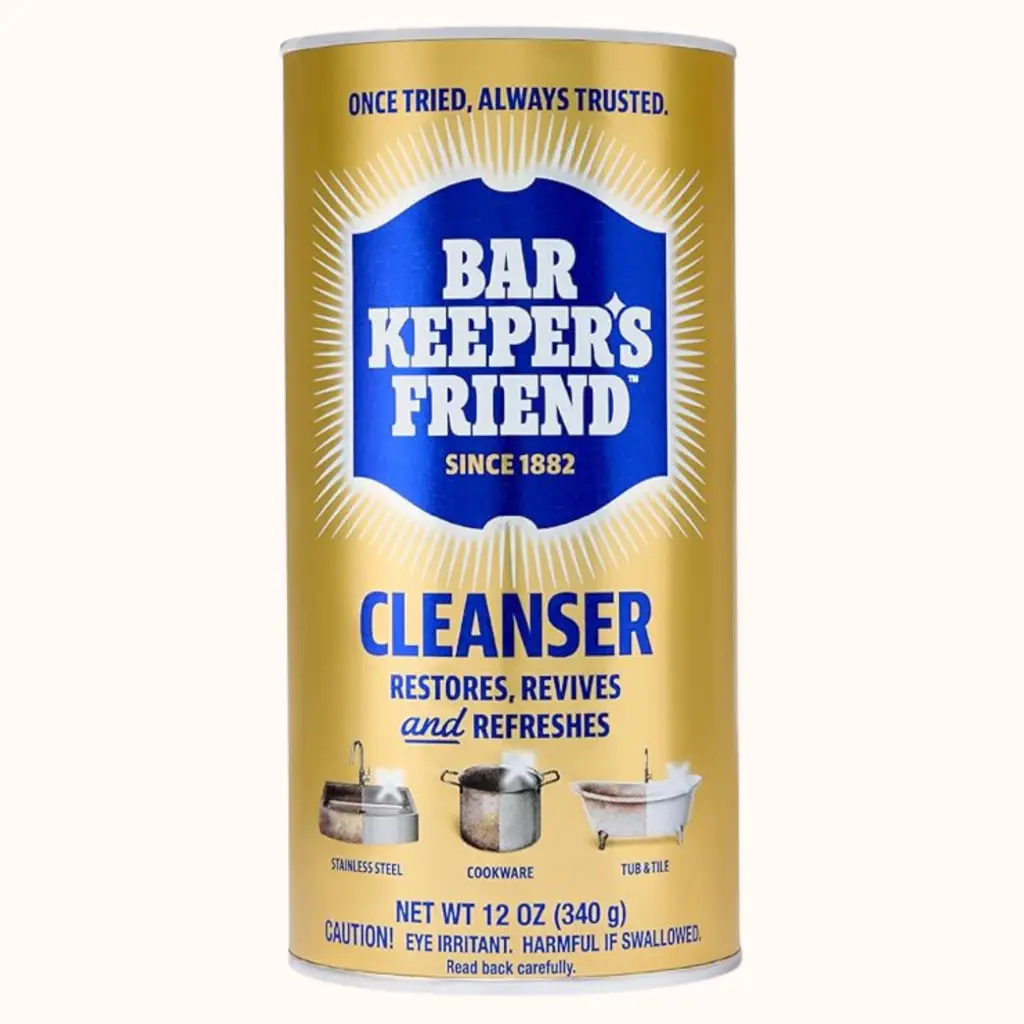
Contains Oxalic acid, so it’s important to use it only where it’s safe.
- Clean: Warm soapy water for daily care; Flitz brings up the shine; Bar Keeper’s Friend is safe on solid chrome for stubborn spots.
- Protect: Nothing required — just dry it to avoid water spots.
- Pantry fix: White vinegar dissolves hard-water spots; a ball of aluminum foil dipped in water lifts light surface rust without scratching.
How to Care for Pewter and Stainless Steel (the Low-Maintenance Two)
Both are easily maintained, and neither patinas the way brass does — but they have opposite weak spots: pewter is soft and scratches, stainless is tough but shows every print.
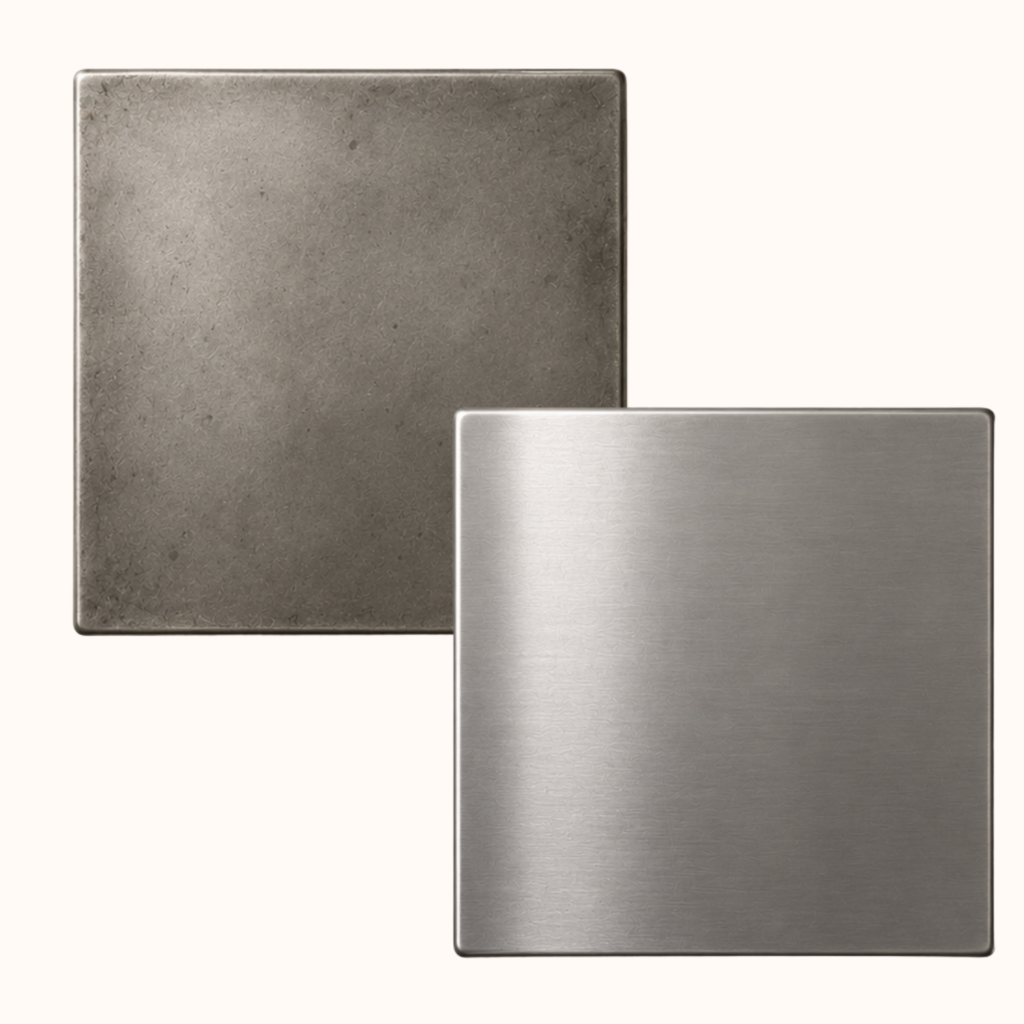
on all the stainless finishes in my house.
Pewter Metal Care
- Pewter is soft and easily marred. Use mild soap and water for all pewter. Use a gentle non-abrasive polish (Flitz or a Cape Cod cloth) on polished pewter only — never use an abrasive or Bar Keepers Friend.
Stainless Steel Metal Care
- Bar Keepers Friend is the workhorse — it lifts stains and water marks nothing else touches. A Cape Cod cloth or Flitz also work, and The Original Bee’s Wax stops the fingerprints stainless is famous for.
- Pantry fix: white vinegar for spots, a baking-soda paste for stuck-on grime, a drop of olive oil buffed in for shine.
How to Ruin a Metal Finish
The fastest way to wreck great hardware is to clean it without considering finish and intention. The five regrets I’ve lived though:
- Polishing a lacquered or plated finish. Polish is for bare metal; on a coating it only scratches.
- Scrubbing a living dark finish. You rub oil-rubbed bronze back to bright brass at the very spots you touch most.
- Using abrasives on chrome or nickel. Micro-scratches dull the mirror permanently.
- Letting cleaners sit. Acidic or ammonia cleaners left to dwell will etch almost any finish.
- Stripping patina you actually wanted. The most common regret of all — a well-meaning cleaning that erases years of character in an afternoon.
Related: Chrome vs Brass in an Old House (and How to Mix Metals)
The Old House Metal Care Kit
Some links may be affiliate links, meaning I may earn a small commission if you choose to purchase — at no additional cost to you.
Almost everything here is a cheap, long-lasting consumable. Buy the wax once and it just might last for years.
- Flitz Metal Polish — non-abrasive polish that is safe on nearly every metal, from brass to chrome to stainless.
- Cape Cod polishing cloths — pre-treated polishing cloths for a quick shine on fine metals; the tin bundle lasts for years.
- Colonel Brassy Surface Cleaner — heavy-duty brass and copper cleaner for neglected, badly tarnished pieces; dilute for delicate work, or choose another product.
- Brasso Brass Polish & Wrights by Weiman Cream Copper and Brass Cleaner — the classic brass and copper polishes for routine brightening.
- Bar Keepers Friend — the stainless-steel and rust workhorse; keep it off plated and lacquered finishes.
- Renaissance Wax Polish — microcrystalline wax that seals and protects any living finish without changing the look.
- The Original Bee’s Wax (Old World Formula) — the fingerprint-stopper; a thin coat on brass, nickel, or stainless keeps hands from marking the surface.
- Microfiber Cleaning Cloths — gentle and lint free towels to keep in every room for quick cleanups and deep cleans allike.
And a well-stocked pantry covers the rest: lemon and salt brighten brass, a little ketchup takes the dullness off copper, and diluted white vinegar clears water spots from chrome.
Metal Care: Common Questions
No. Unlacquered brass is meant to patina, and sealing it fights the look. If you want to slow the aging without stopping it, a microcrystalline wax like Renaissance Wax protects the surface without the permanence — or the eventual flaking — of lacquer.
A gentle wipe will not; a brass polish will. Polishing resets brass to bright and starts the aging over, so only reach for it when you actually want the patina gone.
Use a dry or barely damp soft cloth and skip every abrasive. The dark finish is thin over the high points by design, so scrubbing rubs through to the bright metal beneath. A thin coat of wax protects the spots you touch most.
No. Both are plated, and even a mild abrasive will micro-scratch the mirror finish permanently. Save Bar Keepers Friend for stainless steel, and always work with the grain.
Warm water, a drop of dish soap, a microfiber cloth, then dry. It is safe on every finish from chrome to living brass, and it is all most hardware ever needs.