
This Post Is For You If…
- You own (or love) an old house and refuse to let it look like a smart-home showroom.
- You’re tired of choosing between “period-correct” and “actually livable.”
- You want (at least some) modern old house upgrades without a single visible speaker, panel, or black rectangle on the wall.
Some links may be affiliate links, meaning I may earn a small commission if you choose to purchase, at no additional cost to you. I only share products I genuinely like, would use in my own home, or have researched and feel confident recommending.
The Rosemont Sneaky Modern Upgrade Stack. The pick I’d buy in each category, and why you’ll never notice it.
| Category | The Rosemont pick | Why it’s ‘Sneaky Modern’ |
|---|---|---|
| Linksys Velop Micro 7 · Check Price → | Mesh nodes tuck behind art, over cabinets or under a basket. | |
| Philips Hue Bridge Pro · Check Price → | Sunset, sunrise and closet lights that run themselves. No new switches. | |
| Schluter Ditra-Heat Thermostat · Check Price → | Radiant heat under the bathroom slate. Completely toasty & utterly invisible. | |
| Sonos Era 300 · Check Price → | Wireless sound. No cables needed, no holes in the plaster. | |
| Samsung The Frame · Check Price → | Replace the huge black wall rectangle with art. The sneakiest of modernity. | |
| Philips Hue Smart Plug · Check Price → | Gives a 1960s FLOS Arco lamp the same intelligence as every other sneaky smart device in my old house. |
The Trouble With “Smart” in an Old House
Every old house owner hits the same wall eventually: you love the plaster, the trim, the hundred-year-old bones, but you need reliable Wi-Fi in every room and want the lights to turn themselves on (or off) without flipping every switch. Most “smart home” advice is written for new construction, where a visible panel or a speaker on a shelf doesn’t fight the room for attention. In a house like Rosemont, that utility-on-display fights what I love most about this place, its timelessness.
The fix isn’t avoiding modern technology. It’s choosing modern upgrades that can blend in or, or better yet, disappear. These six sneaky modern upgrades for an old house cover a ton of what most old-house owners want. Here’s how to think about each one, what to skip, and what to buy.
6 ‘Sneaky Modern’ Old House Upgrades That Stay Hidden
1. Wi-Fi That Works in Old Houses
Old-house walls don’t just make Wi‑Fi “a little slower”. Thick plaster, brick chimneys, masonry, and especially metal lath can absorb or redirect enough of the signal you’re paying for to create sharp dead zones from one room to the next.
The fix isn’t one heroic router hidden in a cabinet. The best fix (and easily DIYed) is a small-but-mighty mesh system, with a network of discreet nodes strategically placed around the house. Every node picks up and relays the signal, so a single router isn’t expected to transport Wi-Fi through stone, plaster, metal, or concrete.
I’ve used wireless mesh successfully in three difficult houses: Rosemont with its stone floors, granite chimneys, and plaster walls (5 nodes), a century-old stone cottage, complete with stone walls (3 nodes), and a three-story Gene Leedy home built with double-tee concrete ceilings and concrete walls (3 nodes).
Every previous owner told me the Wi-Fi was terrible. Not one house had a dead zone once I got the mesh just right, working with the house (not against it).
Part of the fun of installing your mesh? Making it invisible. You won’t see mine if you visit, but I didn’t go crazy, I just tucked each node in behind art, or over cabinets, or under a wicker basket.

Linksys Velop Micro 7
The newer version of the mesh I run at Rosemont. Five nodes cover stone floors, granite chimneys and plaster walls, and you won’t spot one of them.
Type: Mesh Wi-Fi system
Wi-Fi: Wi-Fi 7, dual-band BE5000
At Rosemont: 5 nodes (previous model)

Amazon eero 7
My next upgrade. This is the mesh I’m moving to when Rosemont gets 2 Gig fiber later this year.
Type: Mesh Wi-Fi router
Wi-Fi: Wi-Fi 7, dual-band
2. Smart Lighting That Works Harder in Old Houses
My house, like so many Century Homes, has grown over time. There are light switches all over the place. Some make sense, and some don’t. There’s one switch in my office, and I still haven’t figured out what it controls. In some closets and powder rooms, there are no switches (yet), because lights relied on pull chains or sconce switches. Every outdoor light across our “yarden” is on its own switch. I want my house to magically light itself up at just the right time, every day. I want some rooms to light up at the “just right” lighting warmth just as I enter. I want some lights that turn on when it’s overcast outside.
And it all needs to be easy, and be invisibly working all the time. The good news on this front? There are SO many smart bulb options out there to choose from.
Enter your sneaky modern lighting adventure by considering how you ultimately want to control your lighting, and which features are most important to you.
For me, easy automation and lighting temperature is key, and so is motion detection. The Philips Hue system is one I’ve relied on and added to over my past three homes. Every sunset, Rosemont’s outdoor lighting is picture perfect, and dims at bedtime. At sunrise, lights in common areas turn on. When we enter closets, lights automagically turn on. But when you walk through the house, you’ll never see a sign of that automation. It’s seamless and portable invisible modernity.

Philips Hue Bridge Pro
The brain behind every light that runs itself. I’ve built out my Hue system over three homes, and the new Bridge Pro is what runs my sunset, sunrise and closet automations.
Type: Smart lighting hub
Updated: 2026 Bridge Pro
Runs: Schedules, scenes and motion sensors
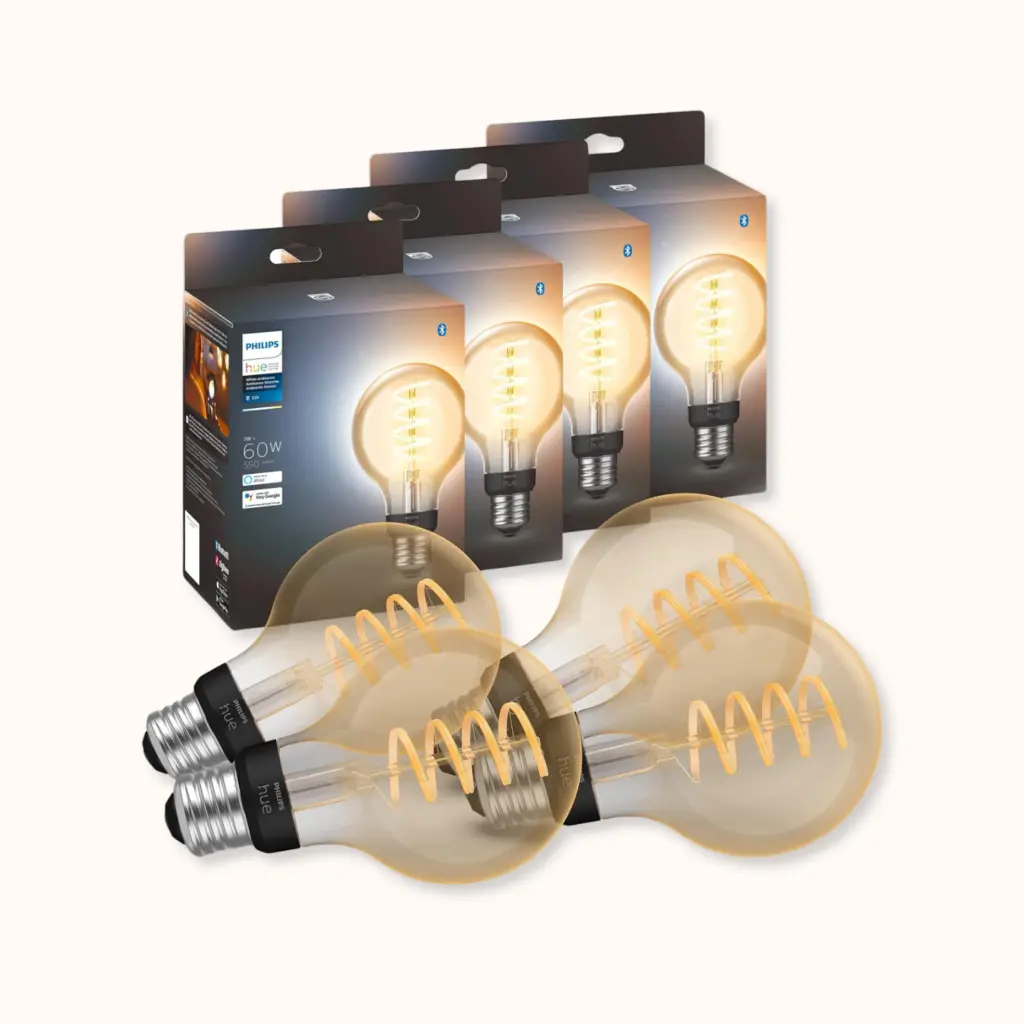
Philips Hue G25 Filament Bulb
For the fixtures where the bulb shows. A filament bulb that looks right in a vintage fixture and still dims and warms on the Hue schedule.
Type: G25 filament LED
Light: White Ambiance, warm to cool
Equivalent: 60W
3. Modern Heat for Old House Rooms
Head to any Old House group and we’ll be talking about heating (or cooling) our house. These houses were built to breathe, and can as a result be drafty … so, colder than we want in the winter, and warmer than we like in the summer. That gets (more and more) expensive to manage. But there are options out there.
Several of Rosemont’s addition rooms were built without piping in radiators.
Getting radiators added to these rooms now would mean new pipes, visible equipment, and a much larger project than we want to take on. An infrared heater delivers targeted, supplemental, sneaky warmth exactly where we need it, without adding duct work or disturbing the historic rooms.
So, we’re using infrared in our pre-reno kitchen this winter because there’s not a radiator in the room, and its gas fireplace takes time to bring the room up to temperature in the mornings.
But in our master bathroom renovation, another radiator-free room (it’s a converted sleeping porch), we spent the extra money and installed radiant heat under the slate tile. The system is Wi-Fi enabled, and keeps the floors exactly at the temperature we want, on the schedule we choose. And no one can tell it’s there.
It’s the most comfortable sneaky modern space in the house.
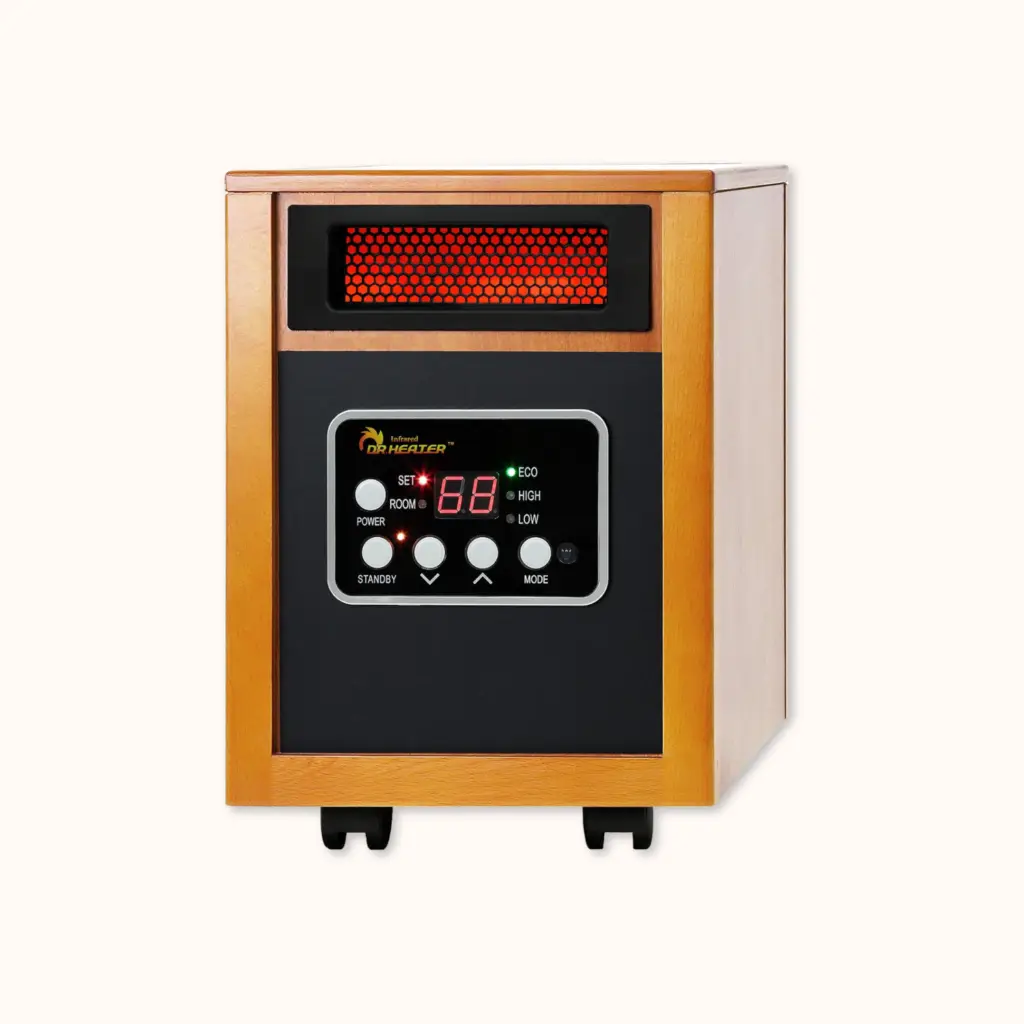
Dr Infrared DR-968 Heater
Our pre-reno kitchen’s winter plan. Targeted infrared heat in a room with no radiator, while the gas fireplace catches up in the mornings. Not a modern look. But definitely a sneaky modern heat source.
Type: Portable infrared heater
Power: 1500W
Finish: Cherry

Schluter Ditra-Heat-E-RS1 Thermostat
The thermostat behind our master bathroom floors. It runs the radiant heat under our slate on our schedule, over Wi-Fi, and nobody can tell it’s there.
Type: Smart floor-heating thermostat
Works with: Schluter Ditra-Heat, installed under new tile
Control: Wi-Fi scheduling
Related: Heated Bathroom Floors in an Older Home: Splurging Makes Sense
4. Whole-Home Music Sets the Old House Vibe
We rely on Sonos speakers for our whole-house sound system at Rosemont. The speakers are hidden throughout the house, crisp and clear, and can be tuned for each room. In a guest bedroom, we have the speaker hidden behind a tube radio cabinet. In our kitchen, a Sonos Five is hidden over a cabinet. In the master bathroom, the Sonos Era 300 is more than enough to fill the space with music, and has Dolby Atmos sound. And we’ve got Era 100s throughout the house, although you’d never see them.
No cables needed. No holes in the plaster. Just 100% wall-of-sound when we want it. And if you’re not ready to invest in whole-home sound, there are great Bluetooth options you can start with from a single speaker from Sonos, or find a vintage-look option from Marshall or Edifier.

Sonos Era 300
The speaker that makes our master bathroom an official retreat. More than enough sound for the room, with Dolby Atmos, and not a single cable or holes in the walls.
Type: Wireless smart speaker
Sound: Dolby Atmos
Color: Black

Edifier D32
A vintage-look place to start. One wireless tabletop speaker in a wood cabinet, for when you’re not ready for whole-home sound.
Type: Tabletop wireless speaker
Streams: AirPlay 2
Finish: Brown wood
5. Turn Your TV (aka Your Old House’s Biggest Modern Eyesore) Into Art
The television is the one piece of ubiquitous modern tech you probably can’t fully hide.
My move (& the move of many YouTubers, home design pros, and bloggers)? We stopped trying to hide the TV.
Instead, we chose televisions that hide in plain sight, doubling as art instead of a big black rectangle on the wall or over the mantel. There are new options in this category, but the one we’ve relied on in the past three Old Houses we’ve been lucky enough to live in is the Samsung Frame TV. The new models of the Frame TV have a matte, anti-glare display, so art looks … like art.
The Frame now has real competition. Amazon’s Ember Artline launched in 2026 as a similar art TV, priced about $200 below a comparable Frame and shipped with a frame in the box.
Art TVs let us display digital art with or without a digital “mat”. They mount almost completely flat to the wall, and wood or gallery frames from Samsung and aftermarket vendors are available.
Or just do what the influencers do and DIY your own frame (it’s on my very very long DIY list of things to do).

Samsung The Frame
The art TV we’ve lived with in our past three old houses. In art mode it reads as a framed piece, not a black rectangle over the mantel.
Size: 65″
Display: 4K QLED, matte anti-glare
Model: LS03F (2025)

Amazon Ember Artline
The newer, lower-priced challenger. Amazon’s art TV launched about $200 below a comparable Frame and comes with a frame in the box. Early reviews are promising, but mixed.
Size: 65″
Platform: Fire TV
Launched: 2026
6. Automate What You Already Have In Your Old House
Consolidate your remote situations. Have motorized shades? Fireplaces with remotes? Ceiling fans with remotes? You can centralize the whole situation with this unobtrusive hub. These are the fine-tuning moments in your house that save energy, improve privacy, and give you full access to your home’s systems even when you’re away from home.
Dream of that type of sneaky modern automation but haven’t made the plunge (yet)? When you’re making your next home updates, look for ceiling fans, fireplace log sets, heaters, door sensors, smoke & water sensors, or motorized shades that are compatible with Alexa, Google Home, Bond, or Zigbee automation.
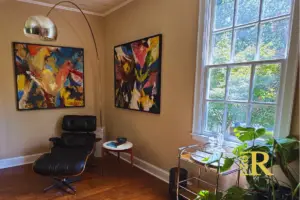
Opt for smart switches and plugs to make “dumb” electrical outlets and fixtures sneaky modern. I use a Hue smart plug for my 1960s Flos Arco Lamp so my system controls not just fixtures with smart bulbs, but can automate rooms and fixtures without them. You don’t need to opt for Hue if your automation is centralized in another system, a move that might save you money while keeping you sneaky modern.
For Old House lovers living in homes without fully modernized electrical, the Lutron Caséta Diva Smart Dimmer works in most old switch boxes because it doesn’t require a neutral wire, making it a flexible sneaky modern light switch solution. Plan on adding Lutron’s Smart Hub, which it needs for app control and automation.
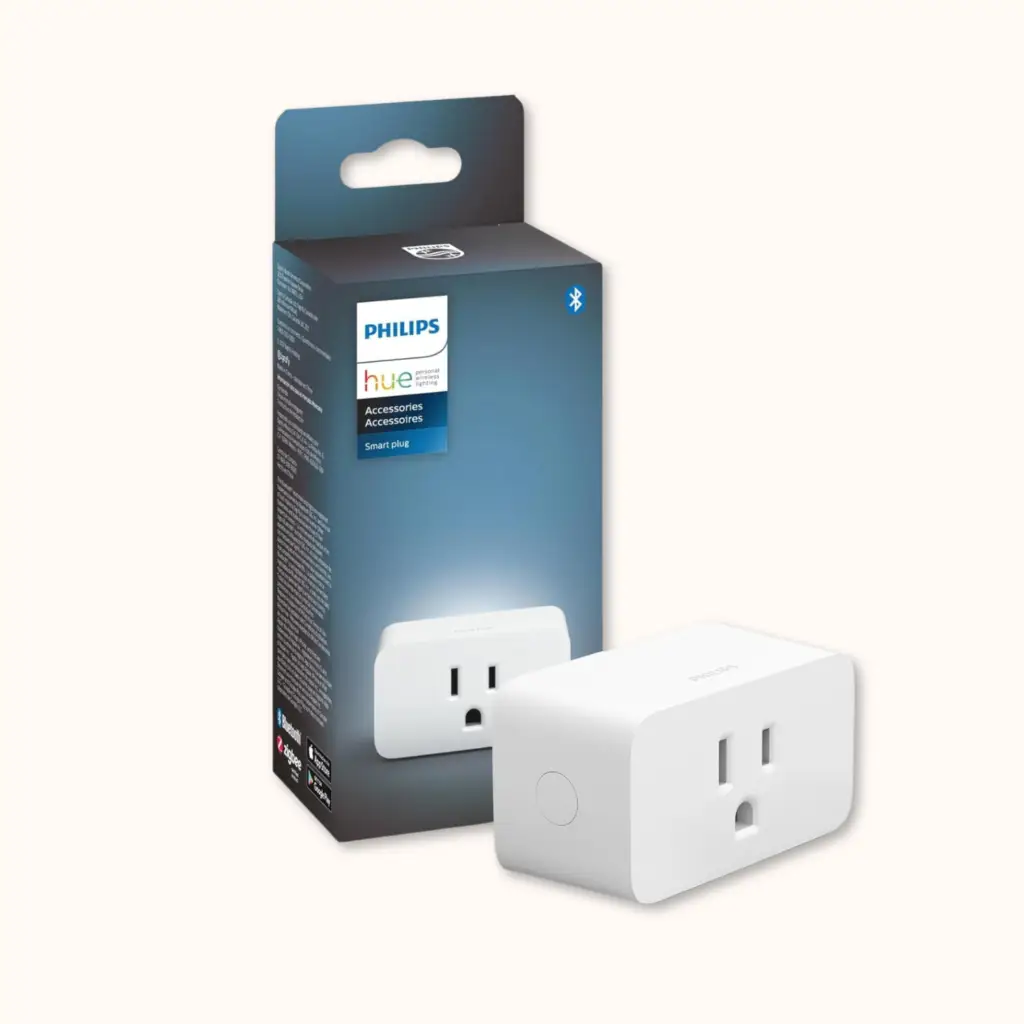
Philips Hue Smart Plug
How a 1960s Flos Arco lamp joins the schedule. Plug in a lamp without a smart bulb and it runs on the same automations as everything else.
Type: Smart plug
Works with: Philips Hue
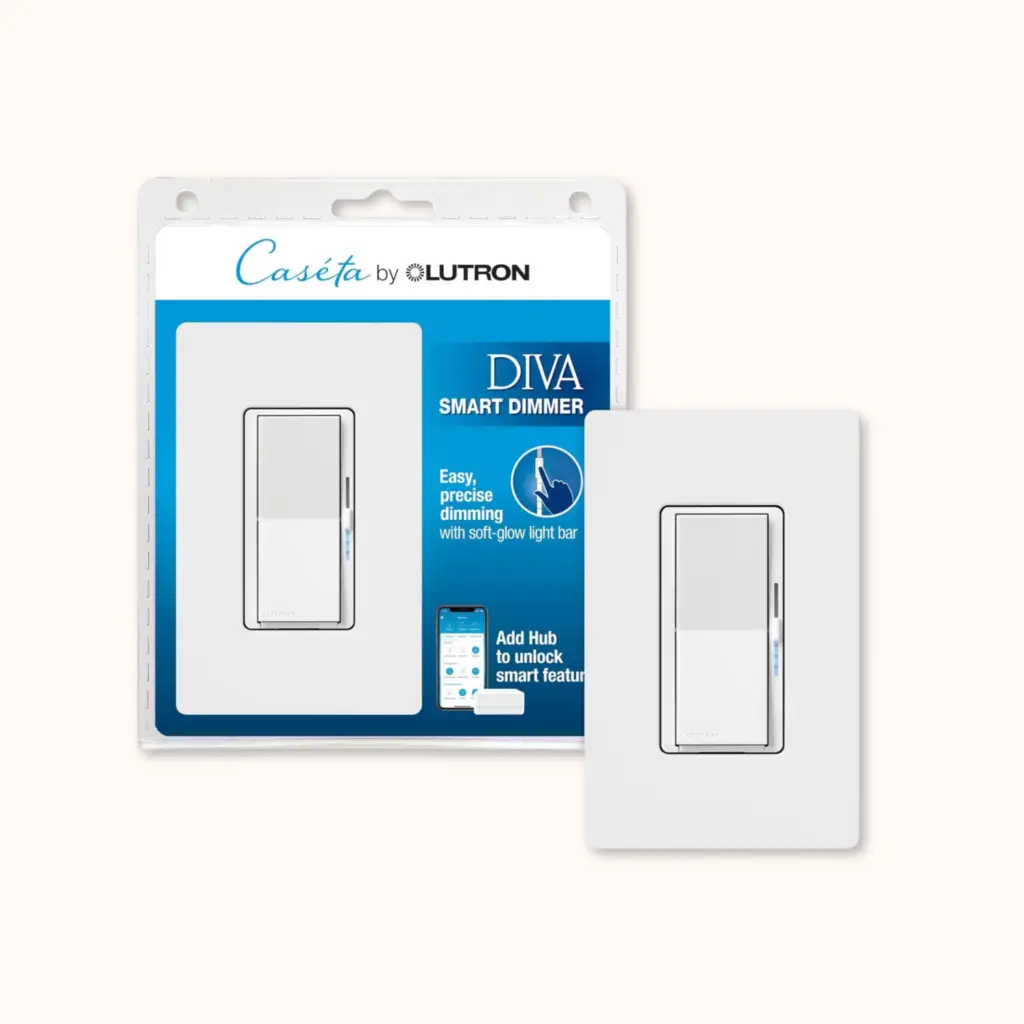
Lutron Caséta Diva Smart Dimmer
The smart dimmer for old switch boxes. No neutral wire required, which is exactly what many old houses lack.
Type: Smart dimmer, single-pole or 3-way
Neutral wire: Not required
Needs: Lutron Smart Hub

BOND
One small hub for everything that came with its own remote. Ceiling fans, fireplaces and motorized shades, controlled from one place.
Controls: Ceiling fans, fireplaces, motorized shades
Works with: Alexa, Google Home
Related: Best Ceiling Fans for Old Houses: 14 Breezy Beautiful Picks
What Not To Do
- Don’t leave the router or mesh nodes out in the open. Tuck them behind art, over a cabinet or under a basket. Nobody needs to see your Wi-Fi.
- Don’t drill speakers into original plaster. Wireless speakers hide on a shelf, over a cabinet or behind a radio cabinet, with no cables and no holes.
- Don’t buy a smart switch before you check for a neutral wire. Many old switch boxes don’t have one. A no-neutral dimmer like the Lutron Diva solves it.
- Don’t replace a ‘dumb’ fan, log set or shade with another dumb one. When something wears out, buy the version that works with Alexa, Google Home, BOND or Zigbee.
FAQ
In most cases, yes. Plaster, stone, brick and especially metal lath block Wi-Fi far more than drywall, which is why a single router usually fails in an old house. How many nodes you need depends on the house: Rosemont uses five, and a stone cottage and a concrete-walled Gene Leedy house we lived in before Rosemont each needed three. Placement matters as much as the count.
Most smart switches use your existing wiring and swap in at the switch plate, so a standard install needs no new wiring or wall work. Check first whether there’s a neutral wire at the switch box, since many older houses don’t have one. If yours doesn’t, a no-neutral smart dimmer like the Lutron Caséta Diva is built for exactly that.
Both use a matte display and an art mode to read as framed art on the wall. The practical differences come down to price, frame options and the art library, and both lines update quickly, so check current details before you buy. Reviews of the Amazon Artline are promising, but mixed.