
This post is for you if…
- You’re shopping for cabinet hardware and just realized you’re not sure what works where (and why)
- You’re making design decisions on a timeline and don’t want to get it wrong
- You’d like to know the context behind the Knob vs Pull rules of thumb to build confidence for this time…and every time after
Hate the story but want the exact sources? → shop the entire project
Some links may be affiliate links, meaning I may earn a small commission if you choose to purchase — at no additional cost to you.
I only share products I genuinely like, would use in my own home, or have researched and feel confident recommending.
In This Blog
Cabinet Hardware Can Be Confusing
The knob vs. pull question comes up every time anyone starts cabinet hardware shopping.
Most of us decide by feel — this one looks better (doesn’t it?) — and most of the time, that instinct leads us somewhere reasonable.
At Rosemont (like most homes) there’s a mix of knobs, pulls, and latches.
In the laundry room, we’ve got Rejuvenation’s Massey pulls on the wider drawers and large doors, and Massey knobs on the smaller doors.
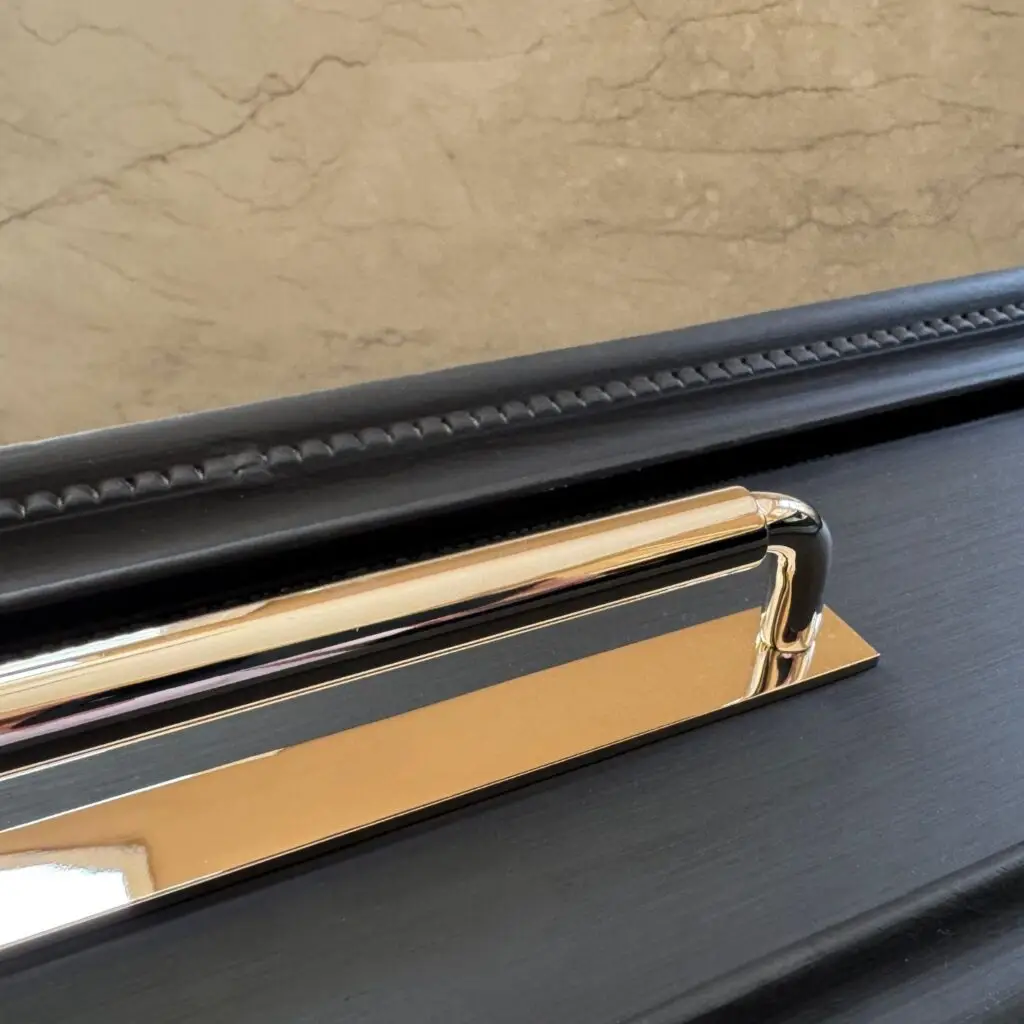
The master bath has one sleek & shiny 8″ polished nickel Rejuvenation Patton pull on each large vanity drawer — one form, confidently applied throughout after many (many) hours of obsessing.
My hope? That this blog helps build your confidence so you can choose the BEST hardware for your project.
When to Use Knobs
Best For
- Cabinet doors
- Small drawers
- Upper cabinets
- Decorative furniture pieces
- Infrequently accessed storage
Advantages
- Cheapest hardware option
- Historically appropriate in most old houses
- Less visually busy
- Easy to replace
Disadvantages
- Harder with wet hands
- Harder with arthritis
- Less leverage for heavy drawers
- Require pinching rather than grabbing
Typical Sizing
- 1″–1.25″ diameter: standard cabinets
- 1.25″–1.5″: larger doors and pantry cabinets
Not So Obvious Knob Considerations
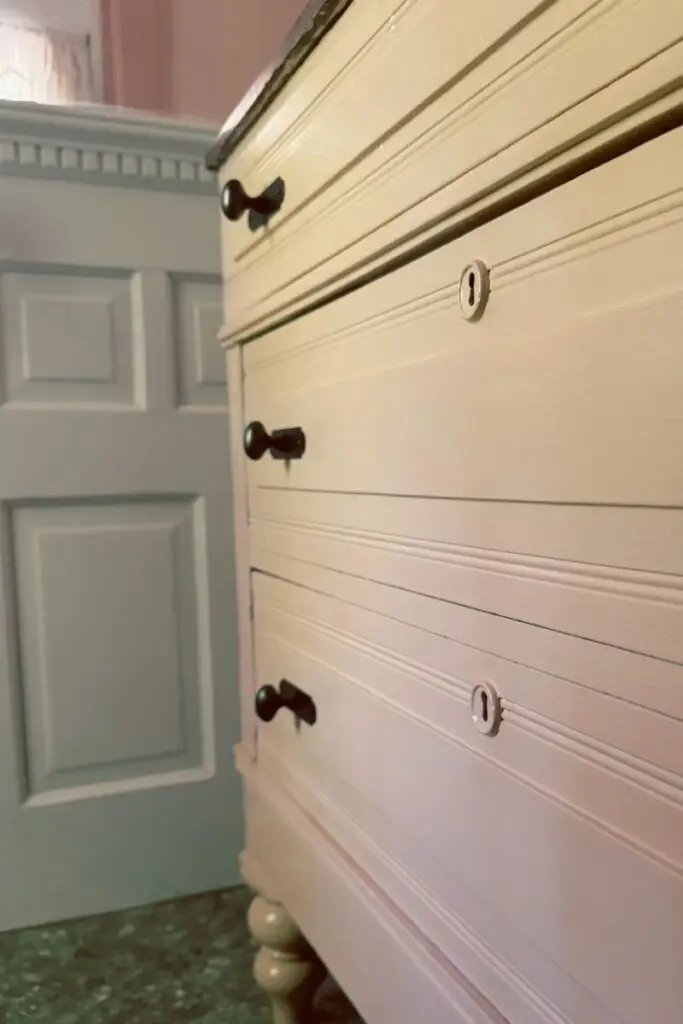
A knob concentrates all pulling force on a single point.
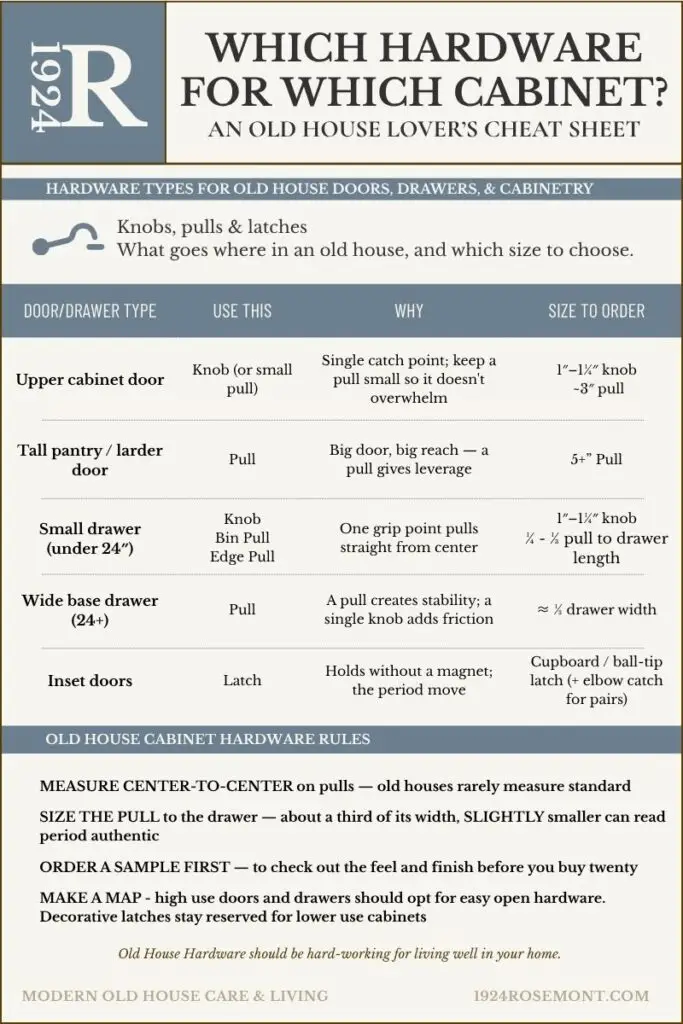
On wide drawers, people tend to pull from one side, which eventually stresses the drawer box and slides. For drawers wider than about 24″, I generally prefer pulls.
Best for Old House Knobs
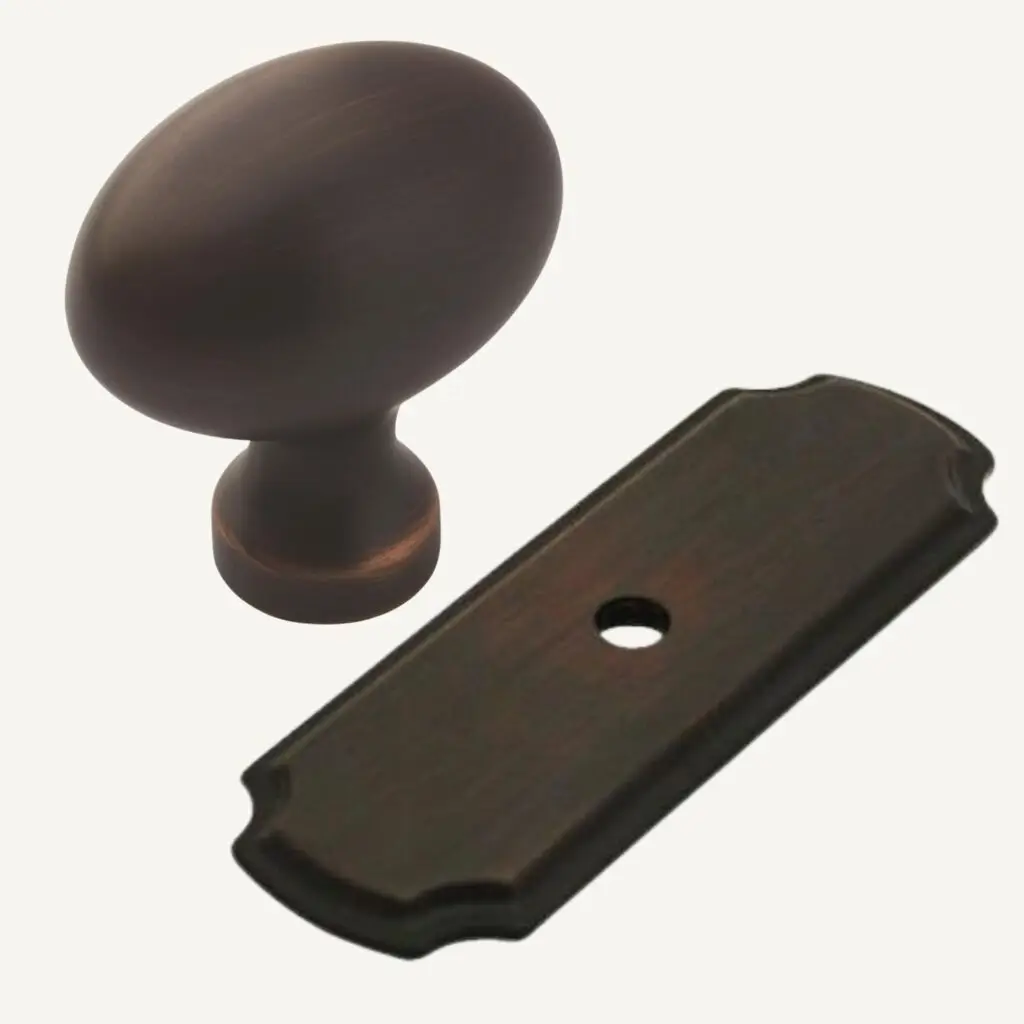
Both in oil rubbed bronze. This creates an easy to handle traditional look at a more entry-level cost, Amazon
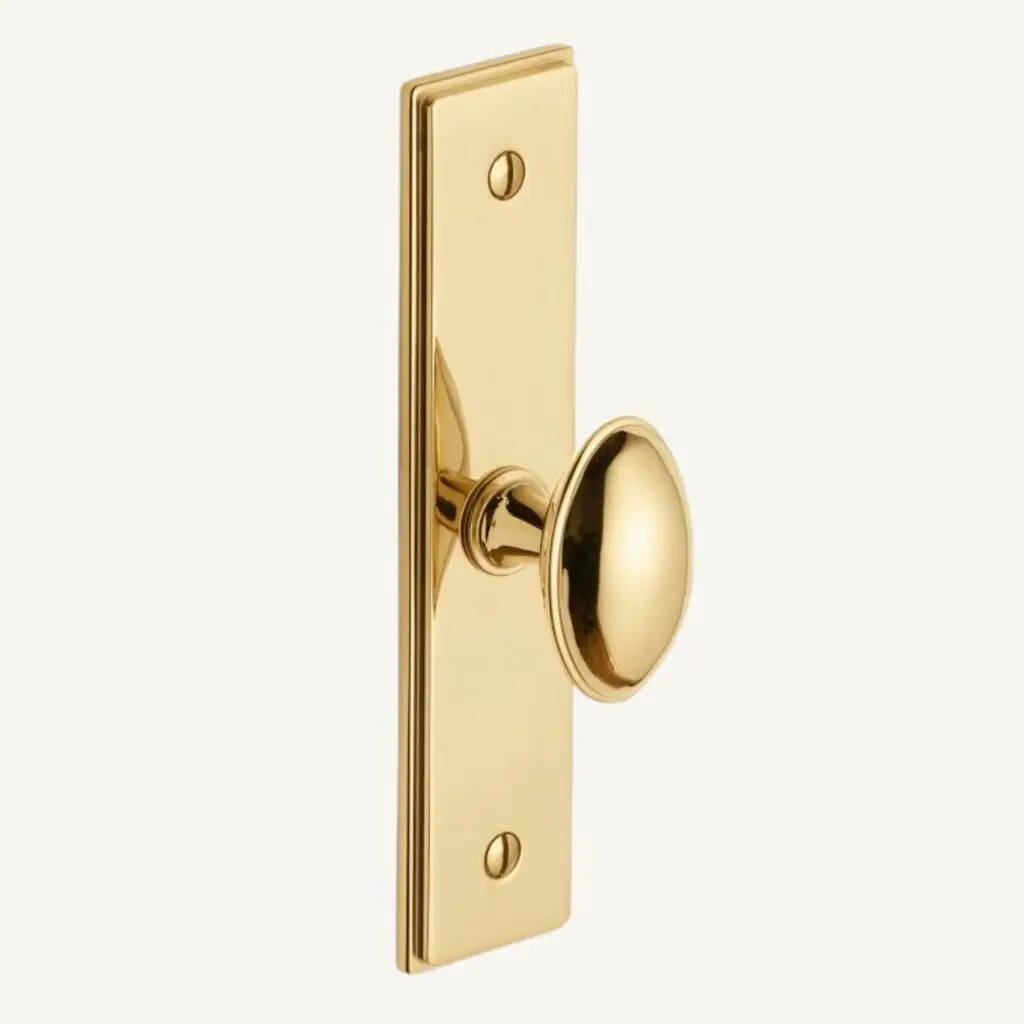
Multiple hardware types and finishes in this traditional, not dated series – all solid brass or bronze.
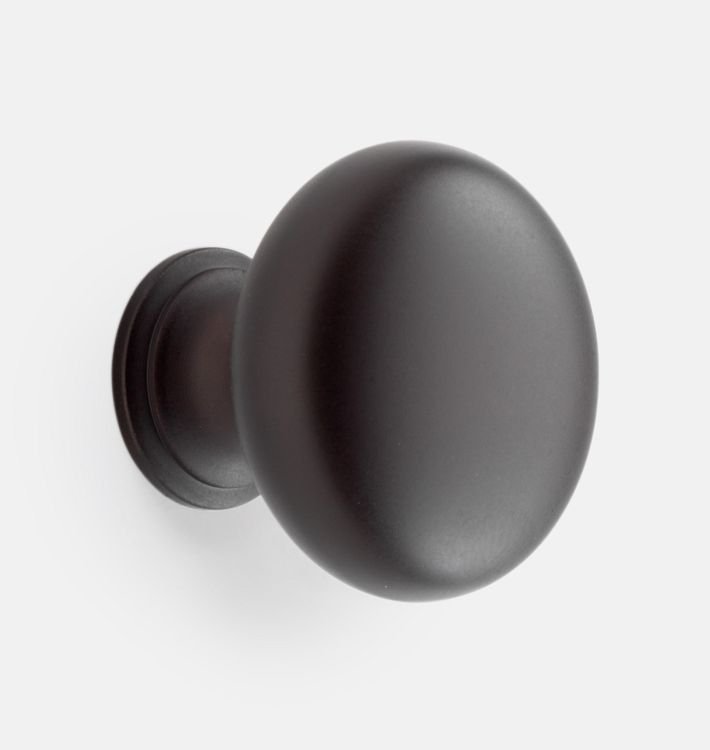
This is what I’ve added to the laundry room. Feels solid, looks high quality, not a chance these will ever read “dated”
When to Use Pulls
A pull distributes force across two points which comes in handy the minute the drawer or door gets wide, heavy, or both.
Best For
- Drawers
- Frequently used cabinets
- Heavy storage
- Trash pull-outs
- Appliance garages
Advantages
- Best ergonomics
- Easy with wet or greasy hands
- Easy carrying items while opening
- Better leverage
Disadvantages
- More visually dominant
- May snag clothing in tight spaces
- More expensive
Typical Sizing
The old “one-third of drawer width” rule still works. For inset cabinetry and traditional homes, slightly undersized pulls usually look more “right” than oversized contemporary pulls would.
| Drawer Width | Old House Pull Size “Sweet Spot” |
|---|---|
| 12-18″ | 3-4″ center-to-center |
| 18-30″ | 5-6″ center-to-center |
| 30-36″ | 8-10″ center-to-center |
| 36″+ | 10-12″+ center-to-center |
Not So Obvious Drawer Pull Considerations
For deep drawers holding cast iron, mixers, dishes, or pantry items, longer pulls work dramatically better over time.
The Patton pull in the Rosemont master bath is a full-commitment choice: one long bar pull on each drawer, polished nickel, nothing fussy. Wide drawers, period-correct fixture, single decisive form, solid brass with a living finish.
Best for Old House Pulls
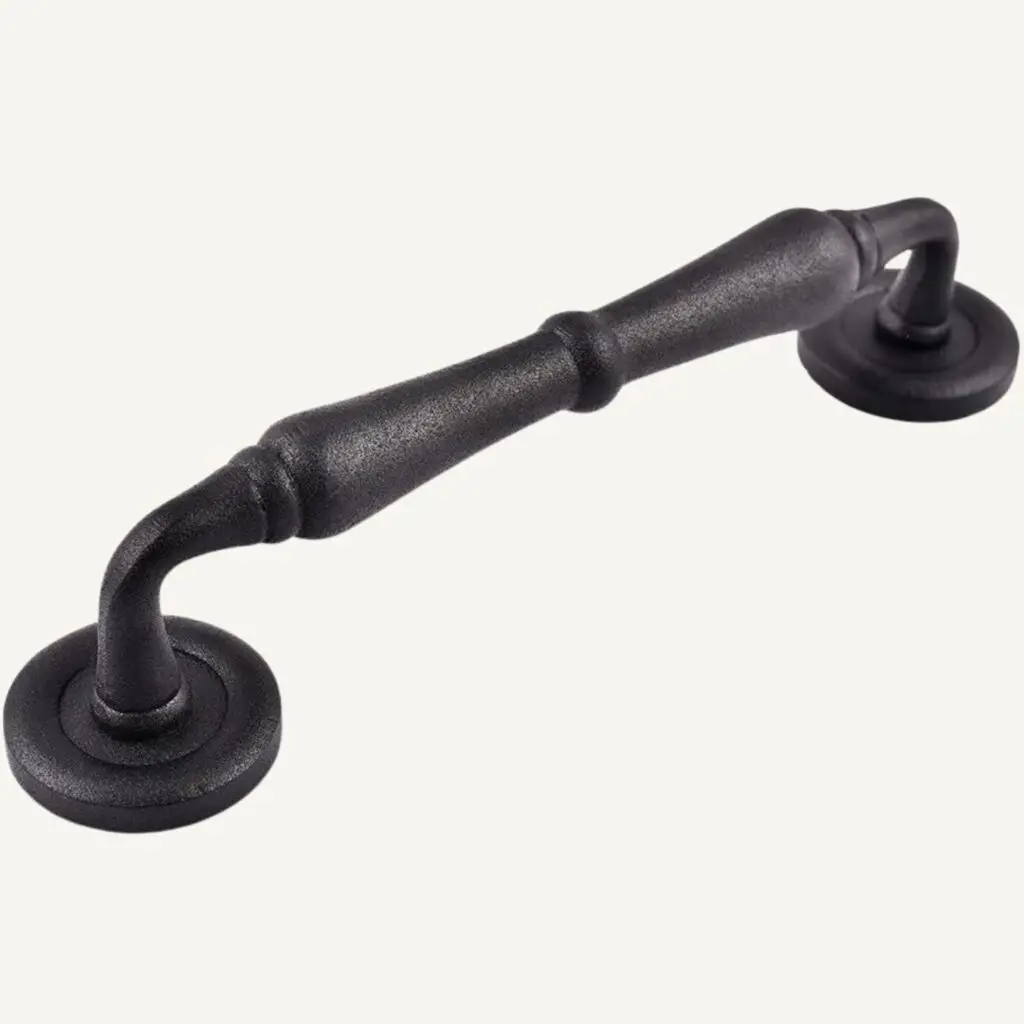
I really love the classic detail on this solid, hefty pull. Colonial in form, honest material. This will be a contender in the upcoming kitchen refresh.
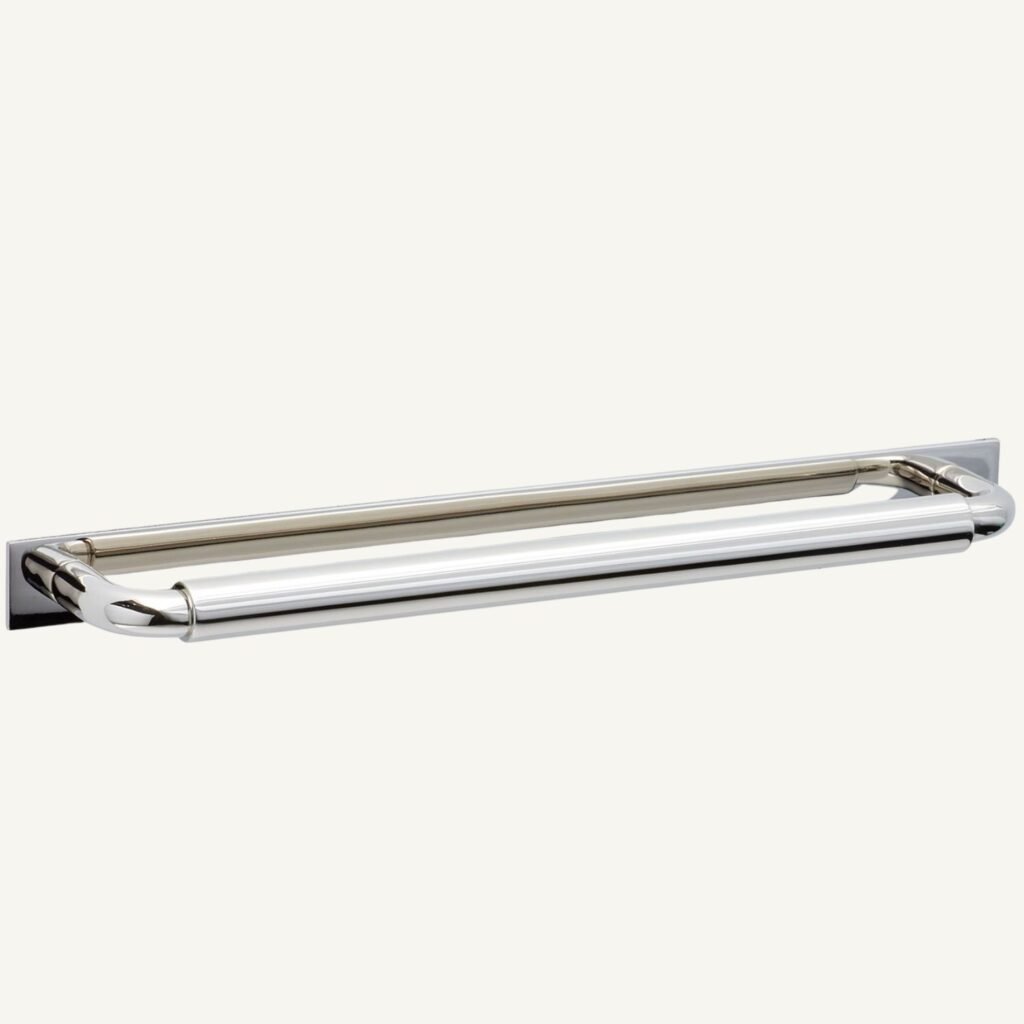
Solid brass, feels amazing in the hand. I chose these in 8″ polished nickel (a living finish that will patina over time) for my master bathroom renovation.
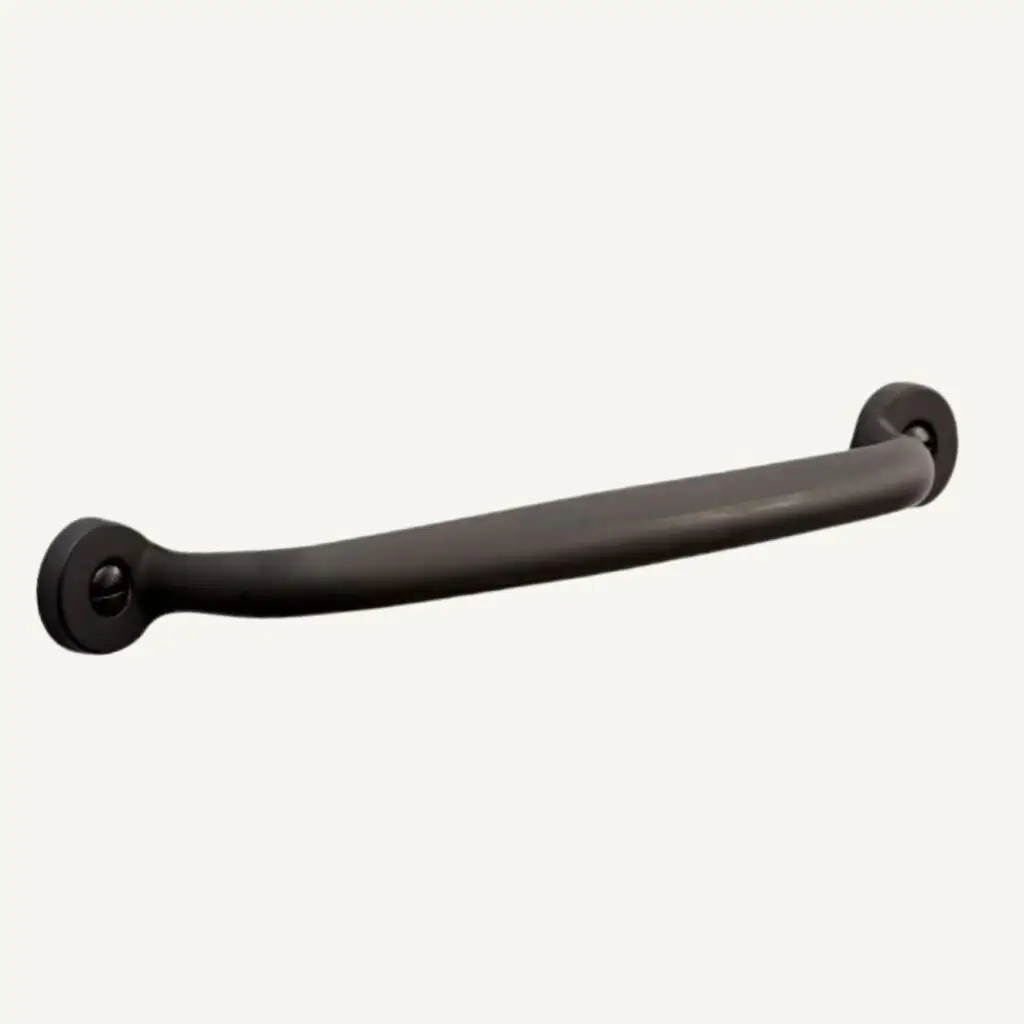
Hefty and sleek in solid brass or bronze. I have these in our laundry room on large drawers and pantry doors.
Related: Cabinet Hardware Backplates: The Hardest Working Cabinet Hardware in the Room
Other Perfect-for-Old-House Cabinet Hardware Types
Two categories that don’t fit neatly in the the knob-or-pull question, but belong in almost any pre-1940 house.
Both categories read instantly authentic, and both come with their own rules.
Best for Old House Bin Pulls, Edge Pulls & Latches
Bin & Cup Pulls and Edge Pulls
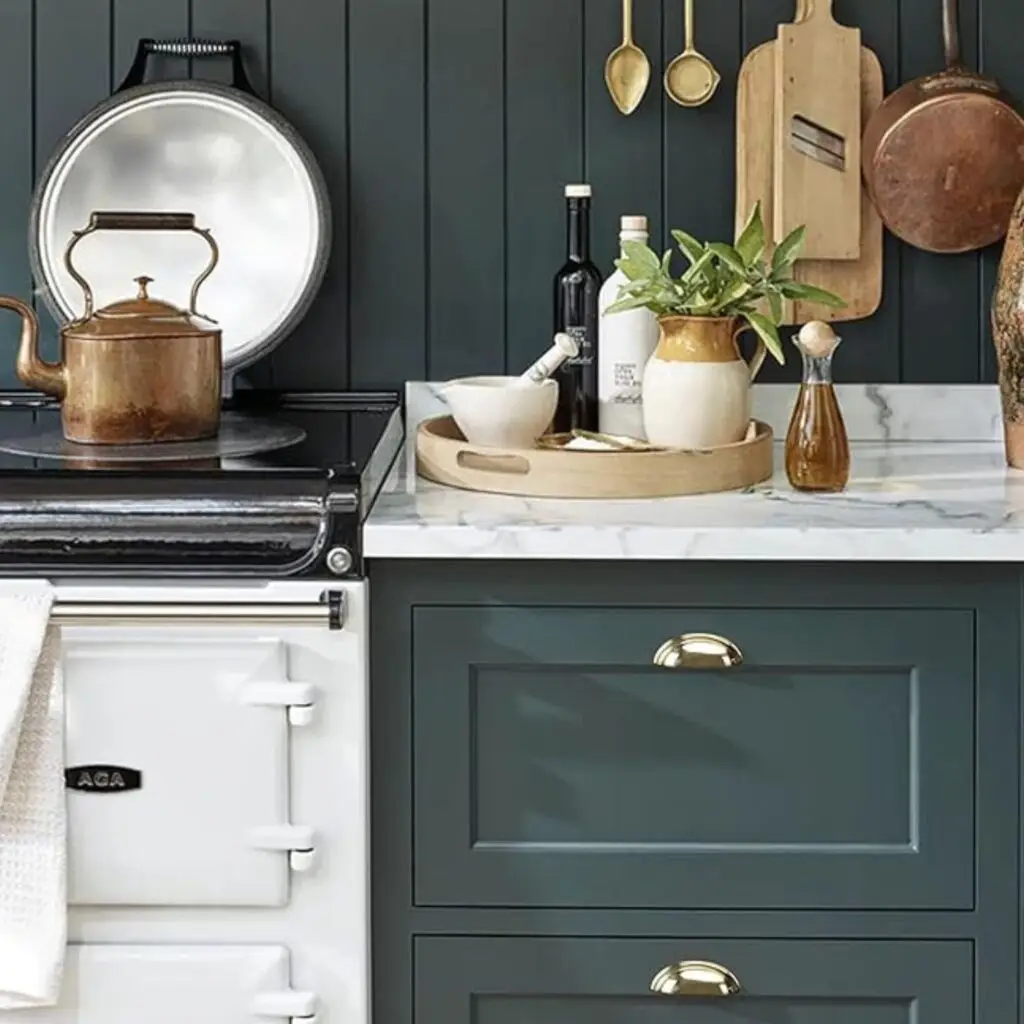
Cup pulls — also called bin pulls — are half-moon pulls your hand cups from underneath. They’re drawer hardware, full stop. You can’t put one on a door, because the grip only works pulling straight out.
On a Craftsman kitchen, a Hoosier cabinet, or a butler’s pantry, nothing is more period-correct.
Edge pulls mount on the top edge or back of a drawer or door instead of the face. They’re the move when you don’t want hardware interrupting a paneled or inset front — you get a clean face and a discreet finger pull. The catch: they require drilling into the edge of the door or drawer, and they only work where there’s a lip to grab.
On a flat overlay door with no reveal, your fingers have nothing to catch.
Best For
- Drawers only
- Kitchens
- Pantries
- Butler’s pantries
- Furniture-inspired cabinetry
Advantages
- Extremely period appropriate
- Comfortable grip
- Hide fingerprints
- Excellent for heavy drawers
Disadvantages
- Not ideal for doors
- Slightly less ergonomic than a full pull
- Can get dirty inside the cup
Typical Sizing
Unlike traditional drawer pulls, length is mostly a visual decision.
| Application | Pull Length |
|---|---|
| Small drawers | 1.5″–3″ |
| Standard drawers | 4″–8″ |
| Wide drawers | 8″–12″+ |
| Appliance panels | 12″–36″+ |
Not So Obvious Bin & Cup Pull Considerations
Cup pulls are an underhand pull. That works beautifully on drawers but won’t work for doors.
Pair them with a matching knob on the cabinet doors: cup pull below, knob above, same finish.
That’s the classic old-house kitchen formula.
In fact, it’s one of the most timeless hardware combinations.
Best for Old House Bin & Edge Pulls
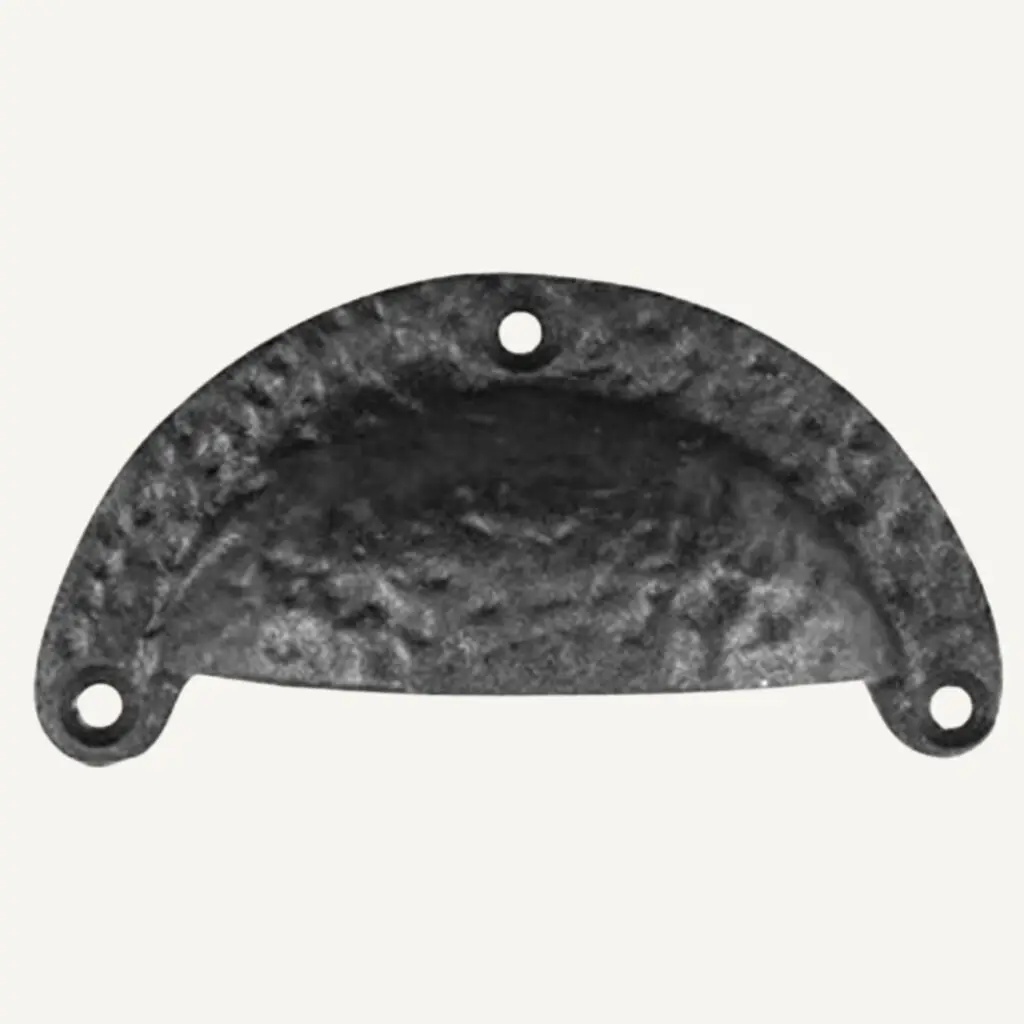
I love this pull. Feels handmade, with simple construction and a classic look. Another frontrunner for our upcoming kitchen refresh.
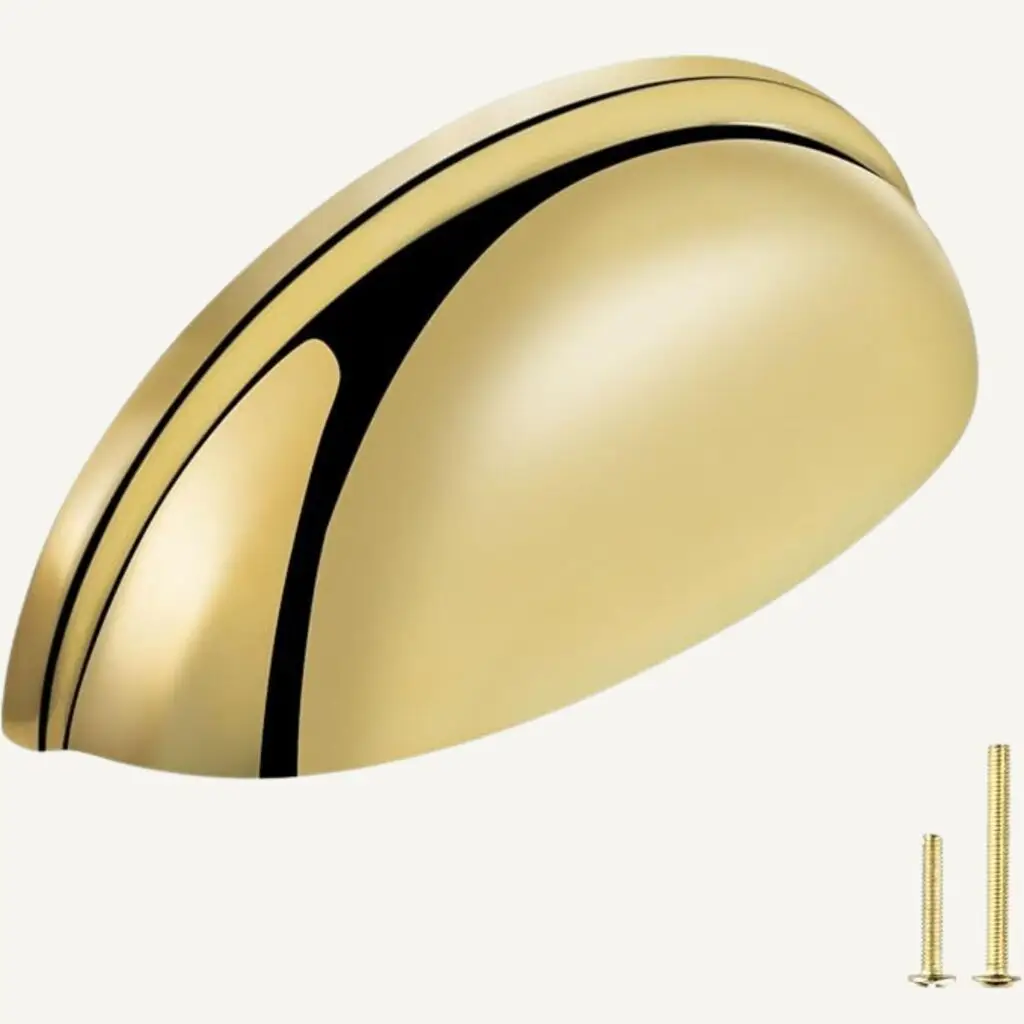
A classic bin pull at a reasonable price point, this one in a living finish brass. Can’t go wrong for an authentic look.
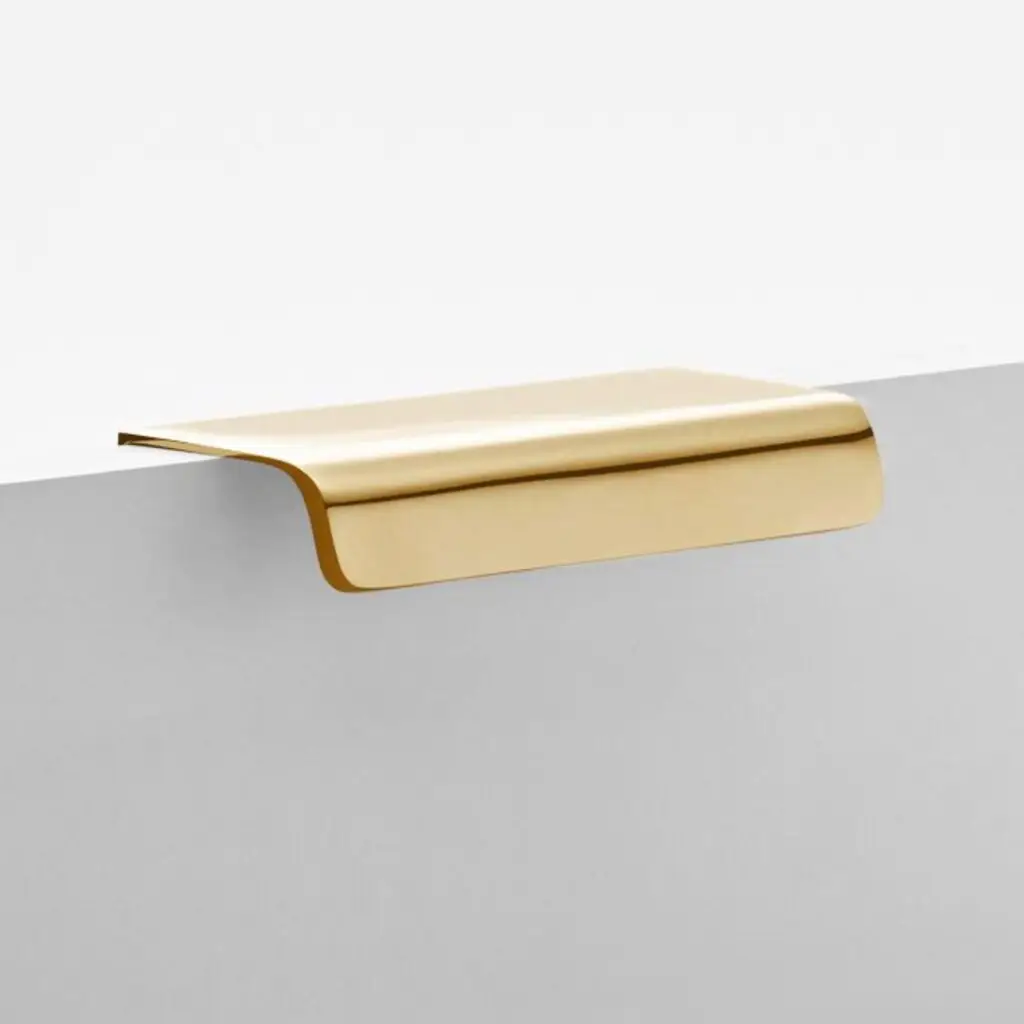
Solid brass and understated functionality in living finishes, a great way to bring minimal efficient functionality to drawers than need an easy open.
Latches & Bolts
This is the most old-house-iest of hardware on the list. Real cupboard latches — ball-tip latches, icebox latches, cupboard turns, elbow catches — don’t just decorate the door, they hold it shut. Before magnetic catches existed, this is how a cabinet stayed closed, and on an inset door it still looks and works right in a way a knob-plus-hidden-magnet never quite does.
The rule that governs all of them: latches are for inset doors. The latch arm or catch needs the face frame to grab — that’s what it hooks against. On overlay doors, where the door sits proud of the frame, a traditional latch has nothing to catch and you’re back to a knob and a magnetic catch. Confirm your doors are inset before you buy.
A few specifics worth knowing. An elbow catch holds the inactive door of a pair shut from the inside — the one without the latch. Surface bolts and cremone bolts do the same job on tall pantry or cabinet doors, and they earn their keep as much for the look as the function. Icebox and ball-tip latches are the showpiece: period-correct, satisfying to use, and the detail that tells someone the kitchen was done by a person who cares.
Best For
- Pantry cabinets
- Furniture pieces
- Historic reproductions
- Appliance garages
- Freestanding cupboards
Advantages
- Very period-correct
- Adds charm
- Keeps doors securely closed
Disadvantages
- Requires two motions
- Slower access
- Can get annoying on frequently used cabinets
Typical Sizing
- 1″–1.25″ diameter: standard cabinets
- 1.25″–1.5″: larger doors and pantry cabinets
Best for Old House Latches
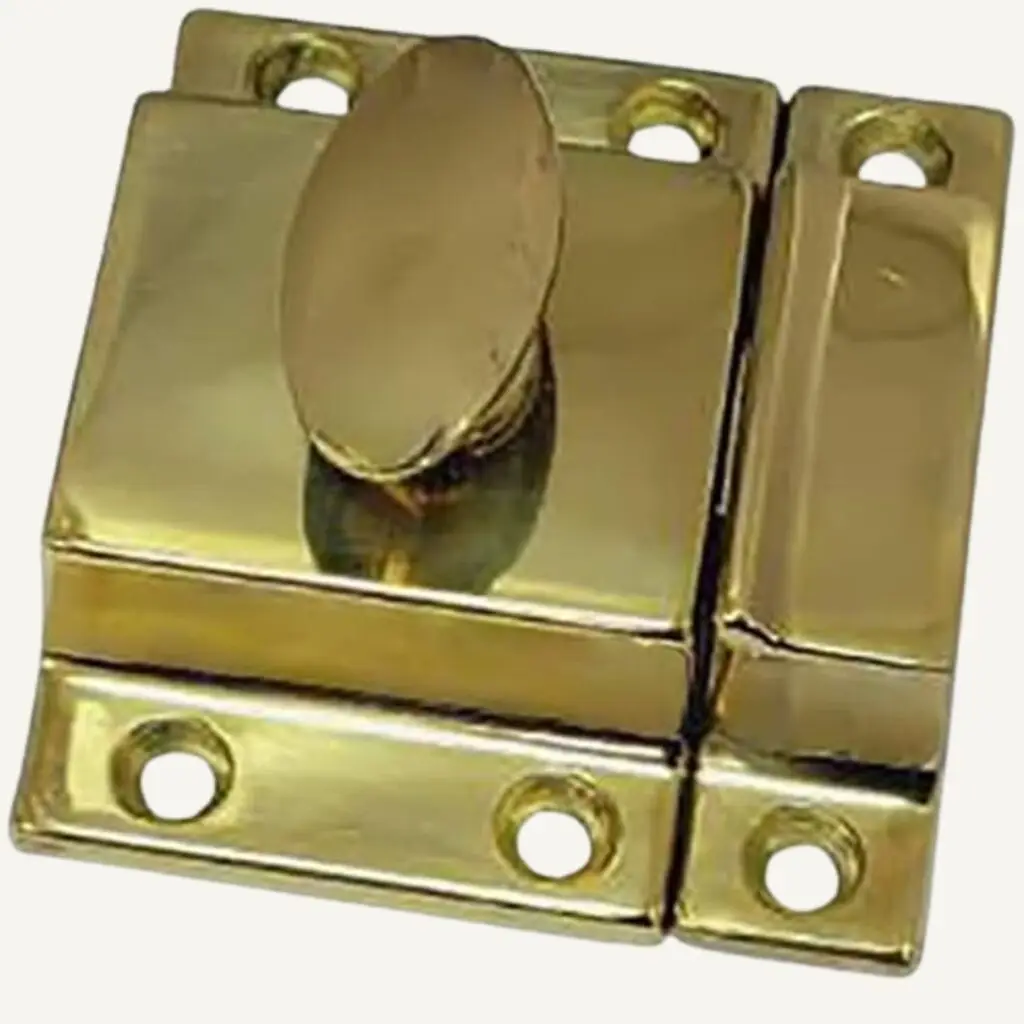
This latch is solid brass, highly rated, and is one of those timeless looks that won’t ever look “wrong” on old house doors.
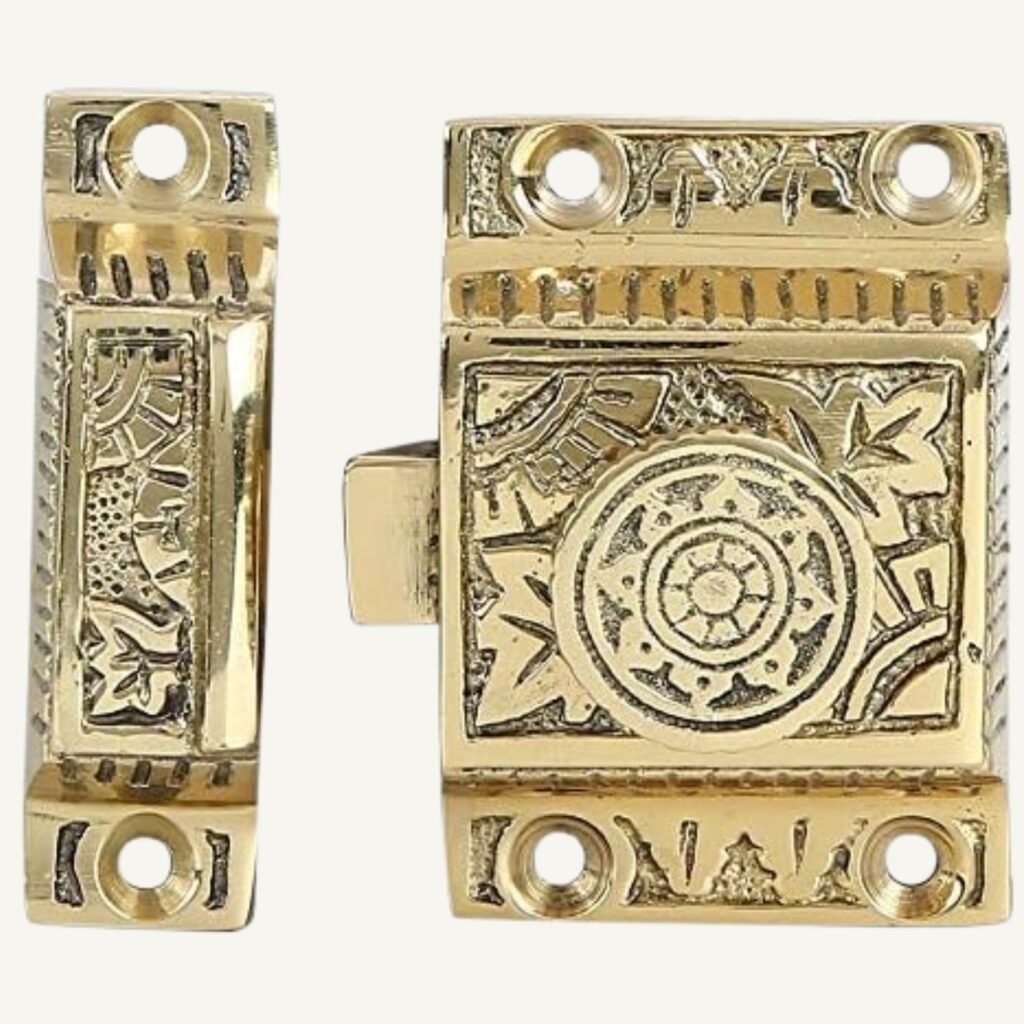
I like the look of this latch where a little embellishment is called for but the form needs to stay classic.
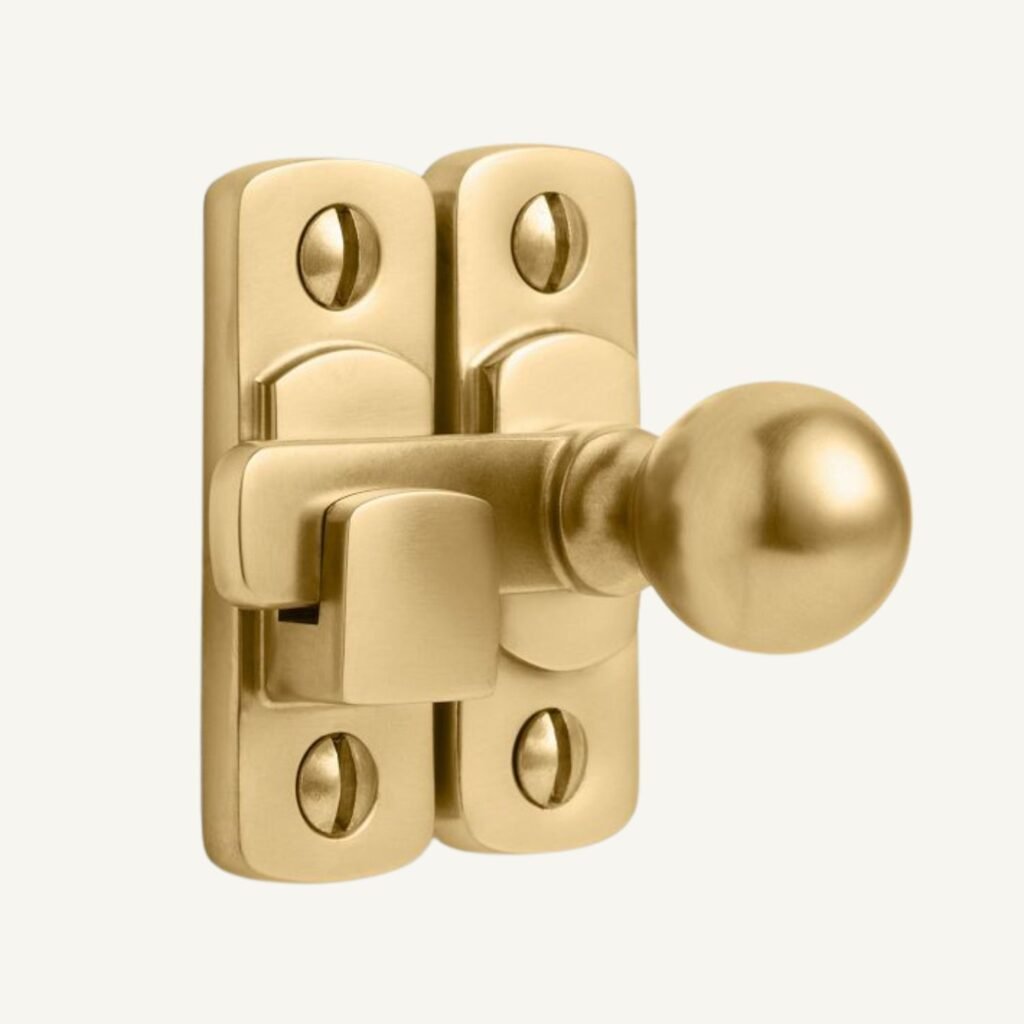
There are a few of these types of latches on built-ins throughout Rosemont. Simple, traditional, and secure.
Not So Obvious Latch & Bolt Considerations
People might not immediately understand how a latch or bolt works.
Opening a latch takes two motions, and that can become annoying on frequently used cabinets.
Skip the latch and bolt option on your daily dishes cabinetry, trash pullouts, and frequently accessed cabinets.
Related: Cabinet Hardware Matters More in Great Design Than You Think
Mixing Cabinet Hardware Types is Normal
Old house or new. Mixing knobs and pulls in the same room is absolutely okay. You’re living in the hosue, and need the hardware to work hard for you.
The Rosemont laundry room is the example: I use a single, long Massey pull on the wide, heavy lower drawers, and simple Massey knobs on the smaller upper cabinets doors. The pantry doors in the room also have long pulls for ease of use.
Why it works: the hardware is the same family — same finish, same visual weight, same design DNA. The mix reads as intentional because it is.
The rule for mixing: use the same hardware family. Related pulls, knobs, and latches will read cohesive. If you’re putting knobs on some drawers and pulls on others, they need at minimum share the same (or a complimentary) finish and visual scale.
An ornate antique brass knob next to a sleek brushed nickel bar pull will look like an accident, not as a family.
Cabinet Hardware Decisions That Don’t Work
Knobs on wide base cabinet drawers. Already said it. Worth repeating. Your drawers will reward you.
Mismatched finish across forms. One finish per room, or a deliberate warm/warm or cool/cool pairing.
Buying before measuring. The center-to-center dimension on pulls is not standardized. Old houses especially — measure the actual holes.
Defaulting to all knobs because they’re cheaper. Knobs run slightly less per piece but the difference is minor. Make the choice on function and form, not unit cost.
FAQ
Should I use knobs or pulls on kitchen cabinets?
Upper cabinet doors: knobs or small pulls. Base cabinet drawers: pulls, especially on anything wider than 18 inches. The form should follow the function of what you’re opening. Most kitchens end up with a mix — that’s correct, not indecisive.
Can you mix knobs and pulls in the same room?
YES! Your room needs to work for you. Different drawer sizes call for different forms. Doors you open all the time should have easy to manage hardware. Save the latches and bolts for inset, occasional use doors. The mistake is mixing forms with no logic behind it, or mixing finishes without a cohesive plan.
What size pull should I use on base cabinets?
Measure center-to-center (hole to hole) on any existing hardware before ordering. Standard sizes are 3″, 3.75″, and 5″. On wide base cabinet drawers (30″+), a longer pull (5″ or more) is proportionally correct. Don’t eyeball it. Get the rules of thumb HERE
Do knobs or pulls look better on old houses?
Neither is more period-correct. Old houses had both. The path to the right answer is for your home? What does the drawer size call for, what finish matches your room’s other metals, and what hardware family makes sense for the house? Older homes can wear a knob or a pull with equal conviction. Make your rooms work for you by thinking through how you’ll use each door, drawer, or cabinet before you source your hardware.
— the question is which one you chose on purpose.
Related: Chrome vs Brass in an Old House (and How to Mix Metals)
Shop this story
Some links may be affiliate links, meaning I may earn a small commission.
Knobs
- Amerock cabinet knob with Cosmas backplate, Amazon An easy to handle traditional look at a more entry-level cost
- Lennox cabinet knob with backplate in unlacquered brass, Rejuvenation Multiple hardware types & finishes in this traditional, not dated series – all solid brass or bronze.
- Massey round cabinet knob in oil rubbed bronze, Rejuvenation What I’ve got in the laundry room. Feels solid, looks high quality, not a chance these will ever read “dated”
Pulls
- Renovators Supply cast iron large drawer pull, Amazon I really love the classic detail on this solid, hefty pull. Colonial in form, honest material.
- Patton drawer pull, Rejuvenation (multiple finishes & sizes) Solid brass, feels amazing in the hand. I chose these in 8″ polished nickel for my master bathroom renovation.
- Massey drawer pull, Rejuvenation (multiple finishes & sizes) Hefty and sleek in solid brass or bronze.
Bin & Edge Pulls
- Renovators Supply Hammered Iron Bin Pull, Pack of 6, Amazon (multiple sizes) I love this pull. Feels handmade, with simple construction and a classic look.
- Unlacquered Brass Bin Pulls, Pack of 5, Amazon (multiple finishes & sizes) A classic bin pull at a reasonable price point, this one in a living finish brass. Can’t go wrong for an authentic look.
- Barrington Edge Pull, Rejuvenation (multiple finishes & sizes) Solid brass and understated functionality in living finishes, a great way to bring minimal efficient functionality to drawers than need an easy open.
Latches & Bolts
- Traditional Large Oval Turn Cabinet Latch in Solid Brass, Amazon This latch is solid brass, highly rated, and is one of those timeless looks that won’t ever look “wrong” on old house doors.
- Solid Brass Cabinet Latch with Windsor Design, Amazon I like the look of this latch when a little embellishment is called for but the form needs to stay classic.
- Quincy Small Traditional Cabinet Latch, Rejuvenation There are a few of these types of latches on built-ins throughout Rosemont. Simple, traditional, and secure.